

Langtang Valley Trek
16 Reviews on Tripadvisor


Trip Duration
8 Days
Max. Altitude
5,000m. / 16,404ft.
Nature of Trip
Tea House Trek
Trip Difficulty
Easy
Group Size
1-20
Best Seasons
March-May/Sep-Nov
Activity
Trekking
Start/End
Kathmandu/KathmanduLangtang Valley Trek
16 Reviews on Tripadvisor
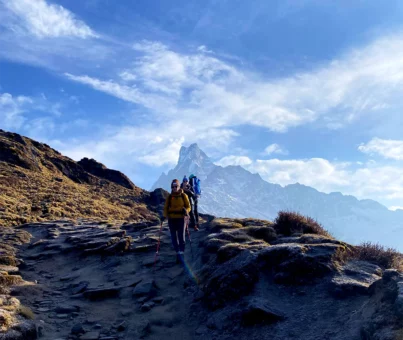
The Langtang Valley Trek is a well-loved trekking destination in Nepal, offering trekkers of all skill levels the chance to enjoy stunning views of snow-capped mountains, lush jungles and traditional Tibetan and Nepali culture. The classic Langtang Valley Trek is of easy to moderate difficulty and follows an out-and-back route over the course of one week. There is the option to extend the trek and add-on other destinations within the region such as the Tamang Heritage Trek or Gosaikunda (a sacred lake).
Starting from Syabrubesi, the Langtang trek takes you through Langtang National Park and follows the Langtang River up the valley. Along the way you can spot a variety of wildlife such as deer, Himalayan tahrs, mountain goats, common langurs and many species of birds.
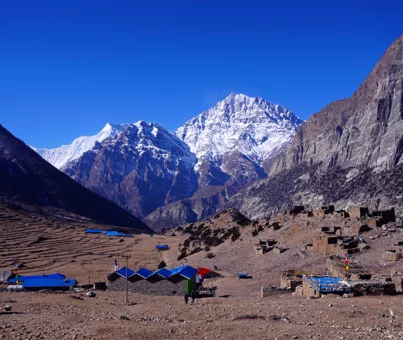
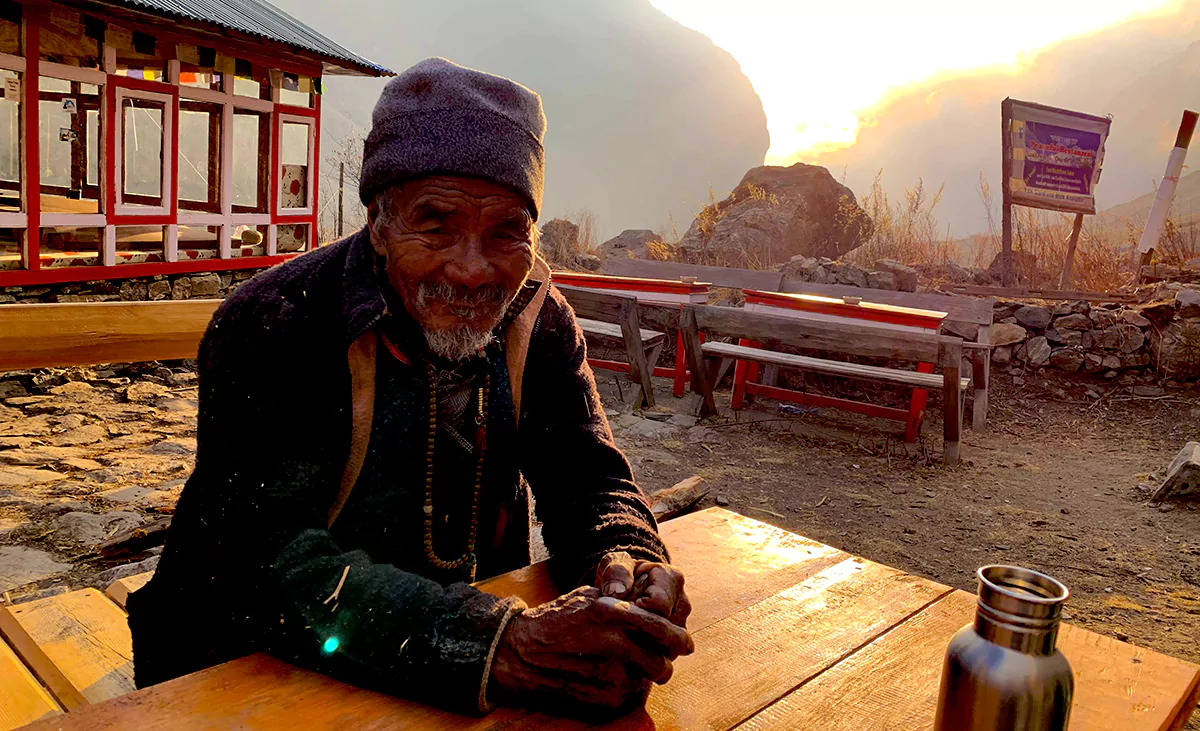
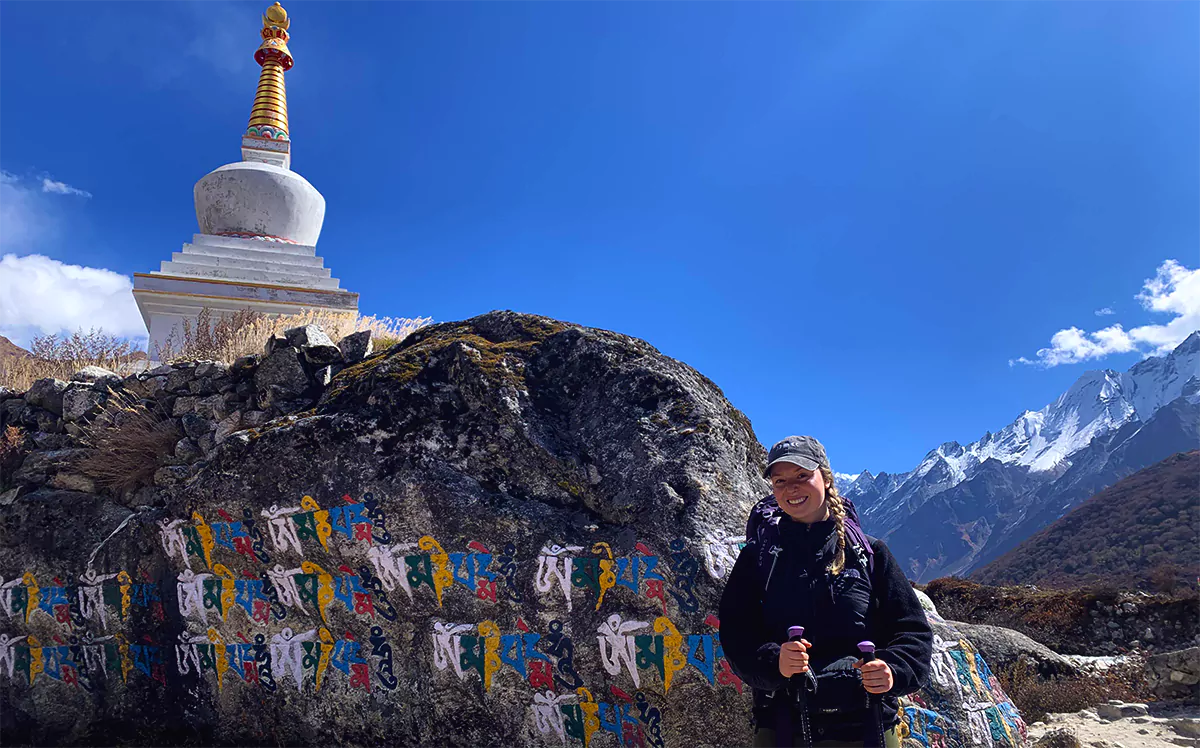
Passing through and staying in picturesque villages like Lama Hotel, Langtang Village, and Kyanjin Gompa gives you the opportunity to interact with the local Tamang and Sherpa communities and experience their unique culture. The region is seeping in Buddhist tradition, customs and relics. You will pass by various sacred sites including prayer wheels, stupas (dome-like structures), welcome bridges, mani walls (stone walls engraved with sacred mantras and prayers) and monasteries that are of great importance.
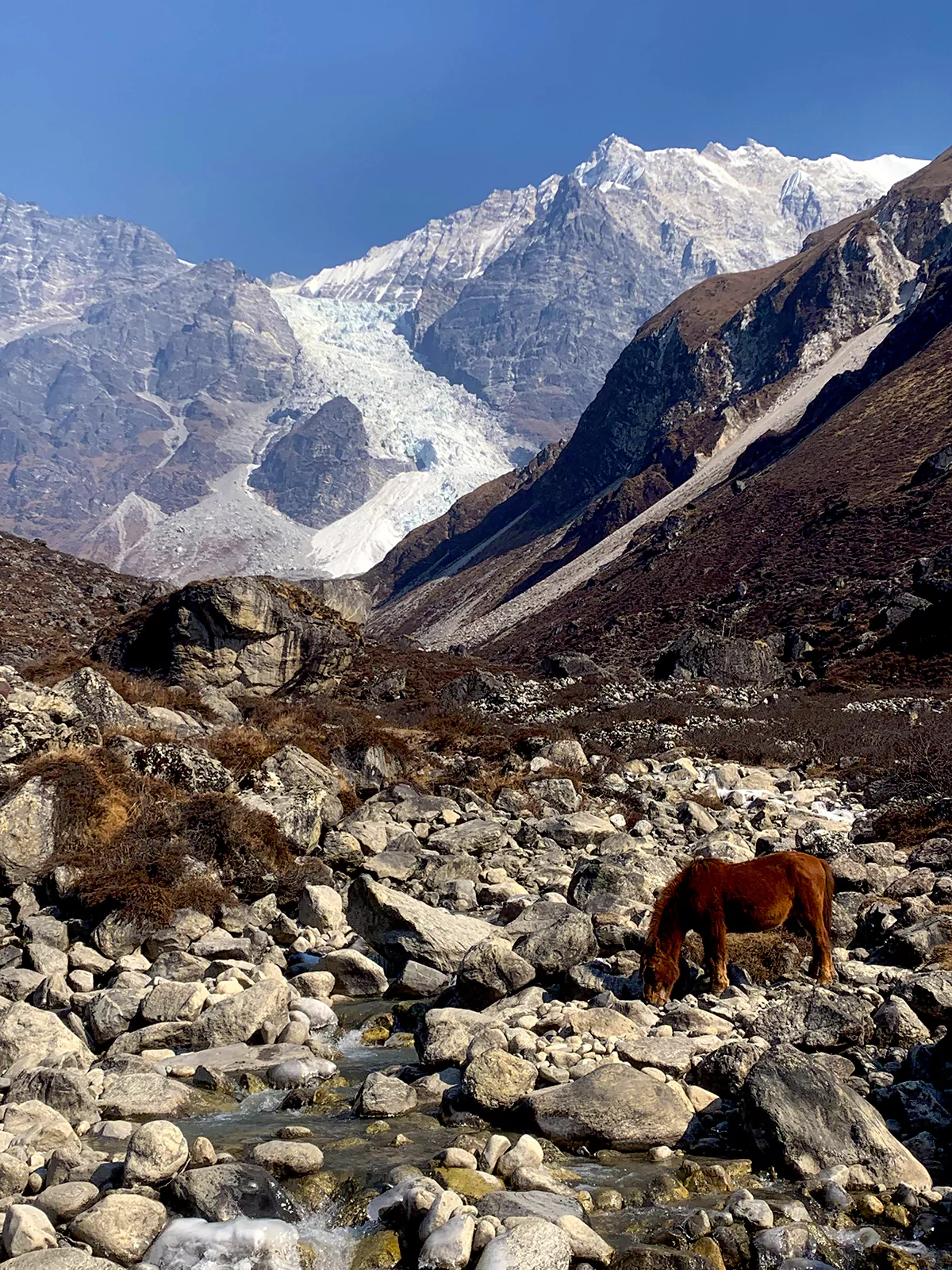
In just a few days by foot, you are surrounded by huge mountains in all directions including Langtang Lirung, Ganesh Himal, and Dorje Lakpa. Don’t miss the opportunity to hike into this unique region of Nepal, try yak cheese from the local factory and visit an old Buddhist monastery.
The beloved Langtang Valley Trek is listed as “easy” because of its well-maintained paths, manageable elevation gain and comfortable tea houses. It is ideal for families, trail runners, beginners and adventurers. It offers the perfect blend of natural beauty, adventure, and cultural and spiritual connection.
If you book your trek with Himalayan Peace Treks, you can relax and trek peacefully, knowing that all of the logistics are taken care of and you are supporting ethical trekking practices. We would love the opportunity to connect with you and answer any questions you might have. No question is too small, so consider reaching out to our welcoming team.
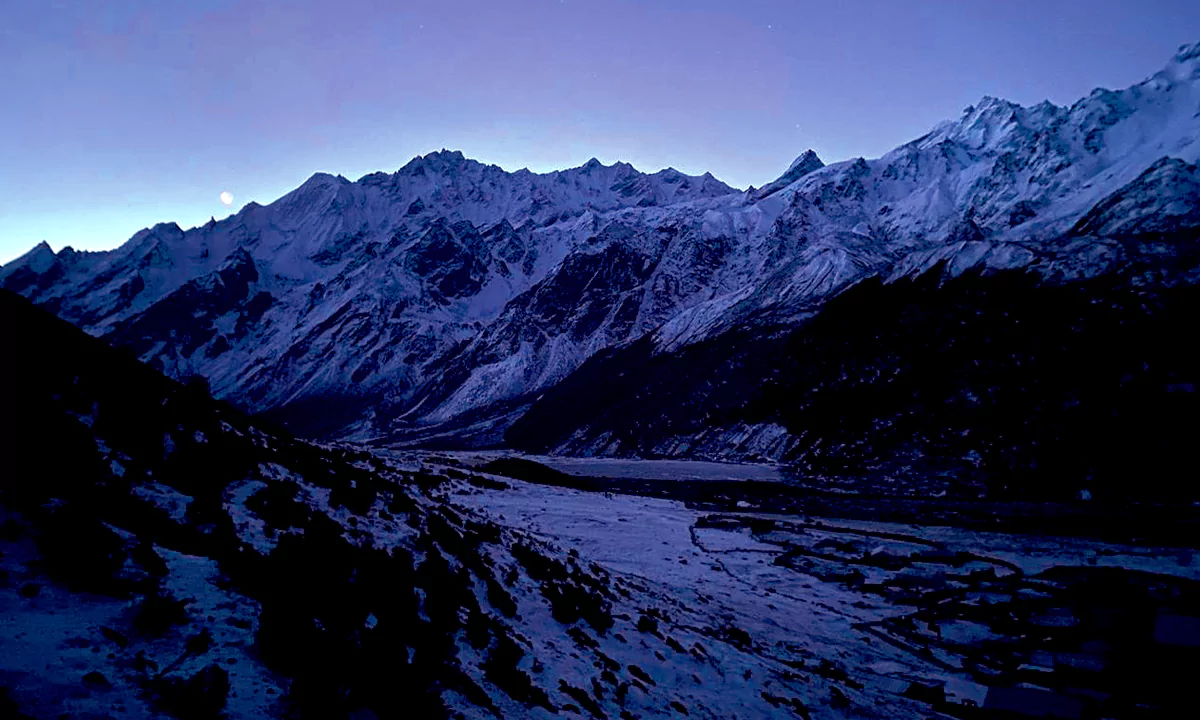
Langtang Valley Trek Highlights
- Gorgeous hiking through varying landscapes as you travel from low to high elevation
- Mountain views of Langtang Lirung (7234 m), Yala Peak (5500 m), and Dorje Lakpa (6966 m) amongst other peaks within the Langtang mountain range
- Explore a region of Nepal that is rich with Tibetan Buddhist practices and traditions and feel the depth of spirituality and serenity
- Look for wildlife within Langtang National Park including red pandas, Himalayan Tahr, langur monkeys and many bird species
- Explore the memorable village of Kyanjin Gompa (3870 m) with its yak cheese factory, bakeries and local shops
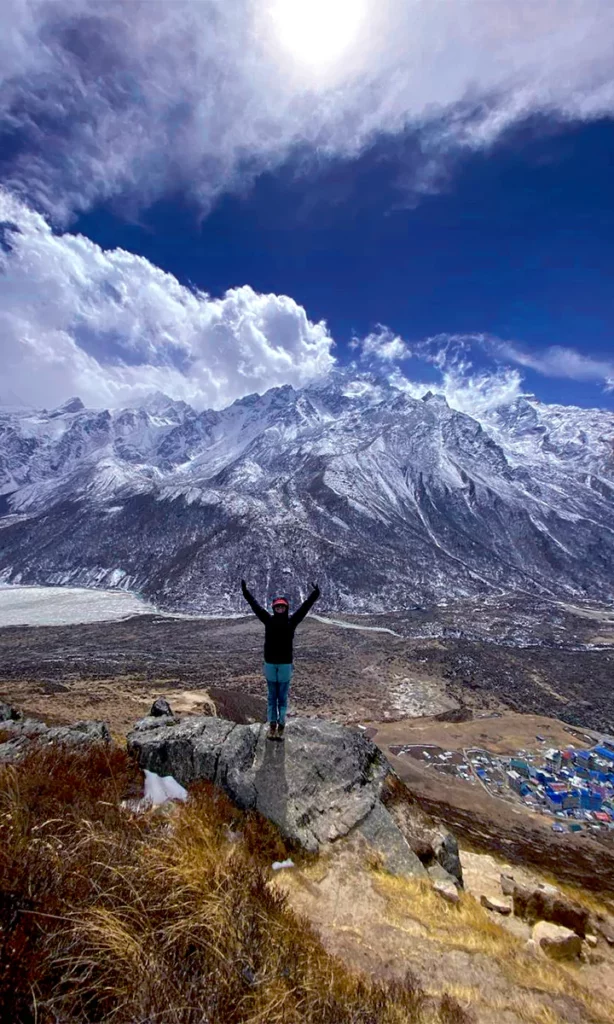
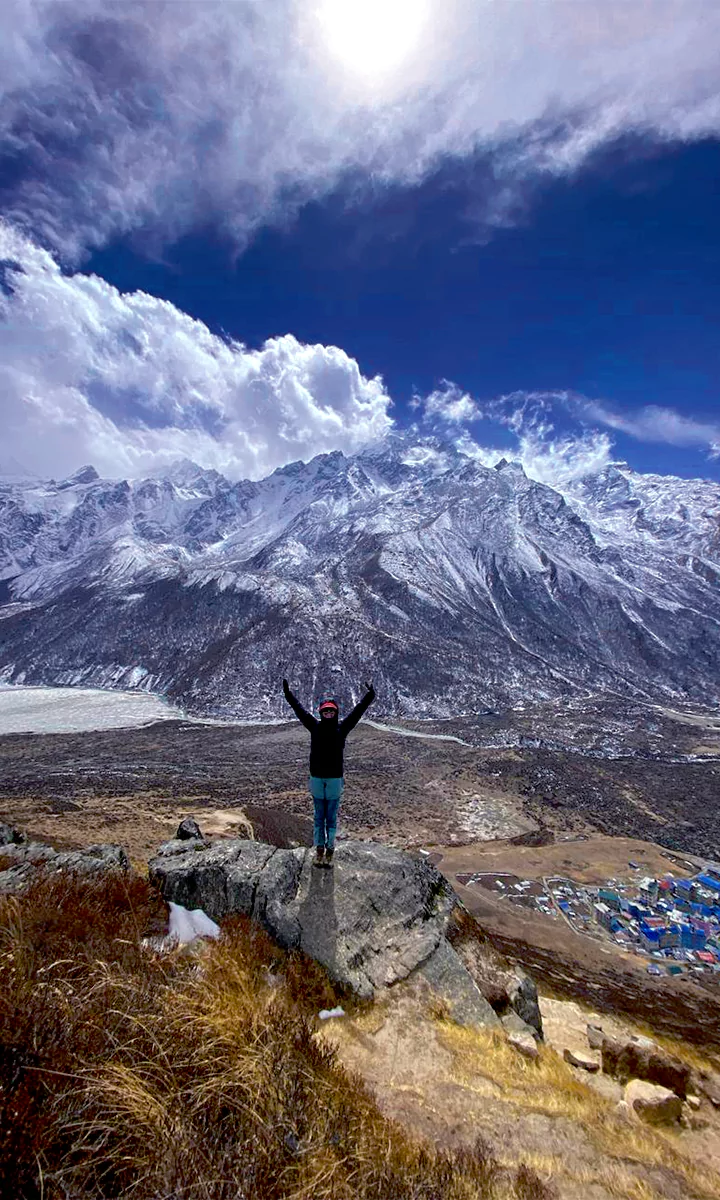
- Celebrate reaching 5000 m when you hike to Tserko Ri and take in the views of the surrounding mountains above and the deep valley below
Why Trek With Himalayan Peace Treks?
We are a trusted, ethical trekking and tour company that facilitates incredible experiences in the Himalayas. You can feel good about choosing our company to guide you because of our genuinely excellent service and commitment to giving back to our communities and the environment.
Our ethical trekking approach means appropriate wages and working conditions for our wonderful team, community empowerment and support, and environmental consciousness. We are honest and thoughtful with our guests and everyone we do business with. We promise you transparency and enjoyment from start to finish and would be happy to customize your trip for you.
With decades of experience among the team, we want to share with you what we love about the Himalayas in the most peaceful way.
Langtang Valley Trek Itinerary Summary
Pre-Trek Day 00: Arrival in Kathmandu (1350 m)
Pre-Trek Day 0: Final Day in Kathmandu (sightseeing and final trekking preparations)
Trek Day 1: Drive Kathmandu to Syabrubesi (1550 m) 145 km, 7-8 hours
Trek Day 2: Hike Syabrubesi to Lama Hotel (2380 m) 11 km, 6-7 hours
Trek Day 3: Hike Lama Hotel to Langtang Village (3440 m) 12 km, 6-7 hours
Trek Day 4: Hike Langtang Village to Kyanjin Gompa (3870 m) 7 km, 3-4 hours
Trek Day 5: Hike Kyanjin Gompa to Tserko Ri (5000 m) and back to Kyanjin Gompa 8-9 hours
Trek Day 6: Hike Kyanjin Gompa to Lama Hotel (2380 m) 19 km, 5-6 hours
Trek Day 7: Hike Lama Hotel to Syabrubesi via Sherpa Gaun (1550 m) 14km, 6-7 hours
Trek Day 8: Drive Syabrubesi to Kathmandu (1380 m) 145 km, 7-8 hours
Photo/Video Gallery
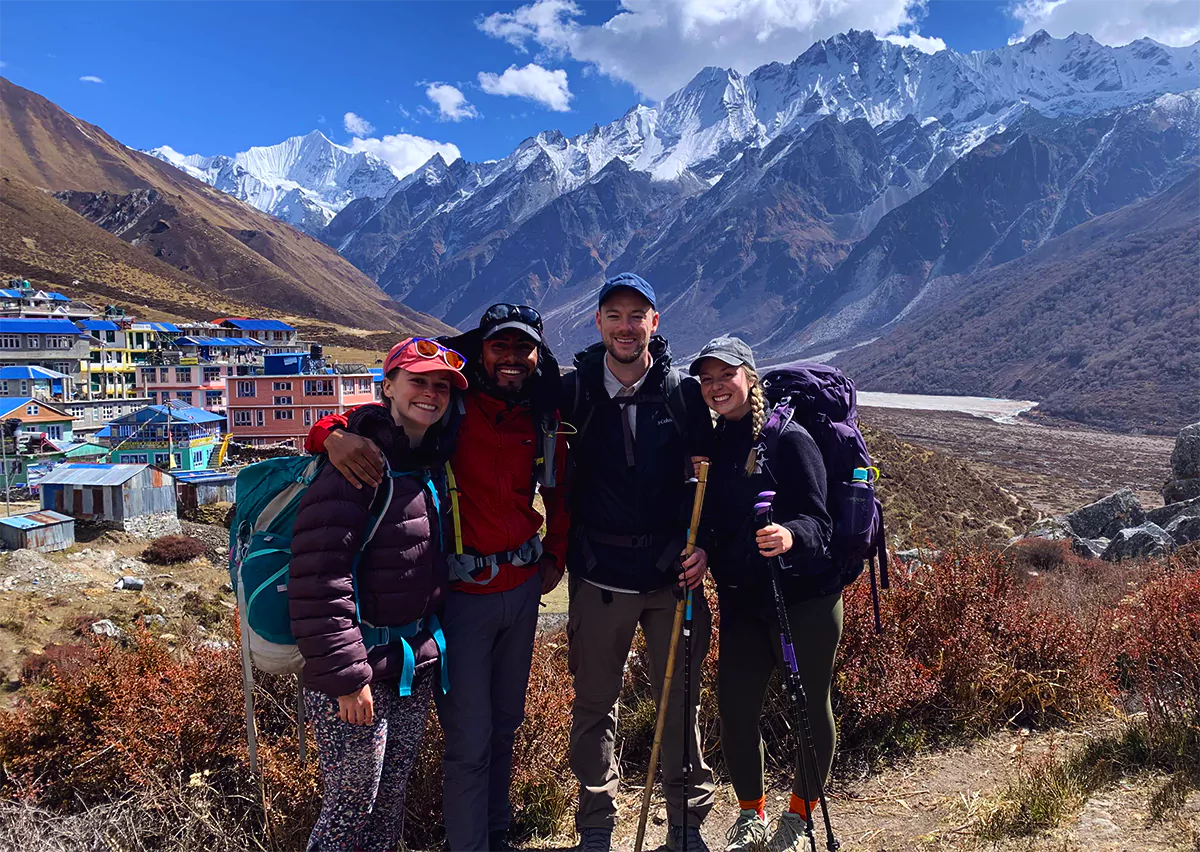
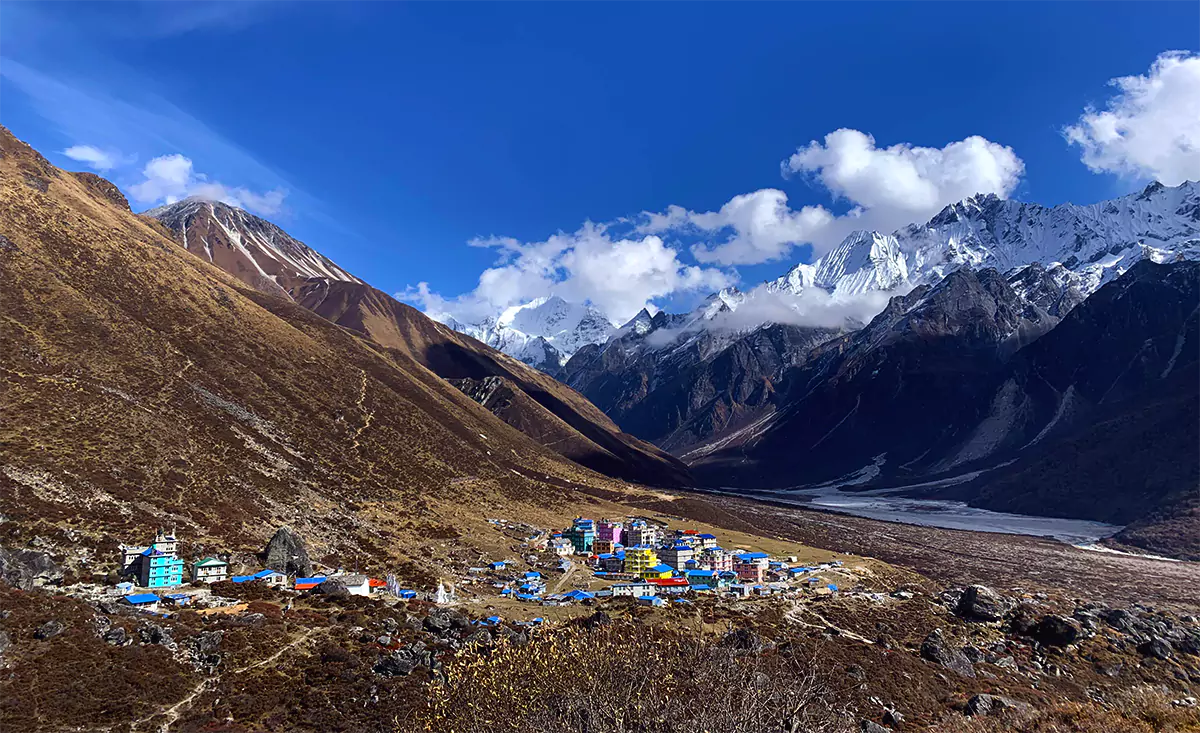
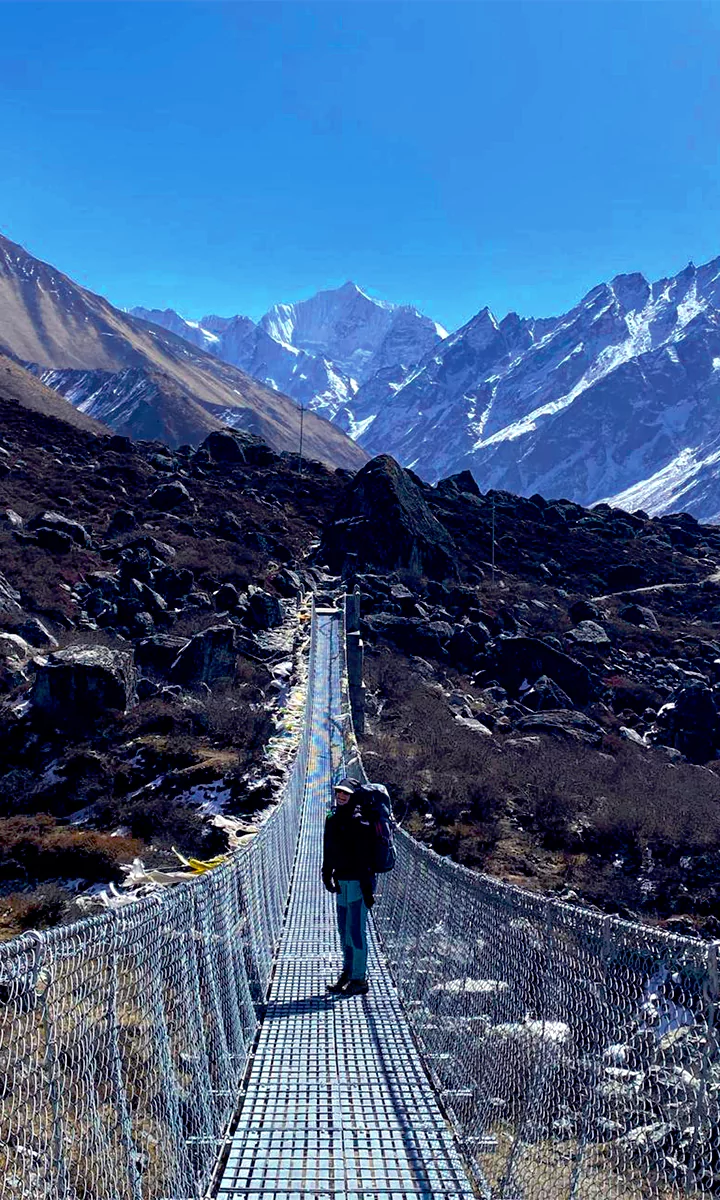
Itinerary of Langtang Valley Trek
We are happy to work with you to adjust this itinerary to create your own personalized experience.
*Times are estimated based on the average hiking pace and do not include breaks.
Day 00: (Pre Trek Day) Arrival in Kathmandu (1345 m)
Feel free to arrive today, or earlier, to enjoy Kathmandu Valley, rest, and prepare for your trek. You will be greeted at Tribhuvan International Airport in Kathmandu and provided with transportation to your pre-booked hotel in Thamel, the tourist hub of Kathmandu. Please let us know your flight itinerary so we can arrange your pick-up.

Distance: 0 km

Overnight Altitude: 1345m./4,413ft. (Kathmandu)

Meal: none

Accommodation: Three Star Hotel
Day 0: (Pre Trek Day) Final Day in Kathmandu and Trekking Preparations
Today is the final day in Kathmandu. If we haven’t already, we will meet with you for a trek briefing and obtain your permits. Make today you own by exploring Kathmandu valley and finalizing your packing.
If you’d like, we can arrange a Kathmandu city tour with visits to UNESCO World Heritage Sites like Swayambhunath (Monkey Temple) and Durbar Square.
You are warmly welcomed to join us for dinner.
Distance: 0 km
Overnight Altitude: 1345m./4,413ft. (Kathmandu)
Meal: Breakfast at Hotel & Welcome Dinner
Accommodation: Three Star Hotel
Day 1: Drive Kathmandu to Syabrubesi (1550 m) 7-8 hours
After a hearty breakfast, you start on your long, meandering journey to the trek trailhead in Syabrubesi. The drive is quite scenic, passing by villages, fields and a river down below. It is a unique way to start to get to know the way of life in Nepal.
The roads here are often dusty and bumpy, so we recommend travelling with snacks and podcasts at the ready to ward off any potential motion sickness! You will stop briefly in Dhunche where your guide will obtain your Langtang National Park permit. You can walk around Syabrubesi, rest, and prepare for tomorrow’s hike.
Distance: 145 km
Overnight Altitude: 1500m./4,921ft. (Syabrubesi)
Meal: Breakfast, Lunch & Dinner
Accommodation: Tea House
Day 2: Trek Syabrubesi to Lama Hotel (2380 m) 6-7 hours
Today your journey officially begins on foot!
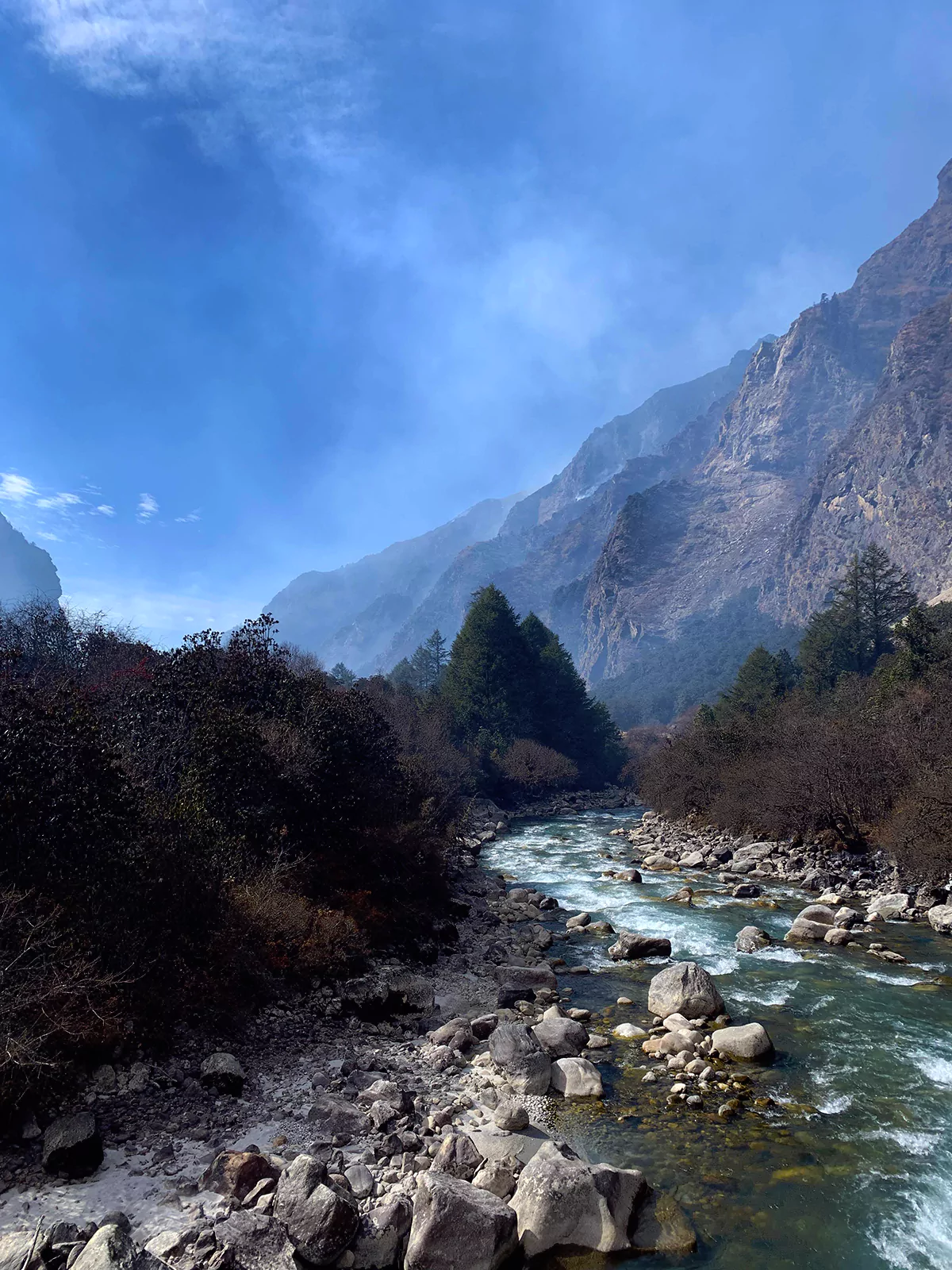
Enjoy breakfast in Syabrubesi then set off through the valley. Most of today’s hike follows the river, passing over various suspension bridges which give the unique opportunity to see the valley from a different angle. The forests are full of diverse flora and fauna including vibrant rhododendron trees that blossom in the spring and the elusive red panda and snow leopard. You are likely to see some of the many species of birds, monkeys and deer.
Lama hotel, your home for the night, is a small resting camp surrounded by forests with a few quaint tea houses. Tea houses are local rustic lodges where you eat and sleep for the remainder of the journey.
Distance: 11 km
Overnight Altitude: 2380m./7,808ft. (Lama Hotel)
Meal: Breakfast, Lunch & Dinner
Accommodation: Tea House
Day 3: Trek Lama Hotel to Langtang Village (3440 m) 6-7 hours
More rhododendron and pine forests await you along with some exciting mountain views in the distance. You can spot Langtang Lirung (7234 m) amongst the Langtang Himal (mountain) Range. Follow the upwards trail to Ghoda Tabela where you will officially reach over 3000 m elevation! After a break for lunch in Ghoda Tabela (3030 m) the path gradually ascends upwards, then opens up to Langtang village.
This particular area of the valley was heavily affected by the massive earthquake in 2015 which devastatingly destroyed all of the traditional houses. Now, by staying here, you can support their rebuilding efforts in more modern-style tea houses.
Distance: 14 km
Overnight Altitude: 3440m./11,286ft. (Langtang Village)
Meal: Breakfast, Lunch & Dinner
Accommodation: Tea House
Day 4: Trek Langtang to Kyanjin Gompa (3870 m) 3-4 hours
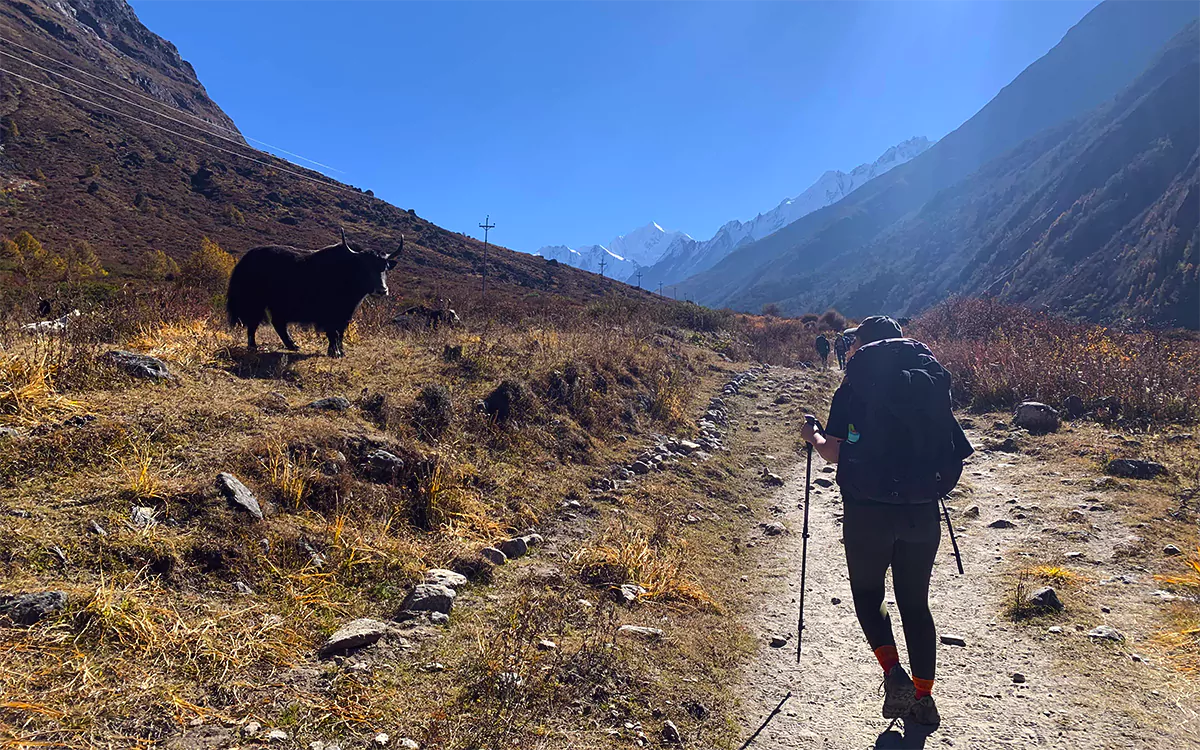
Enjoy a shorter day of hiking today that will help the body to acclimatize to the ever-increasing elevation. The trail gradually ascends towards Kyanjin Gompa, the spiritual heart of Langtang National Park. Many stone mani walls engraved with Tibetan Buddhist scripture guide your way through huge yak pastures. Take your time so that you may feel the depth of beauty and serenity of the region.
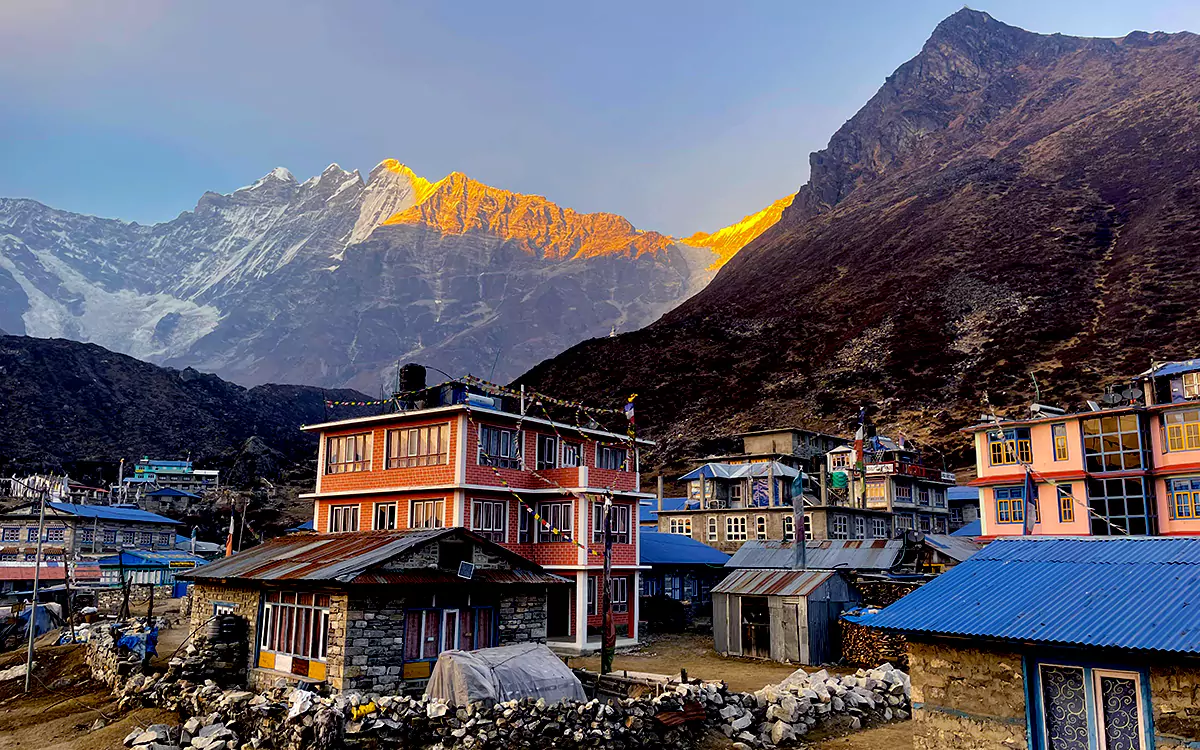
Once you arrive in Kyanjin Gompa, your home for two nights, you can visit the ancient Buddhist monastery and explore the village. Here is where you can taste yak cheese at the small yak cheese factory and grab a coffee and treat at one of the village’s bakeries. You can see mountain views of Langtang Lirung (7234 m), Yala Peak (5500 m), and Dorje Lakpa (6966 m).
Distance: 9 km
Overnight Altitude: 3870m./12,697ft. (Kyanjin Gompa)
Meal: Breakfast, Lunch & Dinner
Accommodation: Tea House
Day 5: Day Hike to Tserko Ri (5000 m) 8-9 hours
Rise as early as you can in order to enjoy the calm of the early morning and watch the sun rays gently lighting up the valley and turning the snowy mountain peaks to gold. You have two hiking options today. The first is a longer hike to Tserko Ri (“ri” meaning “viewpoint” in Nepali) where you can reach 5000 m and enjoy panoramic views of the valley and surrounding mountains.
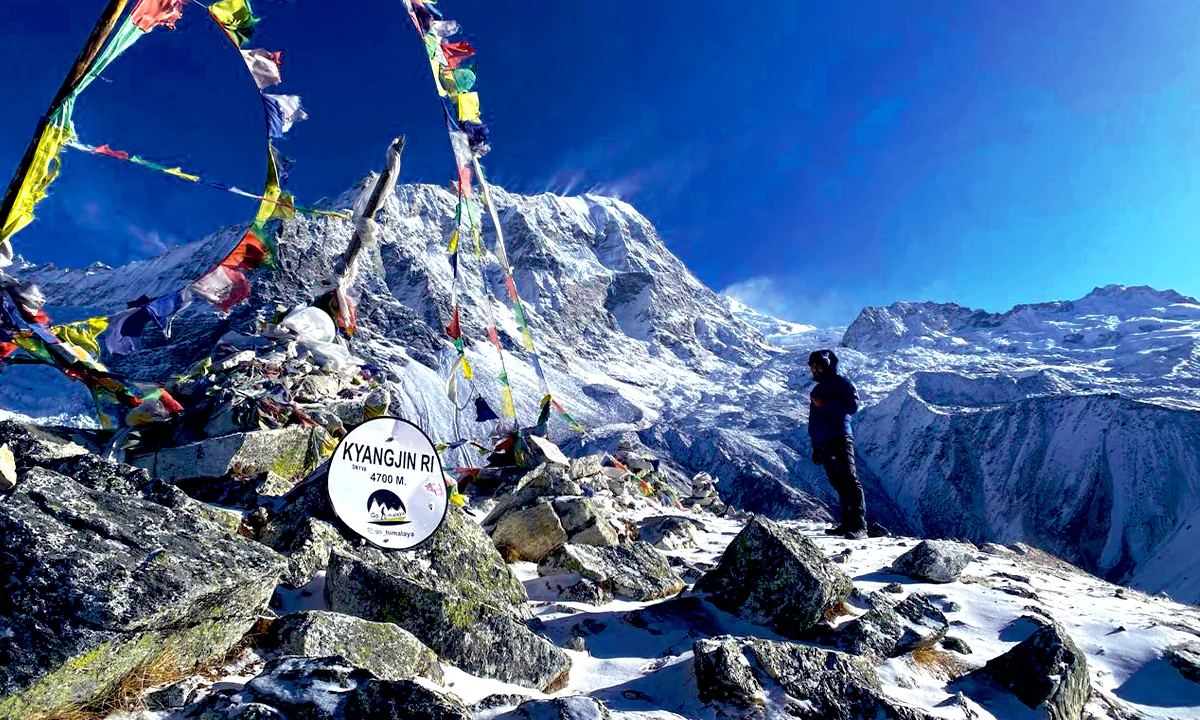
The second option is to hike the shorter distance to Kyanjin Ri (4773 m), a more accessible, but still beautiful, viewpoint overlooking the valley. Hike back down to Kyanjin Gompa for a hearty local meal and enjoy mountain views from the dining hall windows.
Distance: 7.5 km
Overnight Altitude: 3870m./12,697ft. (Kyanjin Gompa) Max. Altitude: 5000 m (Tserko Ri)
Meal: Breakfast, Lunch & Dinner
Accommodation: Tea House
Day 6: Trek Kyanjin Gompa to Lama Hotel (2380 m) 6-7 hours
Today, you begin your descent back the way you came. It is a nice opportunity to see the valley from a different perspective, revisiting your favourite parts along the way. Say goodbye to the rugged rocky terrain of the alpine and dip back into the lush forest.
With the descending trail you might finish the day earlier and be able to enjoy the afternoon on your own time. When descending, it is recommended to go slowly and trekking poles to help protect your knees.
Distance: 15 km
Overnight Altitude: 2380m./7,808ft. (Lama Hotel)
Meal: Breakfast, Lunch & Dinner
Accommodation: Tea House
Day 7: Trek Lama Hotel to Syabrubesi via Sherpa Gaun (1550 m) 5-6 hours
Starting from Lama Hotel, you take an alternative, less-travelled route to Syabrubesi. Surprisingly, most of the day is along uphill trails, with amazing views of the surrounding forested hills and the river far down below. Taking this alternative route promises a quieter, more peaceful path. We love to find more peaceful trekking alternatives at Himalayan Peace Treks.
After a day of hiking through the forest, along the edge of huge rocky hills and past small villages, the trail finally descends towards Syabrubesi for the final hour of the day. After gaining so much elevation earlier in the day, the descent is quite steep so, again, be careful with those knees! Return to where you started in Syabrubesi and reflect upon the amazing journey you’ve had.
Distance: 14 km
Overnight Altitude: 1550m./5,085ft. (Syabrubesi)
Meal: Breakfast, Lunch & Dinner
Accommodation: Tea House
Day 8: Drive Syabrubesi to Kathmandu, 8 hours
Enjoy your final tea house breakfast and then commence on your road journey back to Kathmandu. Your trek package includes a bus ride, but you are welcome to add a private jeep option if you would like a faster, more flexible option.
Upon your arrival in Kathmandu, you can enjoy some rest for the evening and celebrate your accomplishment. We can help you arrange more days of accommodation or travel in Nepal if you would like to extend your adventure here.
Distance: 145 km
Overnight Altitude: 1345m./4,413ft. (Kathmandu)
Meal: Breakfast & Dinner
Accommodation: None (we can arrange upon request)
Includes/Excludes
What is included?
- Airport pick-up and drop-off
- Welcome dinner in Kathmandu
- Two nights accommodation in Kathmandu with breakfast included
- Standard itinerary includes two nights upon arrival
- We can include additional nights or arrange for one night pre-trek and one night post-trek depending on your schedule and preference
- Luggage storage at your hotel in Kathmandu
- Trek briefing one day before the trek
- All necessary trekking permits
- TIMS Card and Langtang National Park Permit
- Transportation to and from the trekking route by bus
- All accommodation in tea houses while trekking
- Three meals a day during travel and trekking days with a tea or coffee at each meal (unless otherwise listed)
- Daily fresh fruit whenever available
- Trekking map
- One experienced and professional local guide who speaks English
- Guide fees include their insurance, livable wages, transportation, food and accommodation
- Assistant guides might be added with larger groups
- First-aid kit carried by guide
- If needed, our team will arrange an emergency rescue with your insurance company
- Company fees, administration, and government tax and VAT.
- A tree planted in your name
- A minimum 1% of profits donated to schools and orphanages in Nepal
What is not included?
- International flights and tourist visa upon arrival
- Personal sightseeing costs and meals in Kathmandu (eg. temples, monastery entrance fees, souvenirs, lunches, etc.)
- Temple and monastery entrance fees during the trek
- Extra costs while trekking for things like snacks, fancy coffees, hot showers, laundry, battery charging fees, wifi fees, monastery fees, donations, etc.
- Local porters to carry the items for your trek
- Porter fees include insurance, livable wages, transportation, food, accommodation and an optional duffle bag to carry your items
- The number of porters and price depends on the number of trekkers: one porter carries the items for two people (maximum 20 kg)
- Drinking water (you need to have a water filtration system or plan to buy boiled water)
- Sleeping bag and puffy jacket rentals are available in Kathmandu and Pokhara if needed
- Personal insurance, personal expenses, loss of property and theft, etc.
- Staff tips
- Many trekking guides and porters in Nepal receive an extremely low wage and need to rely fully on their tips to supplement these low wages. With Himalayan Peace Treks, you will be able to trek knowing that the team is being paid fairly and that any tip you want to give is a reflection of your experience
US$ 750
Standard trek price (per person)
-
1 person
US$ 1053
-
2 -
2 people
US$ 891
-
3 -
4 people
US$ 837
-
5 -
6 people
US$ 794
-
7 -
8 people
US$ 775
-
9 + people
9999
US$ 750
Total Cost:
US$ 1053
Trip Information
Langtang Valley Trek Difficulty
The Langtang Valley trek is considered to be of moderate difficulty. It is recommended for beginners, those new to spending time at elevation and anyone with a shorter schedule. The trails are well maintained, the elevation gain is manageable, the days are not too long and the tea houses are fairly comfortable.
That being said, the trek still involves several days of hiking 5-7 hours a day and reaches a sleeping elevation of 3800 m and the option to continue to a 5000 m viewpoint. It is recommended that trekkers spend time before the trek preparing for long days of movement and walk slowly along the route to help adjust to the changing elevation. Overall, with proper preparation and guidance from experienced guides, the Langtang Valley Trek is accessible to lots of people including beginners, families, trail runners and large groups.
Respecting Culture and Religion On The Langtang Valley Trek

As an ethical company, it is of utmost importance to Himalayan Peace Treks that we respect the land, villages and homes that we are venturing through.
The Langtang Valley Trek is rich in Tibetan cultural traditions, Buddist practices and local Tamang heritage.
Prayer wheels, mani walls and stupas add spiritual significance during your trek. While trekking and being hosted in tea houses, be mindful of the local norms in which modesty is the standard. Openly changing in front of people and urinating in public spaces is not common. Please consider the culture when selecting what clothing to bring and keep public displays of affection to a modest minimum. Only enter homes and kitchens when invited, and ask for permission to take photos of local people and their homes (a good practice anywhere!).
Your right side and right hand is considered sacred, so pass religious structures with your right side facing them (walking clockwise). Additionally, practice only using your right hand for spinning prayer wheels, eating, and handing items (such as currency) to someone as a form of respect.
Read more about the DOs and DON’Ts of staying in tea houses here.
Major Elevation Points on The Langtang Trek
- Kyanjin Gompa: 3870 m
- Tserko Ri: 5000 m
- Gosaikunda (if adding): 4380 m
- Starting Elevation: 1550 m in Syabrubesi
- Finishing Elevation: 1550 m in Syabrubesi
Langtang Valley Trek Packing List
We have put together an incredible packing list for the Langtang Valley Trek. It is extremely thorough and in some cases might be too much, so please use your own judgement when packing. Most people overpack for their first trek, so keep that in mind while gathering items. Porters can carry a maximum of 20kg, which is 10kg per person.
We have created a detailed packing list with explanations and here is a condensed PDF packing checklist.
Weather On the Langtang Valley Trek
If you are trekking during peak seasons, spring and autumn, you are more likely to get clear skies, little precipitation, warm days and cool nights. At low elevation you might be surprised to know that the day time can be quite hot but the days cool off as you gain elevation. At night time, it can get quite chilly, especially with higher altitude. If you are trekking closer to winter (which is December to mid-February), then you are likely to get clear but cold weather.
If you are trekking close to monsoon season (which is mid-May to mid-September) then expect to get wet! Regardless of the time of year, the mornings are generally clearer in the mountains and the clouds start to roll in after midday. Have lots of different clothing layers, a good sleeping bag and be prepared for extreme weather and emergencies.
Food on the Langtang Valley Trek
Considering that you’re trekking into a remote part of the Himalayas, the food is pretty great! Each tea house has a menu to choose from including local and international dishes. The most recommended local food to try is Nepal’s national dish, dal bhat. Dal bhat is lentil soup (dal) and a hearty portion of rice (bhat), traditionally served with curry, sautéed greens, and maybe some fresh cut vegetables, a spicy sauce or local yogurt. It’s always made fresh and has unlimited refills to help refuel after a long day of trekking.
Another delicacy to add to your must-try list are momo, which are well-loved local dumplings. You can expect to see other dishes including pasta, fried noodles and soup for lunch and dinner and more western items for breakfast such as pancakes, eggs and oatmeal. Common food requirements such as allergies, vegan, and gluten-free can be easily accommodated for, but some cross-contamination is possible.
Accommodation on the Langtang Valley Trek
You will be staying in tea houses which are small, simplistic lodges with a dining hall and guest rooms to stay overnight.
In some places, you might be able to find nicer tea houses with amenities such as hot showers, attached bathrooms and electricity in the rooms. Otherwise, plan for basic amenities, shared bathrooms and cold water. The dining halls are often heated by a delightful wood stove, but there is no heating in the guest rooms so a good sleeping bag is required to keep you cozy and warm.
Transportation to the Langtang Valley Trek
Our trek package includes round trip transportation to your Langtang Valley Trek from Kathmandu. You drive to and from the trek trailhead/trail end in Syabrubesi via local bus, which takes around 7-8 hours, depending on traffic and road conditions.
The driving in Nepal can be quite unpredictable so be prepared for a long day. The roads and bumpy and the local buses make lots of stops to let people on and off. Although the local bus is a fun adventure, you are welcome to request private transportation, which is much more comfortable.
Required Permits for the Langtang Valley Trek
When you book with Himalayan Peace Treks, we will obtain all necessary permits for your Langtang Valley Trek on your behalf.
You need a Langtang National Park permit and TIMS card for this trek, which we will obtain with your passport at the park entry checkpoint.
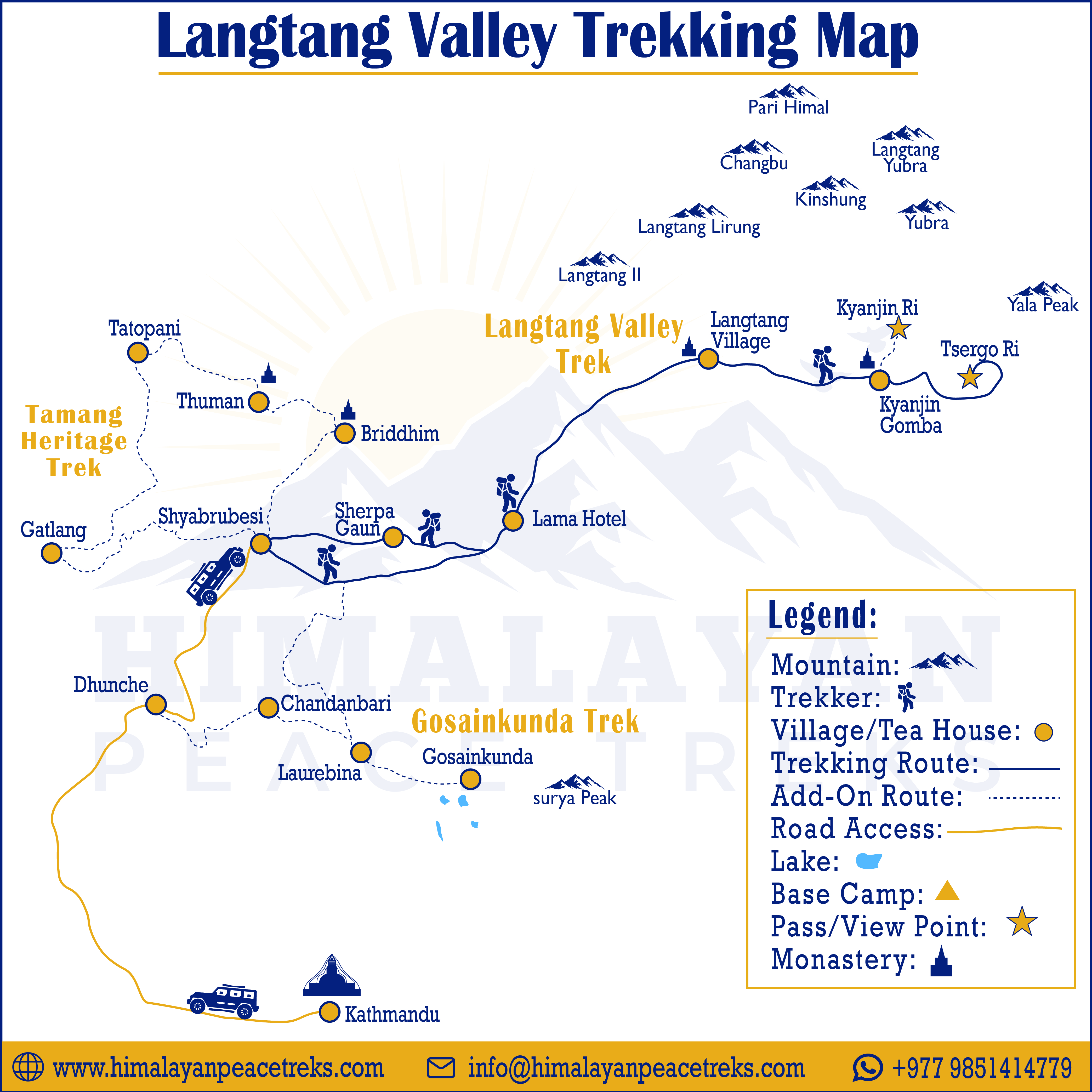
Trip Map of Langtang Valley Trek
Frequently Asked Questions
You can trek into Langtang Valley year-round, however the best time is in the spring and autumn seasons. The spring season is typically from the mid-February to the beginning of May and is when the rhododendron forests are in full bloom. During the autumn season, which starts in mid-September and continues through to mid-November, you can expect wildflowers and ideal weather. Some guests are interested in coming at quieter times, or have schedule restrictions and choose to come during off season. This is fine if they are prepared to manage the weather conditions of the time.
Yes, as of 2025 it is a requirement to have a certified guide accompany you into Langtang National Park. Guides are important for the safety and enjoyment of guests. Guides and trekking companies organize all of the trek details for you including arranging transportation, obtaining permits, and booking tea houses.
Guides also offer local knowledge about the culture and language, as well as the surrounding flora, fauna and mountains. Your guide will help you set the pace, communicate with locals, assess risks and manage emergency situations.
A porter is not necessary, but recommended for the Langtang Valley Trek. If you have lots of experience trekking at high altitude and are feeling physically and mentally confident, then you will likely be just fine. Porters are recommended for anyone who is new to trekking at high altitude, is nervous about the terrain, or is seeking more enjoyment rather than a challenge. Hiring a porter is a lovely way to support the local economy and have another staff member present in case of emergency.
Remarkably, considering you are trekking into the Himalayas, there is electricity at most tea houses within the Langtang Valley. Very few have charging outlets in guest rooms, but you can charge your devices in the main dining hall. Some tea houses request a small additional charging fee. Be prepared that the electricity is unpredictable and could cut out at any time. Many trekkers choose to bring a power bank or solar charging device. Either can be useful but are not necessary.
Yes, there is wifi accessible while trekking. Although we suggest that you use the opportunity to disconnect, many tea houses have wifi so you can still let your loved ones know that you are having the time of your life. Many tea houses charge a small fee to access the wifi for your stay. Similarly to the electricity, the wifi can be extremely unpredictable and unreliable so we don’t recommend that you plan to rely on it for anything important.
You can choose to travel via local bus or private jeep from Kathmandu to Syabrubesi and back. A bus is included in the price of your trek package. Local buses can be a fun cultural experience but are often noisy, dusty and slow. If you would like to add a private jeep for a quicker, more comfortable ride, then you are welcome to do so. We would subtract the cost of the local transportation from the cost of the private jeeps.
The total walking distance on the Langtang Trek is approximately 75 km. This number varies slightly depending on the day tours or side hikes that you choose to do. Each day you can expect to walk an average of 10-15 km.
Altitude sickness, which occurs as a result of spending time at high elevation, can happen any time you’re at or above 2500 m above sea level. It is a result of gaining altitude too quickly and not allowing time for the body to adjust to the reduced oxygen and air pressure changes. Symptoms can include anything from headache, loss of appetite, dizziness, vomiting and difficulty sleeping to more severe symptoms such as fluid in the lungs, irrational behaviour, breathlessness, blue skin, and an inability to walk. Surprisingly, altitude sickness can happen to anyone, even if they’re young, fit, and have been at high altitude before. It is important to do everything possible to prevent altitude sickness and not ignore symptoms if they arise.
The best way to prevent altitude sickness is to ascend slooowly. This means physically walking slowly, as well as limiting how much elevation you gain in a short period of time, and stretching your trek out over many days. To further help the body acclimatize to the elevation gain, it’s a good idea to hike up to a higher point than you plan to sleep whenever possible.
If it’s your first time at elevation or you have time to spare, then we can adjust your itinerary to include more days to help you ascend slower and rest more. Altitude sickness medication is best used as a treatment instead of a prevention. You can consult your doctor if you have any specific questions.
DO: ascend slowly, drink lots of water, monitor your symptoms and trek with an experienced guide
DON’T: push through severe symptoms, heavily consume alcohol, caffeinated drinks, or smoke cigarettes, take sleeping pills, ascend too quickly
Yes, a tourist visa can be obtained at airport immigration upon your arrival.
Visa options include a 15 day visa for $30, a 30 day visa for $50, and a 90 day visa for $125. You can pay the USD equivalent in any major currency. Although credit cards are accepted, cash is recommended. If needed, you can extend your tourist visa at the Department of Immigration in Kathmandu or Immigration office in Pokhara. The extension cost is a minimum of $45 for up to 15 days and then an additional $3 per day.
Yes, obtaining good medical travel insurance before you come to Nepal is necessary to trek safely and worry-free. Ensure that whatever insurance you get covers high altitude activities. You will send your insurance information to Himalayan Peace Treks so we can coordinate your safe return if there are any unlikely emergencies.
To pay for your trek you can bring any major currency ($€£¥). For spending money in Kathmandu and on your trek, you’ll need local Nepali Rupees (NPR) because Nepal mostly deals in cash. You can exchange or withdraw local rupees in Kathmandu (you cannot get any outside of Nepal).
Once you venture into the mountains there are no reliable ATMs, so any cash you might need for the entirety of the trek (for snacks, souvenirs, gear replacement, tips, etc.) needs to have been already obtained.
To pay your initial 15% deposit, you can pay directly on our website with a credit card, send a money transfer (eg. Wise) or send an international bank transfer. To pay for the remainder of your trek once you have arrived in Kathmandu, you can pay by cash (in any major currency). Any fees associated with a transfer or payment are your responsibility. All prices are listed in USD.
Here you can read more about the trekking cost breakdown, our terms & conditions, and booking & paying.
Trip Reviews
 View All Reviews
 View All Reviews
US$ 750
Total Cost:
US$ 1053
Have Questions?
Talk to our expert team and plan your trip.


 9 Days
  Moderate