

Everest Base Camp Trek
16 Reviews on Tripadvisor



Trip Duration
12 Days
Max. Altitude
5,545m. / 18,192ft.
Nature of Trip
Tea House Trek
Trip Difficulty
Challenging
Group Size
1-20+
Best Seasons
Feb-May or Sept-Nov
Activity
Trekking
Start/End
Kathmandu/KathmanduEverest Base Camp Trek
16 Reviews on Tripadvisor
Trek through incredible Himalayan landscapes and Sherpa villages on your journey to the world’s tallest mountain. The trek to Everest Base Camp (EBC), located at 5364 m elevation, is one of the most famous treks in the world for a reason! The huge mountains, special Sherpa culture and exciting challenge of trekking at high elevation make it a bucket-list item for many people. Trekking to Everest Base Camp provides access to the spectacular Himalayas for trekkers of varying skill levels due to the well-maintained trails and comfortable facilities.
While hiking through the Khumbu region of Nepal, you are surrounded by incredible mountains with notable peaks including Ama Dablam (6812 m), Lhotse (8516 m), Nuptse (7861 m), and, of course, Everest (8849 m). Not only are the mountains a highlight, but so are the other aspects of the changing landscape including rhododendron forests, rivers, and rocky alpine terrain.
The Everest Base Camp Trek is highly customizable to suit your needs and preferences. It can be completed in as short as 9 days and as long as 15 days, with endless additional acclimatization days and side trip options. Our itinerary is 12 days with two acclimatization days to help set you up for success. Additionally, you can customize your adventure by booking a “Luxury Trek” in which you have access to the nicest tea houses and along the way. If you’re looking for something spectacular to add on to your EBC Trek, you can visit the stunning glacial lakes of Gokyo or trek the Everest Three Passes for a big challenge.
Himalayan Peace Treks would love to host you for your Everest trek. We are a small, ethical, Nepali trekking company that offers customized itineraries and experiences in the Himalayas. Feel free to reach out to us and chat, no question is too small!

Everest Base Camp Trek Highlights
- Reach Everest Base Camp (5364 m), the base camp of the world’s tallest mountain
- Enjoy varying landscapes including rhododendron forests, yak pastures and alpine terrain
- The spectacular Khumbu glacier accompanies you along the way
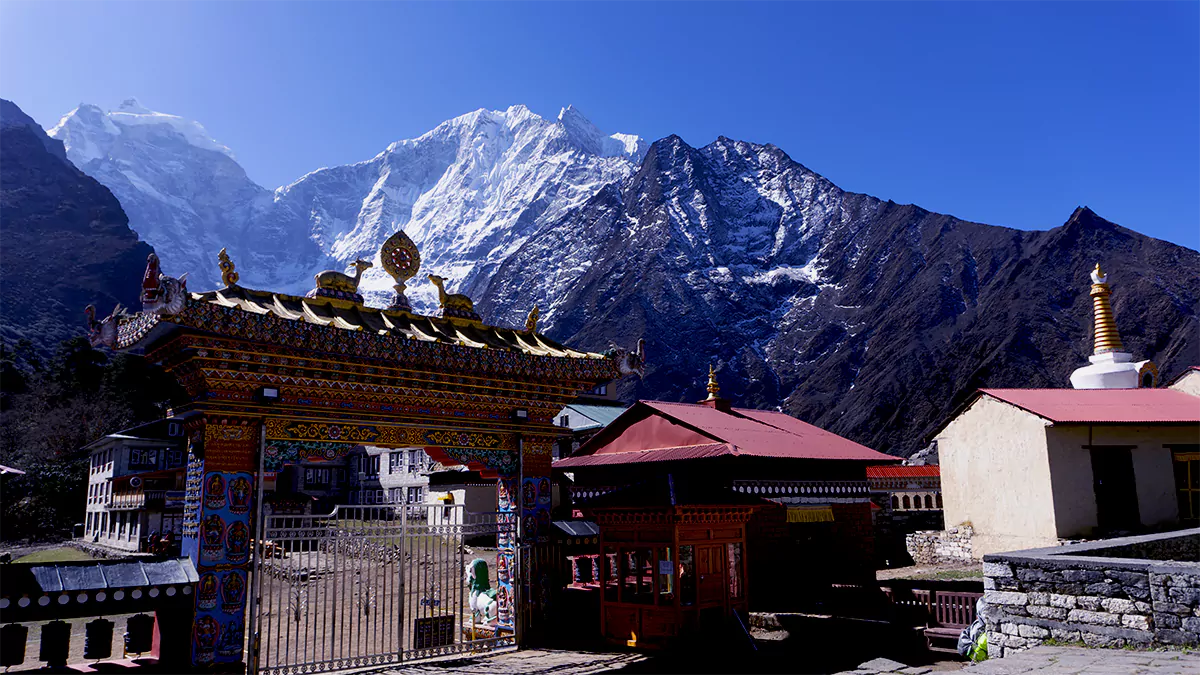
- Visit Tengboche Monastery, the largest monastery in the Khumbu region
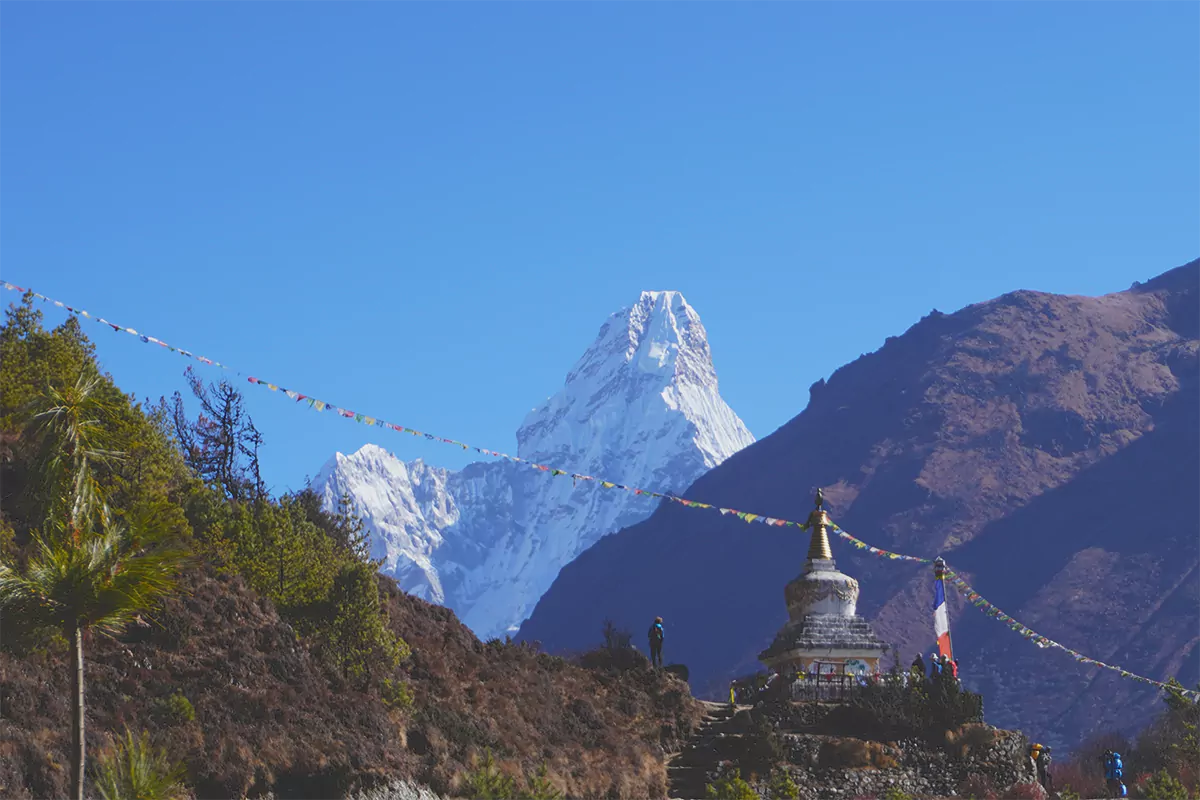
- Endless mountain views including famous peaks like Ama Dablam (6812 m), Lhotse (8516 m), Nuptse (7861 m), and Everest (8849 m)
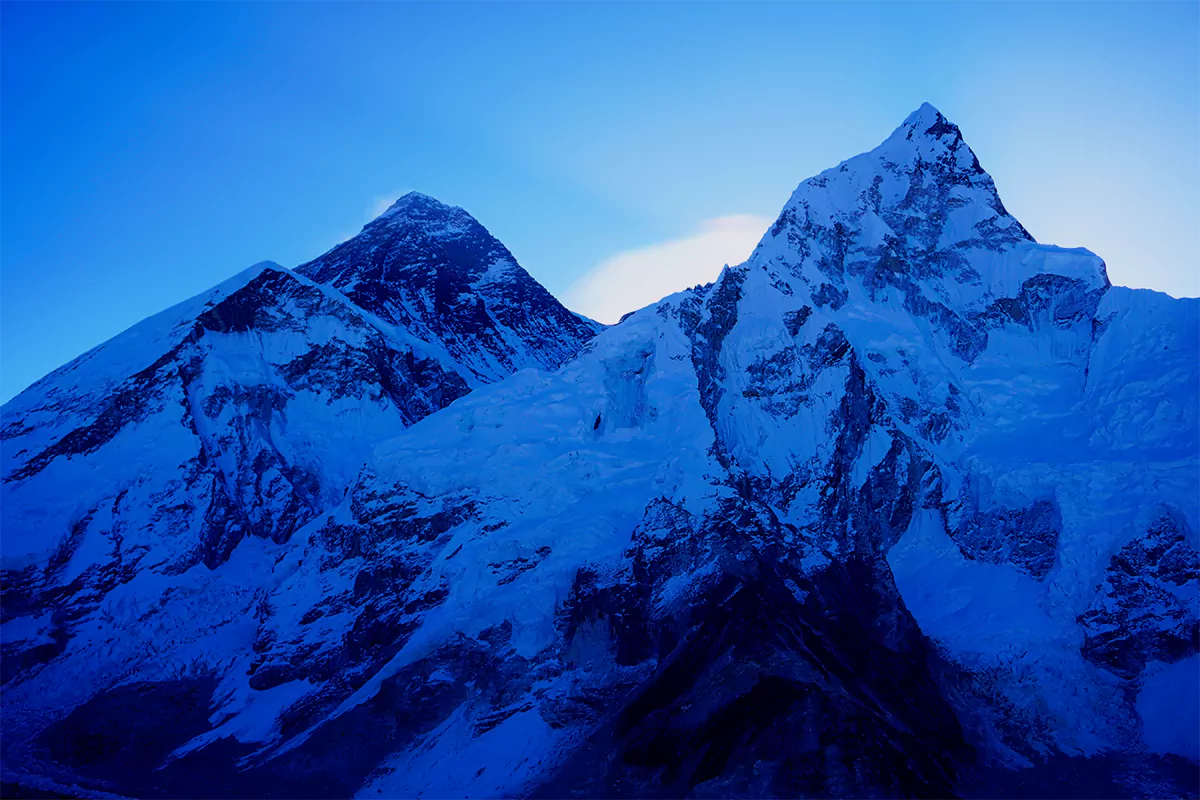
- Hike up to Kala Patthar for incredible sunrise or sunset views of Everest and surrounding snow-capped mountains
- Glimpse into the world of Sherpa culture and rural life in the Himalayan mountains
- Stop in Namche Bazaar, a unique trading hub with shops, cafes, and a long history of hosting trekkers
Why Trek With Himalayan Peace Treks?
We are a trusted, ethical trekking and tour company that facilitates incredible experiences in the Himalayas. You can feel good about choosing our company to guide you because of our genuinely excellent service and commitment to giving back to our communities and the environment.
Our ethical trekking approach means appropriate wages and working conditions for our wonderful team, community empowerment and support, and environmental consciousness. We are honest and thoughtful with our guests and everyone we do business with. We promise you transparency and enjoyment from start to finish and would be happy to customize your trip for you.
With decades of experience among the team, we want to share with you what we love about the Himalayas in the most peaceful way.
Everest Base Camp Daily Itinerary Summary
Pre-Trek Day 00: Arrival in Kathmandu (1345 m)
Pre-Trek Day 0: Final Day in Kathmandu
Trek Day 1: Fly to Lukla (2800 m), then trek to Phakding (2610 m) 8 km, 3-4 hours
Trek Day 2: Trek Phakding to Namche Bazaar (3440 m) 12 km, 6-7 hours
Trek Day 3: Acclimatization Day in Namche Bazaar. Hike to Everest View Hotel (3880 m) 3-5 km, 3-4 hours
Trek Day 4: Trek Namche Bazaar to Tengboche (3860 m) 10 km, 5-6 hours
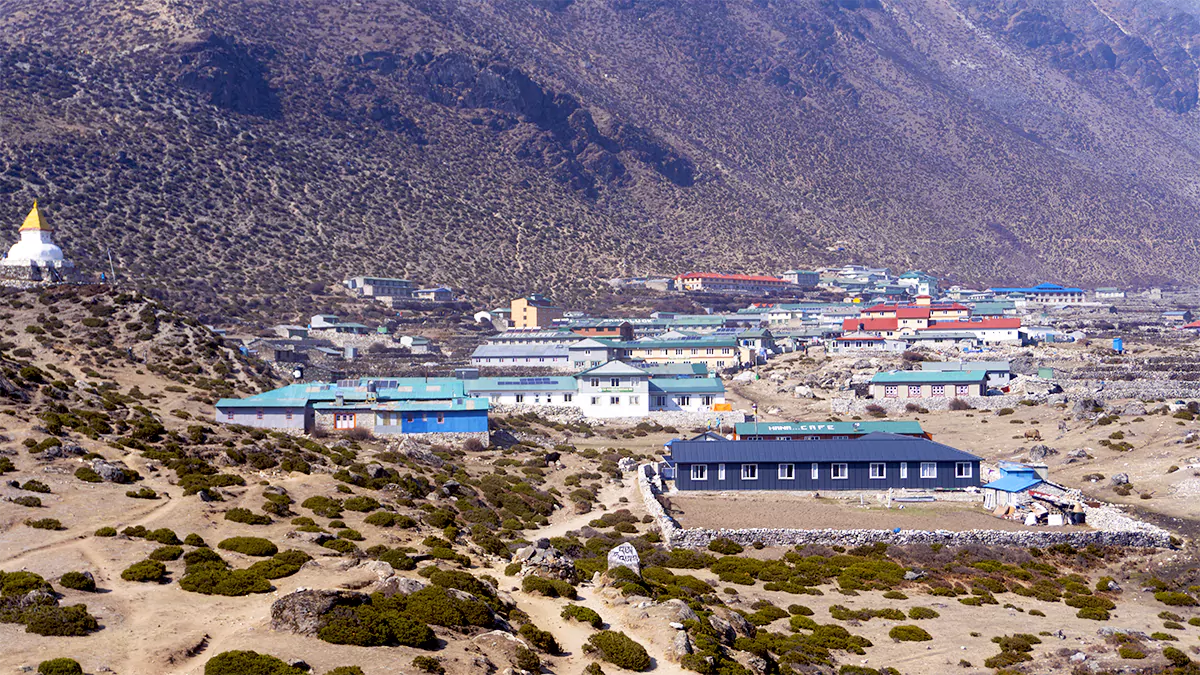
Trek Day 5: Trek Tengboche to Dingboche (4410 m) 9 km, 5-6 hours
Trek Day 6: Acclimatization Day in Dingboche. Hike to Nagarjun Hill (5100 m) 3-4 km, 3-4 hours
Trek Day 7: Trek Dingboche to Lobuche (4940 m) 10 km, 5-6 hrs
Trek Day 8: Trek Lobuche to Gorak Shep (5180 m), then hike to Everest Base Camp (5364 m), 11 km, 7-8 hrs
Trek Day 9: Hike Gorak Shep to Kala Patthar (5545 m), then trek to Pheriche ( 4280 m) 18 km, 5-6 hrs
Trek Day 10: Trek Pheriche to Namche (3440 m), 19 km, 7-8 hrs
Trek Day 11: Trek Namche Bazaar to Lukla (2800 m) 20 km, 6-7 hrs
Trek Day 12: Fly Lukla to Kathmandu (25 or 20 minutes flight)
Photo/Video Gallery
Itinerary of Everest Base Camp Trek
We are happy to work with you to adjust this itinerary to create a personalized experience.
*Times are estimated based on the average hiking pace and do not include breaks.
Day 00: Pre-Trek: Arrival in Kathmandu (1345 m)
Feel free to arrive today, or earlier, to enjoy Kathmandu Valley, rest, and prepare for your trek. You will be greeted at Tribhuvan International Airport in Kathmandu and provided with transportation to your pre-booked hotel in Thamel, the tourist hub of Kathmandu. Please let us know your flight itinerary so we can arrange your pick-up.

Distance: 7 km - Airport to Thamel

Overnight Altitude: 1345m./4,413ft. (Kathmandu)

Meal: n/a

Accommodation: Three Star Hotel
Day 0: Final Day in Kathmandu and Trekking Preparations
Today is the final day in Kathmandu for us to meet and obtain your required permits. We will brief you so that you feel fully prepared to commence on your trek. You have time today to explore Kathmandu and for any final trekking preparations.
We can arrange exploring in Kathmandu’s UNESCO World Heritage Sites like Swayambhunath (Monkey Temple) and Durbar Square, a Himalayan singing bowl session, and/or yoga class for your group. We would like to invite you for dinner this evening which is included in your package.
Distance: 0 km
Overnight Altitude: 1345m./4,413ft. (Kathmandu)
Meal: Breakfast at Hotel & Welcome Dinner
Accommodation: Three Star Hotel
Day 1: Fly to Lukla (2800 m), then trek to Phakding (2610 m) 3-4 hours
Your Everest trekking adventure begins with a short, picturesque flight over the Himalayas to Lukla. Then enjoy a gentle walk through forested trails alongside the Dudh Koshi River; the perfect way to ease into the trek.
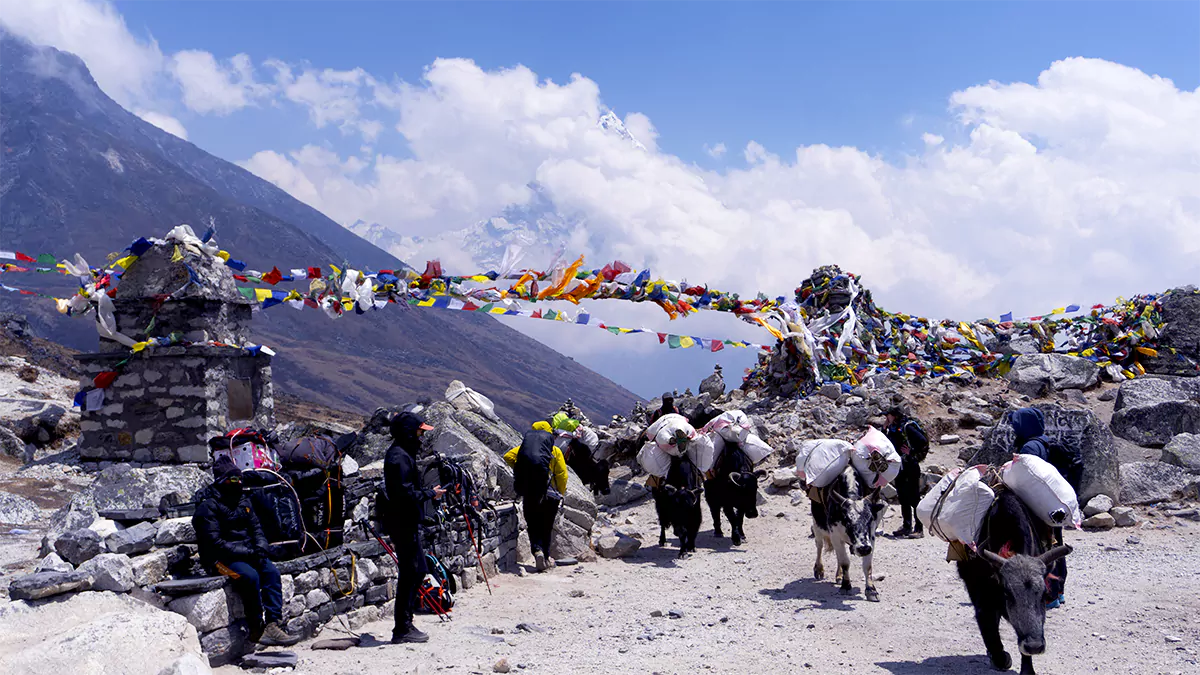
The trail descends slowly towards Phakding, passing several Sherpa villages and their various Buddhist relics including mani walls (stone walls carved with ancient prayers), stupas, and prayer flags.
Distance: 25 min Flight & 8 km
Overnight Altitude: 2610m./8,563ft. (Lukla)
Meal: Breakfast, Lunch & Dinner
Accommodation: Tea house
Day 2: Trek Phakding to Namche Bazaar (3440 m) 6-7 hours
Today’s route continues alongside the Dudh Koshi River, passing from one side of the river to the other via suspension bridges. The suspension bridges are uniquely beautiful, showcasing their strength as they hold the weight of mules and yaks carrying supplies in and out of Sagarmatha National Park.
As you cross, you can enjoy a different view of the river below and the surrounding valley. One famous bridge is the Hillary Bridge, named after Edmund Hillary, where thrill-seekers can bungee jump from.
The day continues through a rhododendron and pine forest that opens up to reveal rocky terrain. Enjoy the first exciting glimpses of Mount Everest as you make your way up to Namche Bazaar, a vibrant Sherpa trading hub and the gateway to Everest.
Distance: 12 km
Overnight Altitude: 3440m./11,286ft. (Namche Bazaar)
Meal: Breakfast, Lunch & Dinner
Accommodation: Tea house
Day 3: Acclimatization Day in Namche Bazaar. Rest Day or Hike to Everest View Hotel (3962 m) 3-4 hours
Namche Bazaar is a lively place in the middle of the Himalayas with lots to do and explore. It is recommended to hike up to the Everest View Hotel in the morning to help your body acclimatize and then rest or tour Namche Bazaar in the afternoon.
The short hike to Everest View Hotel (3880 m) goes through Syangboche village and features views of Mt. Everest, Lhotse, Ama Dablam, and other huge snow-capped mountains.
In the afternoon you can pop into one of the museums to learn about the local Sherpa culture and Everest expeditions, visit Khumjung Village and its monastery with a “Yeti scalp”, or leisurely stroll through Namche’s lively markets.
Distance: 0-7 km
Overnight Altitude: 3960m./12,992ft. (Namche Bazaar) Max. Altitude: 3880 m (Everest View Hotel)
Meal: Breakfast, Lunch & Dinner
Accommodation: Tea house
Day 4: Trek Namche Bazaar to Tengboche (3860 m) 5-6 hours
Today’s hike meanders through several small Sherpa villages and their surrounding terraced fields, and rhododendron and juniper forests. The trail has many gradual ups and downs with the potential to spot Himalayan wildlife including pheasants and musk deer.
After one final uphill push, you will arrive at Tengboche, home to the largest monastery in the region. You are welcome to visit Tengboche monastery, then enjoy the delicious local cuisine of the tea house where you will rest for the evening.
Distance: 10 km
Overnight Altitude: 3860m./12,664ft. (Tengboche)
Meal: Breakfast, Lunch & Dinner
Accommodation: Tea house
Day 5: Trek Tengboche to Dingboche (4410 m) 5-6 hours
After enjoying breakfast with a view, you head off for another exciting day on the trails. As you continue to gain in elevation, it is important to walk slowly and stay hydrated to help ward off altitude sickness.
At first, you are surrounded by a mix of birch, pine and rhododendron trees, then eventually break free of the treeline and enter into rugged alpine terrain.
Spectacular, up-close views of Ama Dablam (6812 m) await you, along with walking through Pangboche, the highest permanent Sherpa settlement. After another couple hours of walking, you will reach the picturesque mountain village of Dingboche, your home for the next two nights.
Distance: 9 km
Overnight Altitude: 4410m./14,469ft. (Dingboche)
Meal: Breakfast, Lunch & Dinner
Accommodation: Tea house
Day 6: Acclimatization Day in Dingboche. Rest Day or Hike to Nagarjun Hill (5100 m) 3-4 hours
Another important day on the Everest Base Camp Trek to help the body acclimatize to the reduced oxygen and changes in air pressure as you continue to gain elevation.
It is recommended that you hike slowly up to Nagarjun Hill for beautiful panoramic mountain views including the north face of Ama Dablam (6812 m) and Makalu (8485 m), the fifth highest mountain in the world.
The earlier you can rise the better for clearer, more crisp mountain views before the clouds roll in. Enjoy a hearty lunch and lots of rest in the afternoon to help your body rejuvenate and prepare for what’s to come.
If you are interested, you can learn about local farming practices with Sherpa people in the high-altitude fields or attend an informational movie screening in the village. A unique aspect of the village are the stone walls surrounding the fields that protect the crops against wildlife and the harsh mountainous climate.
Distance: 3-5 km
Overnight Altitude: 4411m./14,472ft. (Dingboche) Max. Altitude: 5100 m (Nagarjun Hill)
Meal: Breakfast, Lunch & Dinner
Accommodation: Tea house
Day 7: Trek Dingboche to Lobuche (4940 m) 5-6 hrs
The day begins with a gentle climb through the scarce alpine shrubbery and packed dirt. The vegetation here is incredibly delicate, so please try to stick to the paths, leaving as little of an impact as possible.
The surrounding mountains are truly spectacular, there is no doubt that you are deep within the Himalayas now. If the towering mountains weren’t enough to convince you, then the large plains, thinning air and your sluggish feeling body are more indicators of the high elevation, vastness of the region and how far you’ve come. The trail begins to steepen and your pace likely slows even more.
You pass the lateral moraine of the Khumbu Glacier as well as a stone memorial dedicated to mountaineers who have lost their lives while climbing in the surrounding area. Another hour or so and you reach Lobuche; simplistic in its build and remarkable in its location!
Distance: 10 km
Overnight Altitude: 4940m./16,207ft. (Lobuche)
Meal: Breakfast, Lunch & Dinner
Accommodation: Tea house
Day 8: Trek Lobuche to Gorak Shep (5180 m), then hike to Everest Base Camp (5364 m), 7-8 hrs
In the morning you trek to Gorak Shep, the last settlement before EBC and then continue on to EBC after lunch. The views are incredibly scenic and the trail itself is quite manageable.
Walking alongside the famous Khumbu Glacier be sure to take lots of breaks to catch your breath and appreciate the spectacular panoramic views. Arrive at Gorak Shep where you can leave your bags and grab a warm meal before you continue upwards towards your trekking goal.
After a couple hours of slow, scenic trekking along the rocky path, you arrive at Everest Base Camp (5364 m)!!! Take your time to celebrate your incredible achievement and feel the energy that is palpable here.
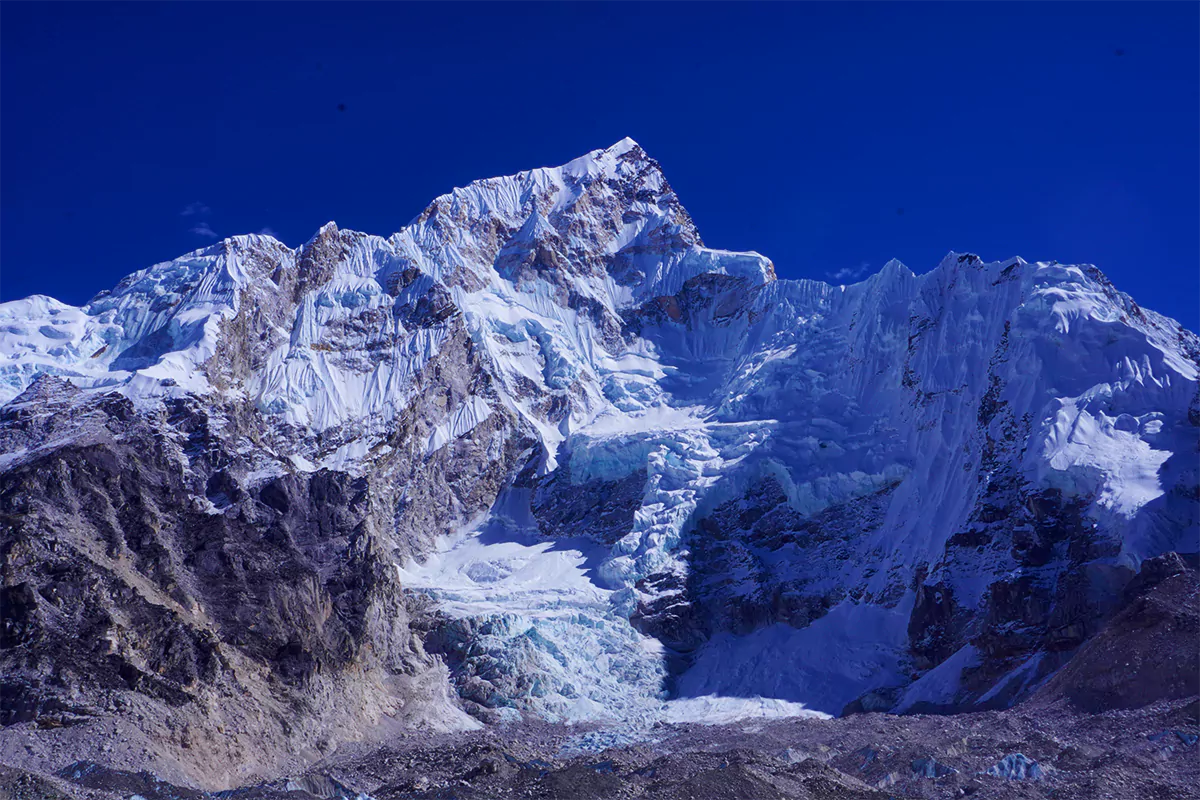
Although you can’t actually see the peak of Everest here, there are gorgeous views of the Khumbu Icefall and the up-close snow-capped peaks of Nuptse, Khumbutse, and Pumori.
Distance: 11 km
Overnight Altitude: 5180m./16,995ft. (Gorak Shep) Max. Altitude: 5364 m (Everest Base Camp)
Meal: Breakfast, Lunch & Dinner
Accommodation: Tea house
Day 9: Trek Gorak Shep to Kala Patthar (5545 m), then to Pheriche (4280 m) 5-6 hrs
Today begins with an early morning climb to Kala Patthar (5545 m) to watch the magic of the sun light up Everest (8849 m) and Nuptse (7861 m) with the vibrance of its morning rays. The views from Kala Patthar are unmatched and a highlight of the trek for many people.
After enjoying Mother Nature’s show, descend back to Gorak Shep for breakfast. Then, venture out once again into the rugged terrain of the remote Himalayas and descend carefully to Pheriche. Pheriche is a scenic village that is home to a simplistic hospital and surrounding fields.
Distance: 18 km
Overnight Altitude: 4280m./14,042ft. (Pheriche) Max. Altitude: 5545 m (Kala Patthar))
Meal: Breakfast, Lunch & Dinner
Accommodation: Tea house
Day 10: Trek Pheriche to Namche (3440 m), 7-8 hrs
There are still many mountain views awaiting you on today’s hike. It’s best to start early to give yourself plenty of time to meander through the lush forests and take your time on the memorable suspension bridges.
The trail itself flows up and down, eventually descending back to Namche Bazaar for another night in the bustling hub of the Khumbu region.
Distance: 19 km
Overnight Altitude: 3440m./11,286ft. (Namche)
Meal: Breakfast, Lunch & Dinner
Accommodation: Tea house
Day 11: Trek Namche Bazaar to Lukla (2800 m) 6-7 hrs
Today is the last day of trekking in the Everest region of Nepal. As you descend, perhaps you see the previously walked route from a new perspective and spend the time reflecting on the incredible journey that brought you here. Arrive in Lukla, celebrate your successes, and enjoy your final evening in the mountains.
Distance: 20 km
Overnight Altitude: 2800m./9,186ft. (Lukla)
Meal: Breakfast, Lunch & Dinner
Accommodation: Tea house
Day 12: Fly from Lukla to Kathmandu (25 minutes flight)
On a clear day, you catch a morning flight back to Kathmandu. If you arrive in Kathmandu you will have a short drive to your hotel. Celebrate your completion of the Everest Three Pass Trek in the bustling city and take some well-deserved rest. Thank you for choosing Himalayan Peace Treks to guide you on your memorable trek.
Distance: 25 min Flight
Overnight Altitude: 1345m./4,413ft. (Kathmandu)
Meal: Breakfast
Accommodation: none (can be arranged upon request)
Includes/Excludes
What is included?
- Airport pick-up and drop-off
- Welcome dinner in Kathmandu
- Two nights accommodation in Kathmandu with breakfast included
- Standard itinerary includes two nights upon arrival
- We can include additional nights, arrange for one night pre-trek and one night post-trek or upgrade to a high-end hotel depending on your schedule and preference
- Luggage storage at you hotel in Kathmandu
- All necessary trekking permits
- Khumbu Pasang Lhamu Rural Municipality Entrance Fee
- Sagarmatha National Park Permit
- Round-trip flights from Kathmandu to Lukla
- All accommodation while trekking
- Three meals a day (unless otherwise listed), with a tea or coffee at each meal
- Daily fresh fruit whenever available
- Trekking map
- One experienced and professional local guide who speaks English
- Guide fees include their insurance, livable wages, transportation, food and accommodation
- Assistant guides might be added with larger groups
- First-aid kit carried by guide
- If needed, our team will arrange an emergency rescue with your insurance company
- Company fees, administration fees, and government tax (VAT)
- Minimum 1% of profits donated to schools and orphanages in Nepal
- A tree planted in your name
What is not included?
- International flights and tourist visa upon arrival
- Personal sightseeing costs and meals in Kathmandu (eg. temples, monastery entrance fees, souvenirs, lunches, etc.)
- Temple and monastery entrance fees during the trek
- Extra costs while trekking for things like snacks, fancy coffees, hot showers, laundry, battery charging fees, wifi fees, monastery fees, donations, etc.
- Local porters to carry the items for your trek
- Porter fees include insurance, livable wages, transportation, food, accommodation and an optional duffle bag to carry your items
- The number of porters and price depends on the number of trekkers: one porter carries the items for two people (maximum 20 kg)
- Drinking water (you need to have a water filtration system or plan to buy boiled water)
- Sleeping bag and puffy jacket rentals are available in Kathmandu and Pokhara if needed
- Personal insurance, personal expenses, loss of property and theft, etc.
- Staff tips
- Many trekking guides and porters in Nepal receive an extremely low wage and need to rely fully on their tips to supplement these low wages. With Himalayan Peace Treks, you will be able to trek knowing that the team is being paid fairly and that any tip you want to give is a reflection of your experience
US$ 1333
Standard trek price (per person)
-
1 person
US$ 1776
-
2 -
2 people
US$ 1527
-
3 -
4 people
US$ 1444
-
5 -
6 people
US$ 1377
-
7 -
8 people
US$ 1349
-
9 + people
9999
US$ 1333
Total Cost:
US$ 1776
Trip Information
Important Lukla Flight Information
In order to access your incredible Everest Base Camp Trek, you need to take a short (and beautifully scenic!) flight to Lukla. The 25 minute flights operate between Kathmandu and Lukla year-round and from Ramechhap airport (which is 4 hours from Kathmandu) during peak season. Be prepared to fly from either Kathmandu or Ramechhap depending on the season and availability. If flying out of Ramechhap, you might need to leave Kathmandu in the wee hours of the morning in order to catch an early morning flight. Your jeep cost to Ramechhap is included in your trek package.
Please note that flights to and from Lukla are extremely unpredictable and often cancelled because they can only operate during clear weather. Any dense clouds (which are common in the mountains) means that the planes can’t fly. Take extra care when booking your continued travel and leave lots of buffer days at the end of your trip in case you are delayed. Any extra days due to flight cancellations will be charged in addition to your initial trek package cost.
Everest Base Camp Difficulty
Trekking to Everest Base Camp is a moderately challenging and deeply rewarding journey. The challenge for most people comes from the duration (12 days) and high elevation. No mountaineering, climbing or scrambling are required to complete the trek. To help make things easier, the trails are very well maintained, the tea houses are quite comfortable and daily walking time averages ~6 hours a day.
In addition to the high elevation day hikes to EBC at 5364 m and Kala Patthar at 5545 m, five nights are spent sleeping over 4000 m above sea level. To help adjust to the high altitude, the EBC Trek itinerary is designed to ascend slowly and includes two acclimatization days. It is incredibly important to walk slowly and manage your health. With proper training in advance and potentially hiring a porter, the EBC Trek is absolutely doable. It is even an option for beginner trekkers and those who have never spent time at high altitude.
Respecting Culture and Religion on the Everest Base Camp Trek
The EBC trek is rich in Sherpa culture and Tibetan-Buddhist practices. Prayer flags, mani walls, stupas, and monasteries add spiritual significance during your adventure. Be mindful of the local norms in which modesty is the standard. Openly changing in front of people and urinating in public spaces is not common. Please consider the culture when selecting what clothing to bring and keep public displays of affection to a modest minimum.
If you would like to enter temples, monasteries and sacred places, your knees and shoulders need to be covered and shoes removed. Only enter homes and kitchens when invited, and ask for permission to take photos of local people and their homes (a good practice anywhere!). The right hand is considered sacred, so pass religious structures with your right side facing them (walking clockwise). Only use your right hand for spinning prayer wheels, eating, and handing items, such as currency, to someone.
Major Elevation Points on The Everest Base Camp Trek
- Nagarjun Hill: 5100 m
- Kala Patthar: 5545 m
- Everest Base Camp: 5364 m
- Starting Elevation: 2800 m in Lukla
- Finishing Elevation: 2800 m in Lukla
Everest Base Camp Trek Packing List
We have put together an incredible packing list for your EBC Trek. It is extremely thorough and in some cases might be too much, so please use your own judgement when packing. Most people overpack for their first trek, so keep that in mind while gathering items. Porters can carry a maximum of 20kg, which is 10kg per person. We have created a detailed packing list with explanations and here is a condensed PDF packing checklist.
Everest Base Camp Trek Weather
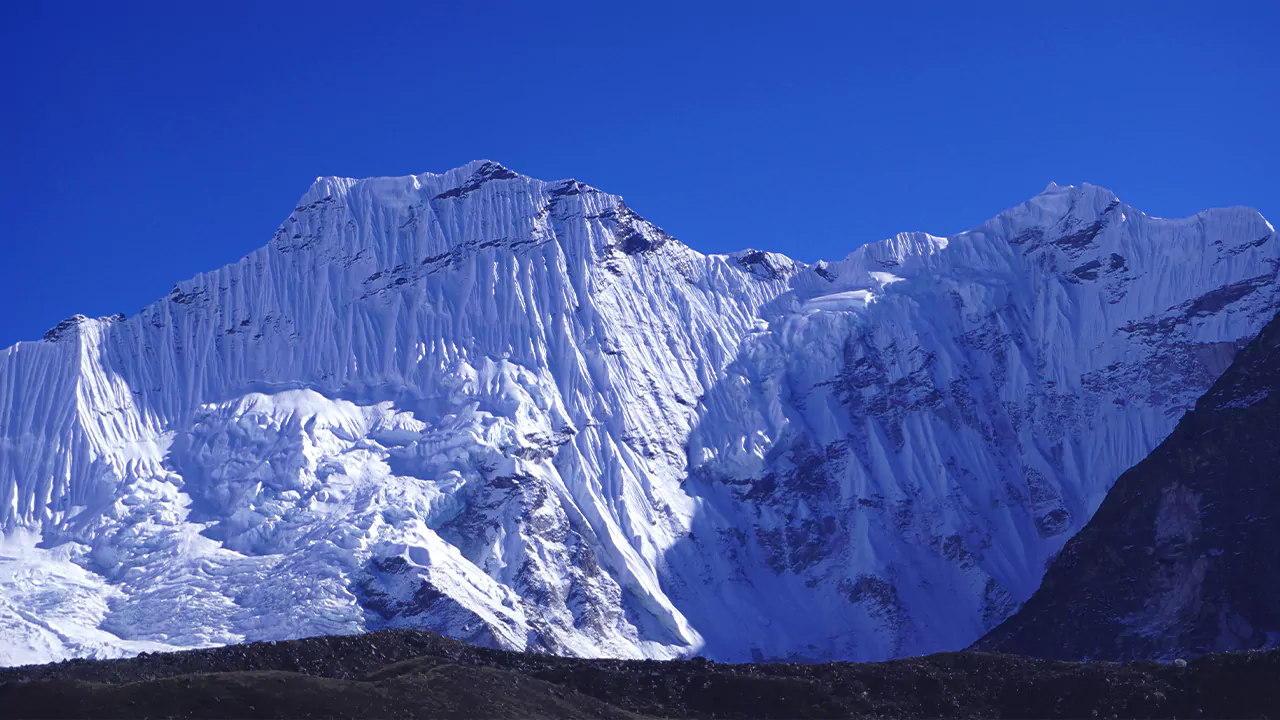
If your trek is during spring or autumn, the peak trekking seasons, then you are more likely to get clearer skies, minimal precipitation, and warmer temperatures. At lower elevation, you might be surprised to know that the day time can be quite hot so be prepared with proper sun protection and breathable clothing. At night time and as you gain elevation, it can get quite chilly, so you’ll need lots of warm layers and a good sleeping bag.
If you are trekking closer to winter (December to mid-February), then you are likely to get clear but cold weather. If you are trekking close to monsoon season (mid-May to mid-September) then you can expect to get wet! In the Himalayas, regardless of the time of year, the mornings are generally clearer and the clouds start to roll in after midday. This is what impacts the flights in and out of Lukla.
Everest Base Camp Trekking Accommodation
For the entire EBC Trek you will be staying in tea houses. Tea houses are simplistic lodges with a dining hall that serves breakfast, lunch, and dinner (and of course, TEA! which is “chiya” in Nepali language), and guest rooms to stay overnight. At lower elevation you will be more likely to find nicer tea houses with amenities such as hot showers, attached bathrooms and electricity in the rooms. As you trek to higher elevation, be prepared for fewer amenities and shared bathrooms.
The dining halls are often heated by a delightful wood stove, but there is no heating in the guest rooms so a good sleeping bag is required to keep you cozy and warm.
Because the trek to Everest Base Camp is quite an established route, there is more of a range of accommodation available. Our standard package includes simplistic rooms, however, you can upgrade to a higher-end experience with rooms that include extra amenities such as electricity, heated blankets and attached bathrooms where available.
Food on the Everest Base Camp Trek
Considering that you are trekking in the Himalayas the food is pretty sensational! Each tea house has a menu to choose from including local and international dishes. In more established villages, like Namche Bazaar, you can find unique little pubs, bakeries and coffee shops. The food gets more basic as you gain elevation.
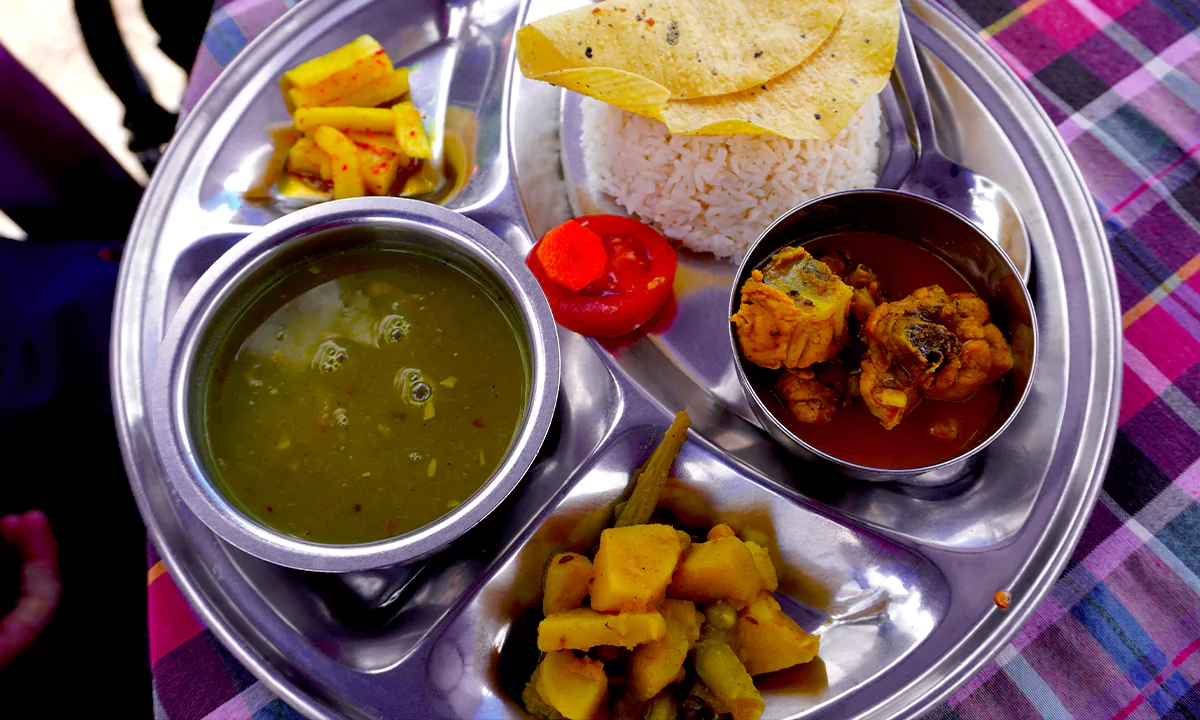
The most recommended local food to try is Nepal’s national dish, dal bhat. Dal bhat is lentil soup (dal) and a hearty portion of rice (bhat), traditionally served with curry, sautéed greens, and maybe some fresh cut vegetables, a spicy sauce or local yogurt. It’s always made fresh and has unlimited refills to help refuel after a long day of trekking. Another delicacy to add to your must-try list are momo, which are well-loved local dumplings.
You can expect to see other dishes including pasta, burgers, fried noodles and soup for lunch and dinner. For breakfast there are western items such as pancakes, eggs and oatmeal/porridge. Common food requirements such as allergy restrictions, vegetarian, vegan, and gluten-free can be easily accommodated for, but some cross-contamination is possible.
Required Permits for the Everest Base Camp Trek
When you book your adventure with Himalayan Peace Treks, we will obtain all necessary permits on your behalf. All permit fees are include in your package.
Once you arrive in Lukla, we require your passport to enter Sagarmatha National Park and commence on your trek. The required trekking permits include:
- Sagarmatha National Park Entry Permit
This permit is required to enter the Sagarmatha (Everest) National Park, which is a UNESCO World Heritage Site. The permit costs NPR 3,000 for foreign Nationals and NPR 1500 for SAARC Nationals. This permit can be obtained at the Nepal Tourism office in Kathmandu or at the entry checkpoint in Lukla or Manjo.
- Khumbu Pasang Lhamu Rural Municipality Entry Permit
To trek in the Khumbu (Everest) region you also need a permit from Khumbu Pasang Lhamu Rural Municipality. Your guide will get this permit directly at the entry point in Lukla or Manjo and it costs NPR 3000 for any Nationals.
Frequently Asked Questions
Trekking the Manaslu Circuit is best in the spring and autumn seasons. The spring season is typically from the mid-February to the beginning of May and the autumn season starts mid-September and continues through to mid-November. Some guests are interested in coming at quieter times, or have schedule restrictions, and choose to come at the beginning or end of a season and manage the weather conditions.
Technically, no, however it is highly recommended for better safety and enjoyment. Guides and trekking companies organize all of the trek details for you including arranging transportation, obtaining permits, and booking tea houses. Guides also offer local knowledge about the culture and language, as well as the surrounding flora, fauna and mountains. Your guide will help you set the pace, assess risks and manage emergency situations.
A porter is not necessary, but recommended for your Everest Base Camp Trek. If you have lots of experience trekking at high altitude and are feeling physically and mentally confident, then you will likely be just fine. Porters are recommended for anyone who is new to trekking at high altitude, is nervous about the terrain, or is seeking more enjoyment instead of an intense challenge.
Hiring a porter is a lovely way to support the local economy and have another staff member present in case of emergency.
Altitude sickness, which occurs as a result of spending time at high elevation, can happen any time you’re above 2500 m. It is a result of gaining altitude too quickly and not allowing time for the body to adjust to the reduced oxygen and air pressure changes. Symptoms can include anything from headache, loss of appetite, dizziness, vomiting and difficulty sleeping to more severe symptoms such as fluid in the lungs, irrational behaviour, breathlessness, blue skin, and an inability to walk.
Surprisingly, altitude sickness can happen to anyone, even if they’re young, fit, and have been at high altitude before. It is important to do everything possible to prevent altitude sickness and not ignore symptoms if they arise.
The best way to prevent altitude sickness is to ascend slowly. This means physically walking slowly, as well as limiting how much elevation you gain in a short period of time and stretching your trek out over many days. To further help the body acclimatize to the elevation gain, it’s a good idea to hike up to a higher point than you plan to sleep. You can also include rest days, often referred to as “acclimatization days” in which you spend two nights at the same elevation, hiking up to a higher point during the day.
The Everest Base Camp Trek itinerary suggested by Himalayan Peace Treks already has the above ways to help prevent altitude sickness factored in. If it’s your first time at elevation or you have time to spare, then we can adjust your itinerary to include more acclimatization days and an even slower ascent. Altitude sickness medication is best used as a treatment instead of a prevention. You can consult your doctor if you have any specific questions.
DO: ascend slowly, drink lots of water, monitor your symptoms, and trek with an experienced guide
DON’T: push through severe symptoms, heavily consume alcohol, caffeinated drinks, or smoke cigarettes, take sleeping pills, or ascend too quickly
Remarkably, considering your location in the Himalayas, there is electricity at most tea houses along the trek. Very few have charging outlets in guest rooms, but you can charge your devices in the main dining hall. Some tea houses charge a small additional fee for charging. More luxury tea houses have electricity in the rooms. Be prepared that the electricity is unpredictable and could cut out at any time. Many trekkers choose to carry a rechargeable power bank.
Yes, there is wifi accessible while trekking. Although we suggest that you use the opportunity to disconnect, many tea houses have wifi so you can still let your loved ones know that you are having the time of your life. Many tea houses charge a small fee to access the wifi for your stay, or it’s included in more luxury spots. Similarly to the electricity, the wifi can be extremely unpredictable and unreliable so we don’t recommend that you plan to rely on it for anything important.
Transportation to the trailhead is via flights into Lukla. The 25 minute scenic mountain flight goes either from Kathmandu or Ramechhap (which is 4 hours from Kathmandu). Be prepared to fly from either Kathmandu or Ramechhap depending on the season and availability. If flying out of Ramechhap, you might need to leave Kathmandu as early as 2am to catch your early morning flight.
Flights to and from Lukla are extremely unpredictable and often cancelled because they can only operate during clear weather. Any dense clouds (which are common in the mountains) means that the planes can’t fly. Take extra care when booking your continued travel and leave lots of buffer days at the end of your trip in case you are delayed.
The total walking distance on the EBC Trek is approximately 130 km. This number could vary slightly depending on the day tours or side hikes that you choose to do. Each day you can expect to walk an average of 10-15 km.
Yes, a tourist visa can be obtained at the airport when you arrive.
Options include a 15 day visa for $30, a 30 day visa for $50, and a 90 day visa for $125. You can pay the USD equivalent in any major currency. Although credit cards are accepted, cash is recommended. If needed, you can extend your tourist visa at the Department of Immigration in Kathmandu or Immigration Office in Pokhara. The extension cost is a minimum of $45 for up to 15 days and then an additional $3 per day. You can find more information about arrival here.
Yes, obtaining good medical travel insurance before you come to Nepal is necessary to trek safely and worry-free. Ensure that whatever insurance you get covers high altitude activities. You can send your insurance information to Himalayan Peace Treks so we can coordinate your safe return if there are any unlikely emergencies.
To pay for your trek you can bring any major currency ($€£¥). For spending money in Kathmandu and on your trek, you’ll need local Nepali Rupees (NPR) as Nepal mostly deals in cash. You can exchange or withdraw local rupees in Kathmandu.
Once you venture into the mountains there are no reliable ATMs, so any cash you might need for the entirety of the trek (for snacks, souvenirs, gear replacement, etc.) needs to have been already obtained beforehand.
To pay your initial 15% deposit, you can pay directly on our website with a credit card, send a money transfer (eg. Wise) or send an international bank transfer. To pay for the remainder of your trek once you have arrived in Kathmandu, you can pay by cash (in any major currency). Any fees associated with a transfer or payment are your responsibility. All prices are listed in USD.
Here you can read more about the trekking cost breakdown, our terms & conditions, and booking & paying.
Trip Reviews
 View All Reviews
 View All Reviews
US$ 1333
Total Cost:
US$ 1776
Have Questions?
Talk to our expert team and plan your trip.


 18 Days
  Challenging