We want to let you in on what happens behind-the-scenes and how we make the magic happen when you book with Himalayan Peace Treks.
The cost of your trek and how it is allocated is widely dependent upon where you choose to trek, for how many days, the number of people in your group, and what add-ons you would like to include.
We promise to never compromise on the wages we pay our incredible guides and porters. Thank you for supporting our efforts to do business ethically in this way.
As mentioned, many factors impact the trekking cost breakdown. For example, trekking to Everest Base Camp means that a bigger portion of the trek cost goes towards transportation (flights in and out of Lukla). Or let’s say that you are trekking into a restricted area such as on the Manaslu Circuit Trek or the Nar Phu Valley Yoga Trek, then you’ll be spending more money on special permits. Some regions such as the Everest and Annapurna regions are more expensive in general for both the guides and guests.
How many people there are in your trekking group also affects your trekking cost breakdown because some costs, such as staff fees, can be split amongst the group. Some items are cheaper with a group or more expensive with a group; it all depends. An example of this is transportation costs. Picture this, there’s a group of four people and everyone fits into one car and the price is split four ways. Add one more person and now an additional vehicle or larger vehicle is required and it becomes more expensive.
There are many add-ons you might choose to include with your trek such as hiring a yoga teacher, taking private transportation, extending your trek or taking a tour such as a Kathmandu City Tour.
When you add something extra, for example flights to Pokhara or luxury accommodation, then we will subtract the original cost of your basic transportation or accommodation from the cost of your add-on. We feel that this is fair.
If we can help you at all by clarifying any aspects of the trekking cost breakdown or answering any questions, then we would be happy to do so. Just give us a shout.
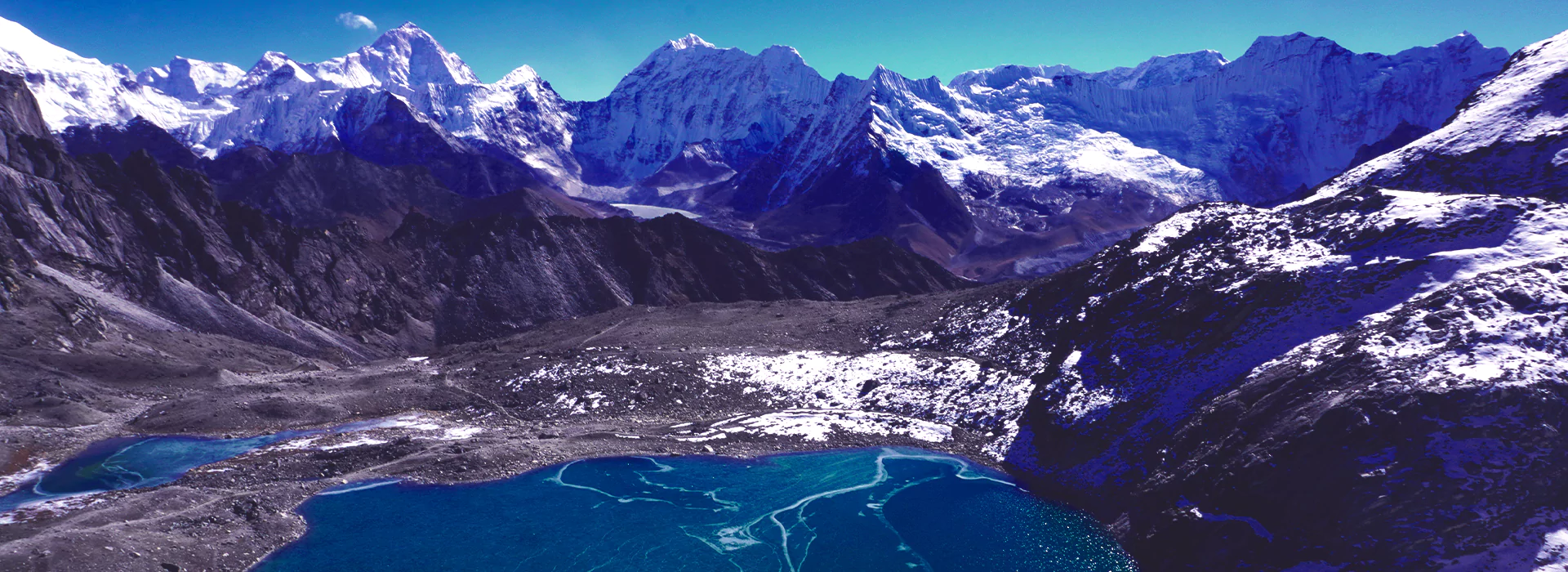
View from Kongma La Pass on the Everest Three Passes Trek
Trekking Cost Breakdown
The range of cost percentages that you see below were calculated based on the scenario of two people trekking with one guide and one porter to three very different treks: Everest Base Camp, Mardi Himal, and the Manaslu Circuit Trek.
Kathmandu and/or Pokhara
Welcome Dinner & Accommodation 3-8%
We love hosting our guests for a welcome dinner before they venture off! The dinner is, of course, optional and can be missed or re-scheduled based on your travel plans
Be sure to check your trek package to see how many nights are included in Kathmandu and Pokhara and let us know if you would like us to arrange more accommodation anywhere in Nepal
Guest Fees on Trek
Permits 3.5%-11.5%
Depending on the region, most permits range in price from US$24-$155. Restricted regions such as the Manaslu Conservation Area and Nar Phu Restricted Area require special permits in order to enter for trekking. The longer you stay in the area, the more expensive the permit. An outlier is the Mustang Restricted Area, which is US$500 for ten days of trekking plus US$50 per additional day!
Transportation 4.5-28%
Some treks, such as the Langtang Valley Trek and the Tamang Heritage Trek in the Langtang region, are easily accessible by public transportation. Other treks, such as the Annapurna Circuit Trek, require shared or private Jeeps. If trekking into the Everest region, you will need to take flights in and out of Lukla.
Airport pick-up and drop-off is also included in your trek package. If your flight is extremely delayed and your driver is waiting for a long time, perhaps you might consider a small, optional tip of a couple hundred rupees
Food & Accommodation 25-34%
For most treks, tea house prices are lower while at lower elevation, and steadily increase as you gain elevation and leave road access behind. Don’t forget to look around you while trekking and remember that everything needs to be carried in or flown in by helicopter – incredible!
We charge an average daily price for food and accommodation which evens out as the prices change throughout the trek
Food costs while trekking include three meals per day with a simple tea or coffee: anything extra or fancy is your responsibility
Our Team
Guides, Assistant Guides and Porters Fees 21-30%
This includes staff insurance, accommodation, food, transportation and wages
We are proud to pay our incredible team fair wages!
Tips from guests are not a necessity, however, within a tipping industry they are greatly appreciated by staff to acknowledge excellent service
Our Company
Operational Fees, Management and Profit 16%
First, this is allocated to website fees, service fees, and other company expenses such as purchasing duffle bags, maps, signage, etc.
Then we pay our owners who are also operational managers
We donate at least 1% of our profits to our philanthropic endeavors including, an orphanage in Kathmandu, two schools in a remote village, and labour fees for planting trees
Our dream is to take land that would have otherwise been left behind and revitalize it with a biodiverse forest
$3 from each guest goes towards planting a tree in their name. The $3 purchases the tree and then we pay for the labour to plant and maintain them
We plant a group of trees during the monsoon season (June-August) every year based on the previous year’s guests
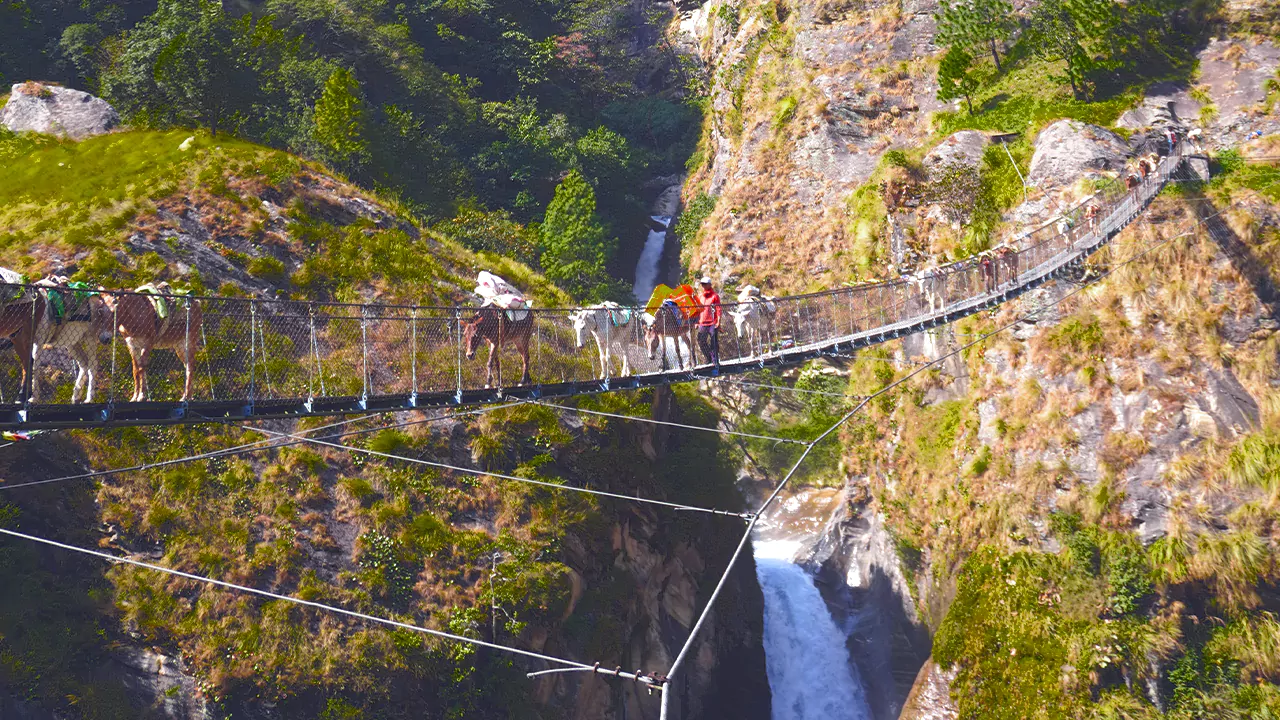
Mules crossing over one of many suspension bridges along the Manaslu Circuit Trek
Our Prices Compared to Other Companies
You might be wondering why our prices are a little higher than other companies. It’s a good question with a good answer. We are not a budget company! We are committed to paying our staff livable wages, not cutting corners and giving our guests incredible, personalized experiences.
Example of What is Included in a Trek Package with Himalayan Peace Treks
This list is based off of a standard trek package for our Everest Base Camp Trek
What is Included:
Airport pick-up and drop-off
Welcome dinner in Kathmandu
Two nights accommodation in Kathmandu with breakfast included
Standard itinerary includes two nights upon arrival
We can include additional nights or arrange for one night pre-trek and one night post-trek depending on your schedule and preference
Luggage storage at you hotel in Kathmandu
All necessary trekking permits
Khumbu Pasang Lhamu Rural Municipality Entrance Fee and Sagarmatha National Park Permit
Return flights from Kathmandu to Lukla
All accommodation while trekking
Three meals a day (unless otherwise listed), with a tea or coffee at each meal
Daily fresh fruit whenever available
Trekking map if you would like
First-aid kit carried by guide
One experienced and professional local guide who speaks English
Guide fees include their insurance, livable wages, transportation, food and accommodation
Assistant guides might be added with larger groups
If needed, our team will arrange an emergency rescue with your insurance company
Company fees, administration fees, and government tax (VAT)
Minimum 1% of profits donated to schools and orphanages in Nepal
A tree planted in your name
What is Not Included:
International flights to and from Nepal
Tourist visa to enter Nepal (can obtain on arrival at the airport)
Any personal sightseeing costs and meals in Kathmandu
Temples, monastery entrance fees, souvenirs, lunches, etc.
Any extra costs while trekking
Snacks, fancy coffees, hot showers, laundry, battery charging, wifi at some tea houses, monastery fees, donations, etc.
Local porters to carry the items for your trek
Porter fees include their insurance, livable wages, transportation, food, accommodation and a duffle bag, if needed, to carry your items
The number of porters depends on the number of trekkers: one porter carries the items for two people (maximum 20 kg)
Drinking water
You need to have your own water filtration system or plan to buy boiled water
Sleeping bag and puffy jacket rentals are available in Kathmandu and Pokhara if needed
Personal insurance, personal expenses, loss of property and theft, etc.
You need medical travel insurance that covers trekking to over 5000 m elevation, then send the information to us please
Staff tips
Many trekking guides and porters in Nepal rely on tips to supplement a lower wage. With Himalayan Peace Treks, you will be able to travel knowing that the team is being paid fairly and that any tip you want to give is a reflection of your experience
What is the 15% Deposit For and Why is it Non-Refundable?
We request a 15% deposit to confirm your booking before you arrive. There are many reasons for this deposit, and for the fact that it is non-refundable.
Firstly, there are some things that might need to be paid for before you have paid for your trek including things like flight tickets, permits, and your airport pick-up.
Secondly, there are expenses that we might have incurred that we cannot get a refund for and so we can’t offer that refund to you (otherwise, we would!). For example, some hotels have a cancellation fee during peak season, and permits and bus tickets are non-refundable.
And finally, we pour so much time and energy into making your journey an incredible one from start to finish and the deposit acknowledges that time, which of course, we can’t get back even if you cancel.
Although the deposit is non-refundable, it doesn’t expire! You can read more about some of the cancellation “What Ifs” on our Terms & Conditions page.