Email us
[email protected]


Email us
[email protected]

Trip booking for 2025 and 2026 is open, you can book any trip from our website.

This is a detailed guide for travellers who are coming to Nepal to trek and want to do so with environmental consciousness.
Nepal is an incredible place that is rich with cultural heritage and natural landscapes, including the tallest mountains in the world. Many travellers choose to venture to Nepal to experience the magic of the Himalayas by foot.
You might be wondering, “Is it sustainable to trek in Nepal?” The answer is YES! Trekking in Nepal is an excellent option for the sustainable, eco-conscious traveller if done thoughtfully.
The nature of trekking itself has quite a low environmental impact. Although it might be a longer journey to get to Nepal, once trekking, you will be spending days and in some cases weeks without any motorized vehicles, unplugging from devices and big electricity usage (many tea houses operate with solar panel power or have no electricity at all), and eating mostly vegetarian. It is important to know what to do so that you can have as little of an impact as possible while trekking.
While venturing into the depths of the Himalayas, you are leaving behind modern filtration systems and proper garbage disposal so extra care and consideration is required when preparing for and journeying along your trek. There are many ways that you can tread more lightly and help to preserve the delicate habitats and landscapes of the beautiful Nepali mountains. This is a guide that has been put together by Himalayan Peace Treks, an ethical trekking company, here to help you with trekking sustainably in Nepal.
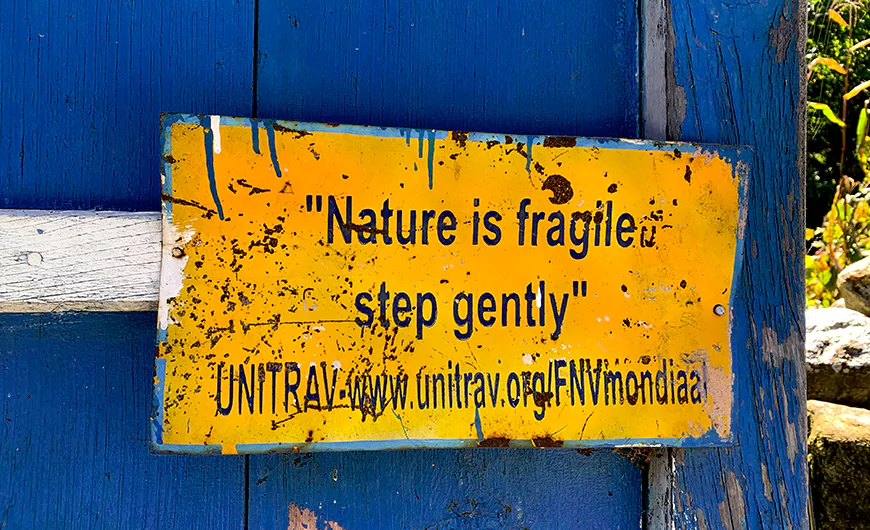
Trekking sustainably in Nepal starts at home with what you choose to bring along. We highly recommend seeking out biodegradable and natural items wherever possible for products such as toothpaste, soap and laundry detergent. While trekking, these products end up going directly into the ground or rivers.
It is also important to consider beforehand what you will do for drinking water along the way. You need to bring your own personalized water filtration system or plan to purchase boiled water instead of relying on buying plastic water bottles (aren’t we done with single-use bottles yet?!).
Be mindful of the amount of packaging and plastic you bring because garbage in the mountains is burned, buried or ends up in the river with no system for recycling. Many eco-conscious trekkers choose to carry out what they carry in when it comes to packaging, wrappers and garbage.
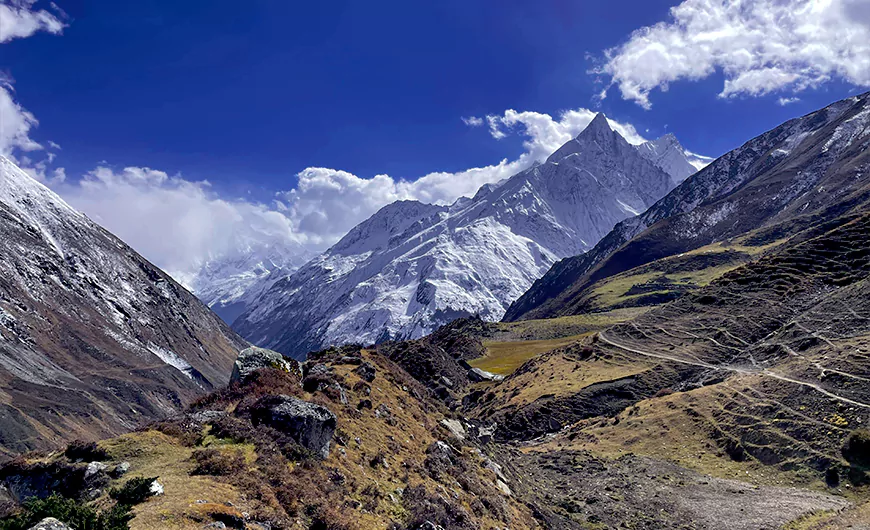
It is incredibly important for environmental protection (and your own safety) to follow your guide and stick to the established trails while trekking sustainably in Nepal. Wandering off the trails can lead to soil erosion and destruction of sensitive vegetation. Even in a wide open field or meadow, try to stay on the main trail you see. Avoid taking shortcuts even after a looooooong day. There are many delicate plants that can be destroyed by being stepped on so be extremely mindful of where you’re stepping.
Nepali locals use only water when using the toilet so there is no reliable system for handling the toilet paper that most tourists are accustomed to using. When trekking, you need to bring your own toilet paper with you. Perhaps you might try to do as the locals do and cleanse yourself with water!
If this is slightly too adventurous, then please simply be mindful of the amount of toilet paper that you are using. Many tourists take a ‘hybrid approach’ in which they wash with water and then dry with toilet paper after. In addition to toilet paper, many trekkers have success with bringing a reusable pee cloth. It is specifically designed to be used after peeing, washed and then hung on your backpack to dry. You can also use it to dry yourself after using water.
Try as best you can to relieve yourself in designated toilets and not along the trails. If you can’t hold it and there’s no bathroom nearby, then be sure to go far away from any water sources.
TAKE NOTHING BUT PHOTOS
LEAVE NOTHING BUT FOOTPRINTS
In order to trek sustainably in Nepal you can make conscious eating choices along the way. Many eco-friendly habits are the same whether you’re at home, trekking or travelling anywhere in the world, such as buying local, choosing packaging-free items and eating vegetarian or vegan dishes.
At tea houses, we recommend eating local dishes such as dal bhat (the national dish of Nepal with rice, lentil soup and curry), or Thenthuk (Tibetan noodle soup), which are prepared fresh with locally grown ingredients. Order only what you think you will eat. Food waste is to be avoided at all costs (even at home) as it is environmentally harmful.
Consider the packaging of the items you’re purchasing on the trails. We recommend choosing items such as milk masala tea or homemade rice pudding, instead of packaged items such as Coca-Cola or chocolate bars.
Many Nepali dishes are already vegetarian and easily modified to be vegan. In many regions of Nepal, including where some treks venture through, the killing of animals is not allowed so vegetarian meals are the norm. Even when there is meat available, choosing vegetarian options is recommended from both a health as well as environmental standpoint. Often times the meat is carried in and stored without proper refrigeration.
This might be surprising, but monitoring your health closely and not pushing yourself past your limit is another way to trek sustainably in Nepal. If a traveller gets altitude sickness and ignores the symptoms they could be in trouble. Continuing to ascend while altitude sickness symptoms are present can lead to huge health issues and the need for emergency services. Hopefully it is understandable that returning from a trek on foot is much more eco-friendly than via a private search-and-rescue helicopter!
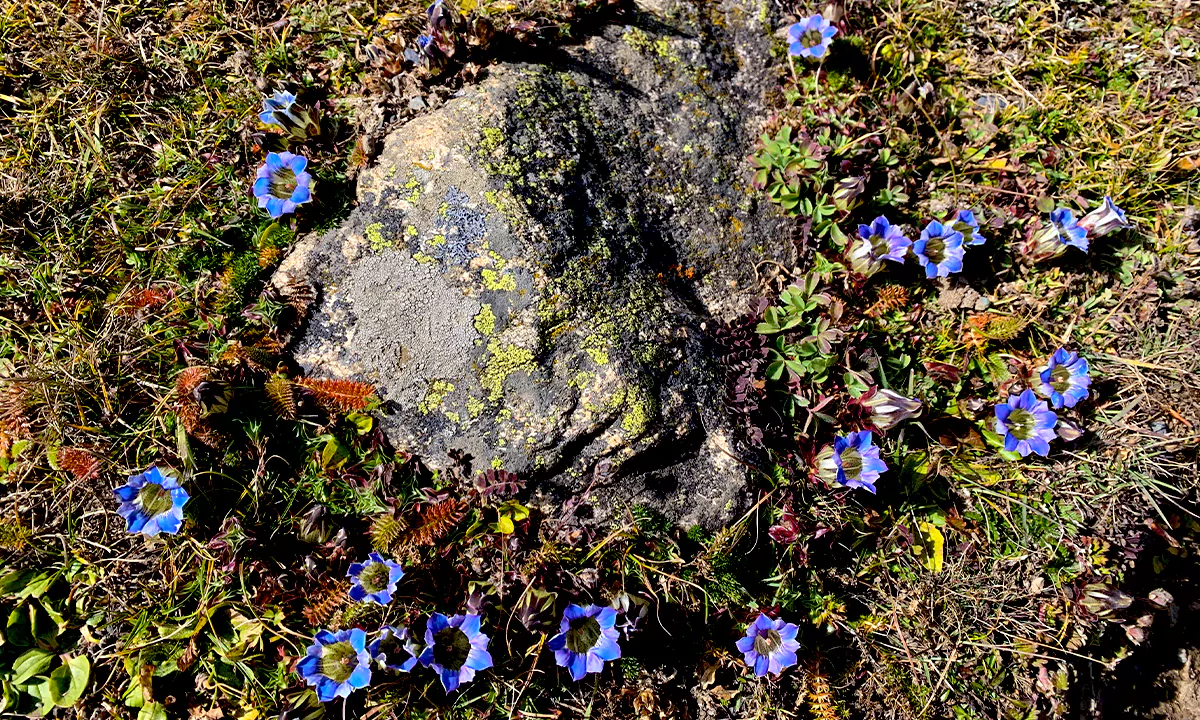
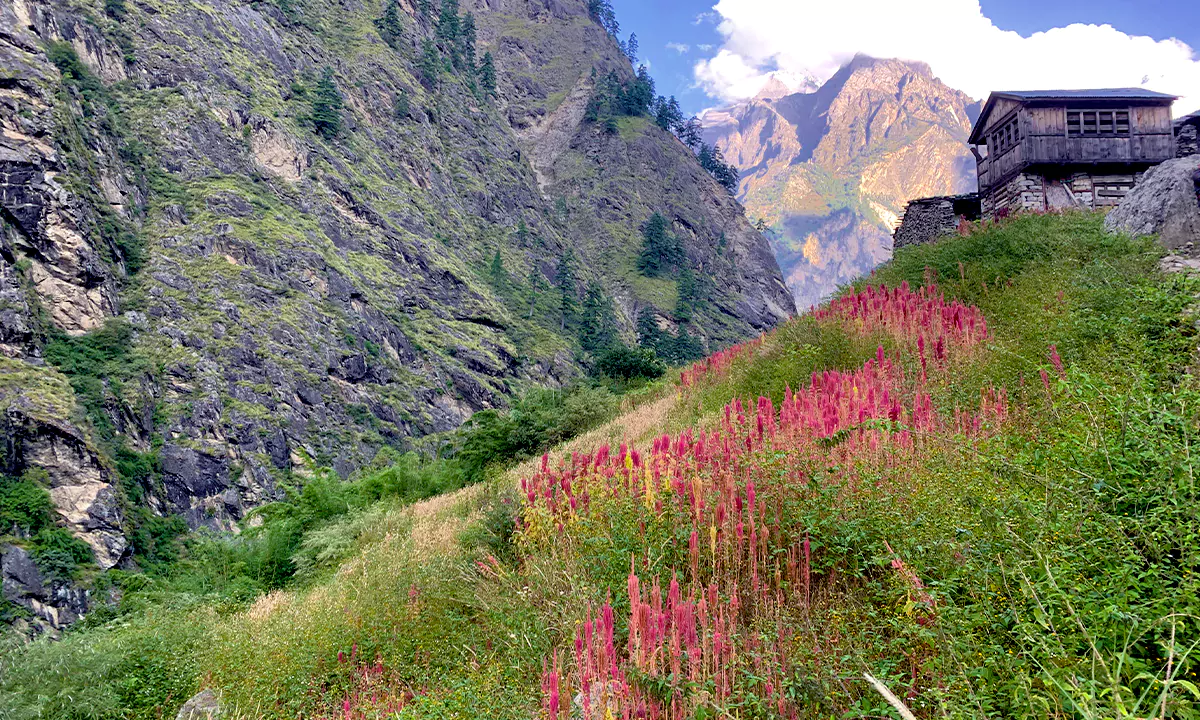
As you meander through the gorgeous jungles and meadows, be careful not to destroy any plants, trees or flowers. It might be so tempting to pick a wildflower or take home a heart shaped rock, but it is best to leave nature in its place. As previously mentioned, staying on the trails while trekking in Nepal is another extremely important way to help protect the sensitive Himalayan vegetation.
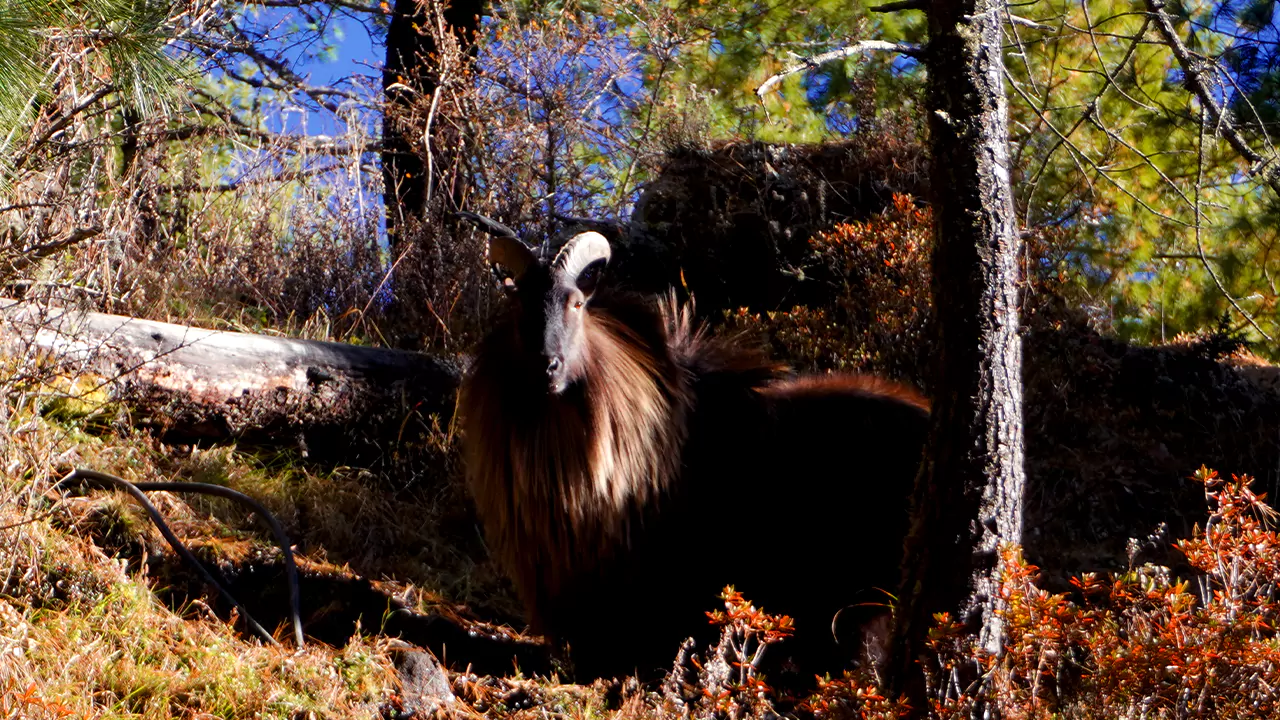
Avoid feeding or closely interacting with wildlife (yes, even that sweet bird that wants a peanut from your hand) as it can disrupt the natural flow, train animals to rely on humans and even hurt their digestion in some cases. Additionally, it is not a good idea to interact closely with wildlife for your safety.
Depending on the trek that you are doing or the region of Nepal that you are travelling to, there are various modes of transportation to get you there. Local and tourist buses operate between all of the major cities. Choosing ground travel instead of flying is a more sustainable choice. Additionally, electric vehicles are becoming more popular within and between the cities to help reduce the air pollution in Nepal. If you’re trekking with Himalayan Peace Treks, we will send an electric vehicle to pick you up from the airport whenever available.

Follow these tips and guidelines in order to trek sustainably in Nepal. If you would like to travel with a company that cares about the environment, contact Himalayan Peace Treks for an ethical, eco-friendly, peaceful journey.
Have Questions?
Talk to our expert team and plan your trip.