First time trekking in Nepal? Want a second opinion on your own packing list? You have come to the right place! Welcome. This is the most useful and detailed packing list out there that is specific to trekking in Nepal.
Nepal is any adventurer’s dream, with countless treks into the Himalayas to choose from. Knowing exactly what to pack on your trek is key for success, safety and enjoyment. Whether you are carrying your own pack or utilizing a porter, it’s important to pack only what is necessary. It can be a challenge to know what to bring and what to leave behind, so we’re here to help!
Below is a detailed Nepal trek packing list along with two printable PDF packing checklists.
This detailed packing list will help you plan in advance and can be referred to again once you’ve arrived in Kathmandu. Be sure to use your own judgement when packing, in combination with the suggestions from our packing list. The below trek packing list is appropriate for most treks in Nepal including popular routes like the Annapurna Circuit Trek and Everest Base Camp, as well as less-travelled paths like the Upper Manaslu Circuit Trek and the Nar Phu Valley Yoga Trek. You might need to adjust the item amounts depending on the length of trek you’re planning to do, your own personal preferences and whether or not your trekking solo or in a group.
It is highly recommended to pack light in order to protect the well-being of porters. Porters are strong and extremely capable, but they’re still human. With a responsible trekking company like Himalayan Peace Treks, there are limits on the amount that porters can carry safely. Porters can carry a maximum of 20 kg for two people (a maximum of 10 kg per person), so please use this as a guideline when packing and aim for under 10 kg.
Whenever possible, consider packing biodegradable and reusable items in order to trek more sustainably.
This guide includes tips for packing, a detailed list with explanations and a short checklist that you can print and use. Feel free to contact our small ethical trekking company, Himalayan Peace Treks, if you have any questions.
Packing Tips for Nepal Trekking
Pack Light
Most people heavily overpack for their first trek, so keep that in mind when organizing your gear. You can often wear items many times, share certain things amongst a group, and even do little bits of laundry along the way. Minimize unnecessary items, choose lightweight materials and bring as much multifunction gear as possible.
Pack Your Favourites
When choosing what to bring, pick items that you already know and love (heading off on your trek is not the ideal time to break in new hiking boots!!!). Make it easy on yourself and test out gear beforehand and bring your favourites. If something is itchy or uncomfortable at home then it will be ten times worse on the trek!
Be Prepared for Weather Extremes
Ever heard the proverb “There’s no such thing as bad weather, only bad clothing”? It’s certainly true while trekking in Nepal! It is recommended that you bring a range of clothing to suit a variety of weather conditions as you hike up and down in elevation. During the day, at lower elevation, it is often extremely hot and sunny so things like sun hats, sunscreen and shorts will serve you well.
Then in the evenings and at higher altitude you’ll be reaching for your hats, puffy jackets and long underwear. If your trek includes a high mountain pass you might encounter snow and ice so crampons will come to handy. Having rain gear, especially if trekking around monsoon season (May-August), will also keep you dry and warm.
It’s not fun to think about what could go wrong while trekking in Nepal, but it’s worth considering so that you can be prepared. Bring blister kits, medication and a first aid kit if your guide isn’t bringing one. Purchase medical travel insurance that covers your whole trip and what you’re going to be doing (eg. reaching 5000 m elevation). Share insurance information with your trekking company and as well as photos of your passport and IDs to friends and family.
Consider Purchasing in Nepal
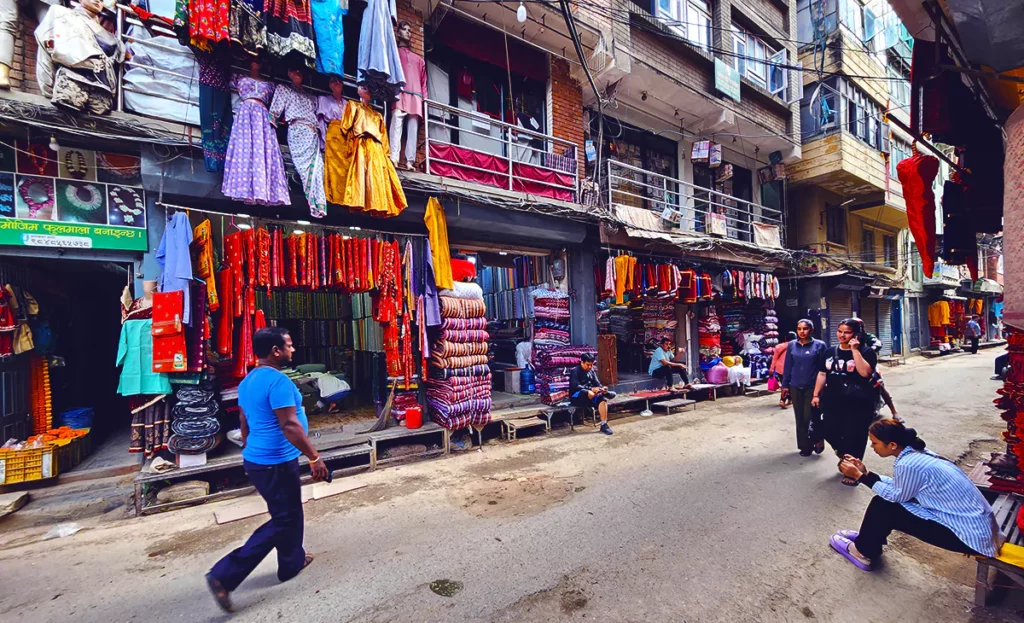
Nepali people rely heavily on tourism for revenue and job creation. Perhaps you will consider supporting the local economy by purchasing some items once you arrive in Kathmandu or along the trekking route. Thamel, in the heart of Kathmandu, is a trekker’s paradise, packed to the brim with anything trekkers might need for their adventure.
Generic trekking gear, snacks, and toiletries can be found in Thamel. In the spirit of transparency, please be aware that items are often cheap, which is then reflected in the quality, so maybe don’t plan to get your big ticket items in Kathmandu.
A street in Thamel, Kathmandu
Pack Mindfully of the Local Culture
Nepal is a beautifully unique place, not just in the magic of its natural landscapes, but in its depth of traditional culture. Many treks take you far into remote areas of the Himalayas in which modesty is the standard. It is important that you dress so that you are comfortable while trekking, but please also consider the cultural norms when selecting what clothing to bring.
Openly changing in front of people or in public spaces is not common. If you would like to enter temples, monasteries and sacred places, your knees and shoulders need to be covered.
Pack Sustainably
While trekking into the depths of the Himalayas, you are leaving behind modern filtration systems and proper garbage disposal. This means that extra consideration is needed for what you choose to carry in because it might just stay there forever!
We highly recommend biodegradable and natural items for products such as toothpaste, soap and laundry detergent.
Limit the amount of packaged items you bring and perhaps plan to carry out your garbage. We recommend purchasing drinks such as hot chocolate or hot lemon honey as a treat instead of items in plastic bottles.
Bring your own water filtration system, or plan to purchase boiled water, instead of relying on buying single-use plastic water bottles (it’s 2025 are we done with single-use bottles yet?!).
In addition to toilet paper, many trekkers have had success with bringing a reusable pee cloth. It is specifically designed to be used after peeing, washed and then hung on your backpack to dry.
We have two printable Nepal Trek Packing Lists for both a long trek, such as the Everest Three Passes Trek, as well as a short trek, such as the Mardi Himal Trek. Please use your discretion when packing and trust your instincts.
Below is the breakdown of what to pack when trekking in Nepal. It helps to explain the two trekking packing list for both a LONG TREK and a SHORT TREK.
Travel Documents and Money
Passport
Some treks require your passport if, for example, you’re taking a flight or need to get your permit at a checkpoint
Traveling with photocopies of your passport is always a good idea
It’s also recommended to send pictures of your passport to friends and family, just in case
Passport photos (1-2)
Passport-style photos of yourself with a white background are needed for some permits and can be sent to your trekking company ahead of time
$¥€ Any major currency to pay for tourist visa upon arrival at the airport
US$30 for 15 days, US$50 for 30 days, US$125 for 90 days
Using a credit card here is not recommended
Accepted currencies to pay for your Nepali tourist visa include:
$¥€ Any major currency to pay for your trek or tour
Cash is preferable for most companies as Nepal still widely operates in cash
रु (NPR) Nepali rupees for spending money on the trek
Extra cash is needed to pay for things outside of your trek package such as souvenirs and snacks, fancy coffees and desserts, hot showers and wifi, and donations and tips
Nepali rupees are only available once you are in Nepal
You can exchange cash or take out rupees at an ATM in Kathmandu or Pokhara
Nepal is a cash country; there are no reliable ATMs on most treks and cards are not accepted while trekking
Personal IDs and money cards
A good tip for travelling anywhere is to have multiple credit cards in case one gets cancelled
Send photos of your important IDs to friends and family, just in case
Insurance plan
Purchase quality medical travel insurance before you travel and send the information to your trekking company, family and friends
Check that your insurance plan covers the activities that you will be doing
For example, trekking above 5000 m elevation, paragliding, bungee jumping, etc.
Clothing
Upper Body
Base Layer
Moisture-wicking shirts (1-2 for short trek, 2-4 for long trek)
These can be short and/or long sleeve depending on your preference
These will be your only layer on hot and sunny days at lower elevation and an underlayer as you gain elevation and the temperature drops
These need to be comfortable against your skin and lightweight
Warm shirts (1 for short trek, 1-2 for long trek)
Warm and cozy shirts (likely long sleeve) for the tea houses, sleeping and perhaps as an underlayer on a cold day of hiking
Sports bras (1-2 for short trek, 2-3 for long trek)
Only bring your most comfortable, breathable, supportive bras!
These can easily be rinsed along the way if needed and double as a bathing suit for hot springs
Mid Layer
Fleece zip up/pullover (1 for short trek, 1-2 for long trek)
For hiking and in the tea houses
Picture this: it will likely be chilly in the morning so you start with a sweater on. Then you work up a sweat during the morning hike and lose the layer. Then, out it comes again from your day pack while you wait for your dal bhat to be cooked fresh for lunch! After lunch, the on-and-off dance of the mid-layer continues…
This layer will also keep you cozy and warm in the evenings
Outer Layer
Puffy jacket (1 for short or long trek)
A good puffy jacket will serve you well as you gain elevation and the temperatures drop
Mostly you’ll wear your puffy jacket during the chilly evenings and mornings around the tea house, but some trekkers who run cold, have it available throughout the day to put on during breaks
It will also come in handy if you are trekking during the winter season (December-early February) and if your trek includes any high mountain passes
You can easily rent a puffy jacket in Kathmandu or Pokhara if needed for ~$1-2 per day
Waterproof/windproof jacket with hood (1 for short or long trek)
Important for monsoon season (May-August)
Some trekkers bring a poncho that goes over their pack as well as their bodies
Also useful as another layer for higher elevation where it can get windy; ideally it fits over your puffy jacket
Hands
Inner gloves (1 pair for short or long trek)
Preferably lightweight and quick drying
Can be worn under big gloves or as their own layer
Useful with trekking poles
Outer gloves (1 pair for short or long trek)
Thick, warm and waterproof
These are optional for some treks and some trekkers; ask yourself, do I usually struggle with cold fingers?
Needed for treks with passes and during winter (December-early February)
Head
Sun hat/ball cap (1 for short or long trek)
The sun is strong, even when it’s cold
The style of hat you choose is based on your preference
Some trekkers wear only a ball cap, others wear a 360 degree coverage fishing hat! Think about how you will best protect your face, ears and neck
Warm hat (1 for short or long trek)
A cozy hat for cold nights and chilly days once you’re at higher elevation
Buff/neck tube/scarf (1 for short trek, 1-2 for long trek)
Something to protect your face from dust, sun & wind
No need for two of the same item, but for a longer trek you might want one that is thinner and one that is warmer
Headlamp with batteries/charger (1 for short or long trek)
Useful for any early mornings that start before sunrise
You can also use around the tea houses in the evenings (some rustic tea houses don’t have lights in the bathrooms) or for when the power goes out, which is not uncommon in the mountains
Sunglasses (1 for short or long trek)
A not-to-be-missed item to protect your eyes during sunny days and essential if going over a pass
High UV protection and ones that wrap around the sides are recommended
Especially if you are doing a pass where the sun is really strong and reflects off of the snow
Sunglasses are a must!
Lower Body
Base Layer
Underwear (5-7 pairs for short trek, 6-9 pairs for long trek)
Some trekkers swear by only bringing moisture-wicking material but we find that that’s only a good idea if you like the feel – just bring what is most comfortable to you
The number of pairs that you bring is slightly a matter of preference and depends on whether you will wash some along the way
Warm long underwear (1 pair for short trek and 1-2 pairs for long trek)
For the tea houses, sleeping and any cold high elevation hiking
Mid Layer
Pack a maximum of 2-3 pairs of bottoms for a short trek and a maximum of 3-5 pairs for a long trek
Not all of the below listed are required!
Hiking shorts (1-2 for short or long trek)
Days are warmer at lower elevation so shorts or cut-off pants are appropriate
Leggings (1-3 pairs for short or long trek)
Some trekkers wear leggings instead of shorts or hiking pants, so this will be up to your discretion
Hiking pants (1-3 pairs for short or long trek)
Hiking pants are super subjective to the trekker so bring what you normally like to hike in
Many trekkers mistakenly pack tons of pants options and then end up sticking to their favourite 1 or 2 pairs
Lined pants (1 pair for short or long trek)
You can bring thicker warm pants for colder days or just plan to layer up with long underwear instead
Outer Layer
Cozy pants (1 pair for short or long trek)
Something warm, like fleece, to lounge in at the tea houses
Waterproof/windproof hiking pants (1 pair for short or long trek)
Necessary during monsoon season (May-Aug), otherwise regular water resistant hiking pants will likely do just fine
Feet
Thin hiking socks (2-4 pairs for short trek, 3-5 pairs for long trek)
The better the quality socks, the better time you’ll have
Higher quality socks are usually worth the money as they are better at blister prevention, reducing smell and managing temperature
Try out a few brands and styles and pick your favourites
Thick hiking socks (1-2 pairs for short or long trek)
Some trekkers are happy to wear thin socks all trek long, so thicker socks are optional if you prefer a thicker pair for colder days
Cozy socks (1 pair for short trek, 1-2 pairs for long trek)
For tea houses and for sleeping (how very controversial, do you sleep with your socks on?!)
Hiking boots (1 pair for short or long treks)
Good boots that you have (ideally) already broken in
If you are carrying weight, a taller boot will help support your ankles
Thick tread will help you navigate varying terrain
Tea house shoes (1 pair for short or long treks)
There’s nothing quite like the feeling of taking your hiking shoes off after a long day on the trails
Bring one pair of sandals, light running shoes, slides, crocs, etc. for the tea houses – be sure that they fit your warm socks into them
Shower shoes (1 pair for short or long treks)
This could be flip flops, thongs, slides, etc. to be worn in the shower
These are optional if your tea house shoes can double as shower shoes or if it’s a short trek and you’re not planning on showering
Consider bringing one pair to share if travelling with a companion
Microspikes/Crampons (1 pair for short or long trek)
Only needed for certain treks with passes
Can easily get in Kathmandu if needed
Trekking Equipment
Large bag
This can be a backpack or a duffel bag for your porter to carry your main items
Many companies, including Himalayan Peace Treks, provide a complimentary duffle bag for the items your porter will carry
An absolute maximum of 20 kg per two people (10 kg per person) can go in this bag
Day pack
A small but structurally supportive day pack for you to carry you daily items
This pack will hold items such as sunscreen, extra layers and (of course) tasty treats
Some trekkers appreciate a bag around their waist (especially if their pack doesn’t have good hip pockets) to keep items handy such as hand sanitizer, tissues and cash
Sleeping bag
Tea houses usually provide one blanket per person and it is often not enough to keep warm at higher elevation or during colder months
You can easily rent a sleeping bag in Kathmandu or Pokhara if needed for ~$1-2 per day
Trekking poles
Some trekkers choose to go without but they are usually a good idea for stability, posture and to help protect the knees on the descents
The lighter the better
Poles are another easy item to get at one of the many trekking stores in Kathmandu or Pokhara
Water bottle and/or bladder
This is a matter of preference and backpack design (does your bag hold a bladder?)
If possible, it’s nice to have a bottle (such as a Nalgene) that can safely handle hot water so you can use it as a delightful hot water bottle at night!
Water purification system
It is up to you to bring your own water purification system such as a filtering bottle, external filter, sterilizing tablets/drops, a Steripen, etc.
Our preference is that you do not rely on buying disposable plastic water bottles
A good option for many trekkers is to purchase boiled water along the way
Camera and/or phone
Think ahead about how you would like to capture your incredible Nepali trek!
Be sure to double check that you have all necessary cords, chargers, batteries, etc.
Medications
This section is completely personal – consult your doctor and plan accordingly. We think it’s better to be safe than sorry!
Any personal prescribed medication
Be sure to bring your regular prescription medication and double check you won’t run out while in Nepal
Precautionary medications
These medications are a good idea to always travel with
This includes things like: painkillers, anti-inflammatories, anti-nausea, antidiarrheals, antihistamines, antacids, and cold meds
Medicated creams
Some trekkers bring a small amount of hydrocortisone cream and/or antiseptic cream for potential minor cuts and insect bites
Antibiotics
For chest/upper respiratory infection and for abdominal/bowel issues
This is absolutely optional, consult your doctor and consider what you’re comfortable with
Vitamins
Also optional and up to you and your doctor
Certain vitamins such as Vitamin B6, C, D, and E, Iron, Magnesium, and Zinc are believed to help with altitude sickness
Altitude sickness medication
It is a good idea to have some with you and use as treatment for altitude sickness instead of taking beforehand as a precaution
As with all of the medications listed, this is optional and up to you and your doctor’s discretion
Electrolytes
You’ll be sweating lots so having electrolyte powder or tablets is an excellent idea
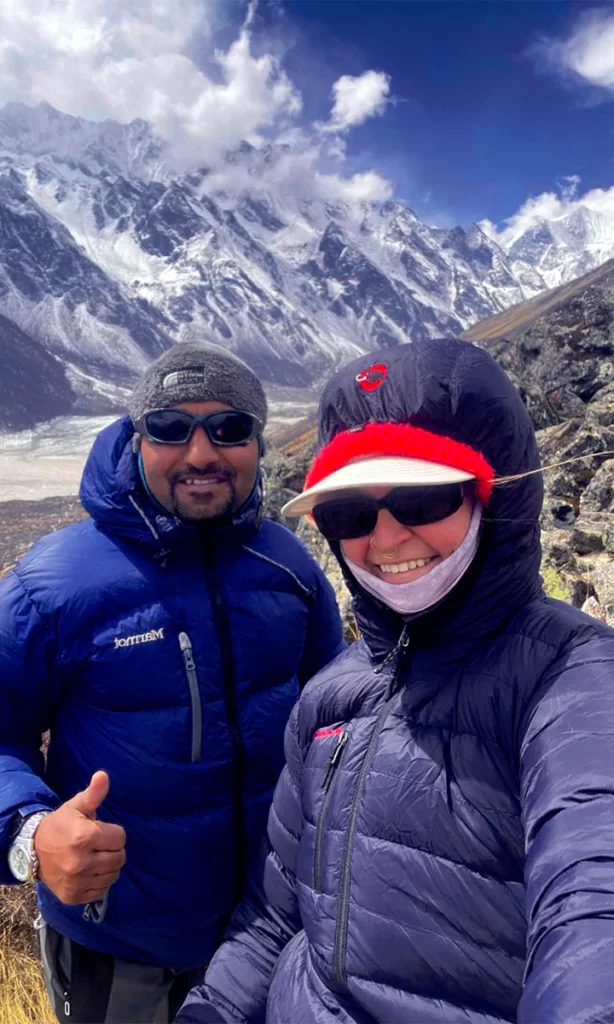
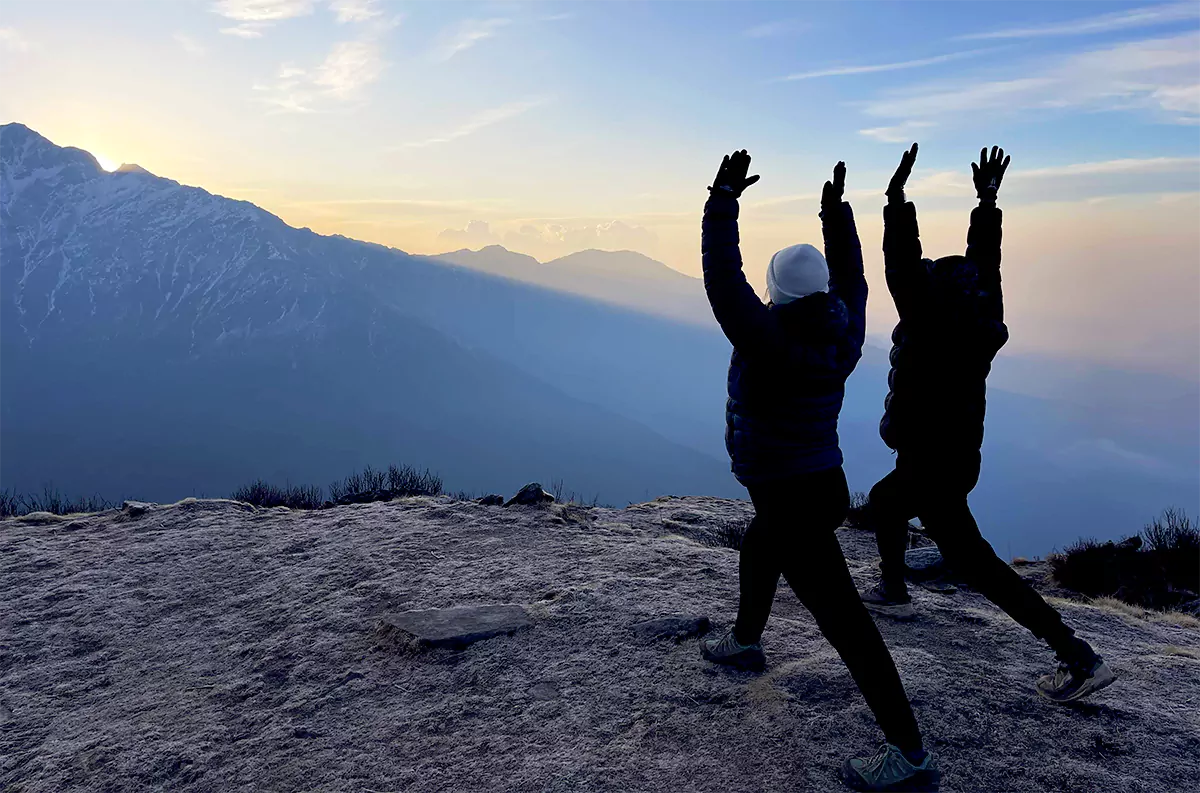
All layers are on for a sun salutation while yoga trekking
Toiletries
Preferably choose biodegradable/natural products whenever possible
Toothbrush & toothpaste
Shampoo
Only bring if you are planning to shower: some short treks aren’t worth showering on if it’s cold!
Soap
Multifunctional soap that can be used for your hands (many tea houses don’t provide soap), your body, and maybe even your hair (?)
You can use for your laundry or bring a little bit of additional laundry soap
Toilet paper
Traditionally, Nepali people use water instead of paper for their bathroom needs so there is not toilet paper provided in tea houses
You can purchase toilet paper along the way if needed
Some trekkers bring a reusable ‘pee cloth’ to use along the route for a more sustainable options
Moisturizer
For your face and body, it gets dry up there!
Sunscreen
The sun is intense, SPF10000+ is highly recommended (just kidding, but definitely bring good sunscreen)
If you are going over a pass, be sure to cover delicate areas such as under your chin, under your nose, and inside your ears because the sun can reflect off of the snow
Lip balm
This is surprisingly important! Bring a minimum of one lip balm/lip chap
Ideally try to find one that has some SPF to protect your lips
Menstrual items
Bring your own because the products in Nepal might be different from what you’re used to
Wet wipes
Always a good idea, but specifically while trekking you might want to give yourself a wipe down when there are no showers (or the water is too darn cold!)
Optional: face cleansing wipes
Nail clippers
Definitely a shareable item and only needed for longer treks
Hand sanitizer
A good idea because many tea houses don’t have soap and during cold nights at higher elevation the water can freeze
Quick dry towel
Potentially sharable, and only if you’re planning to shower
Some tea houses do not have electricity and in the mountains it is not uncommon for the power goes out
Most tea houses require a small fee (in Nepali rupees) to charge your power bank in the dining hall
Some trekkers have luck with a solar power bank
Travel charging adapter
Many tea houses have charging adapters in the dining halls, but if you would like to charge a device in your room at tea houses with electricity, then you might need an adapter
There are three main plug types in Nepal: types C, D and M
Plug type C is a plug with two round pins, plug type D has three round pins in a triangular pattern and plug type M also has three round pins
Cards/small games
Trekking offers such a beautiful opportunity to disconnect from phones and have some good old-fashion fun at the tea houses
Be careful though, your guides might never let you win a hand!
Book/e-reader
Reading is a nice pastime in the mountains during the afternoons and evenings
Keep it light though, you likely won’t be reading 17 books on your week-long trek!
Journal
You might like a small journal to document your experience
Save plastic bags for garbage
It would be awesome if you planned to pack out your garbage!
You can also use bags for wet items or use them to protect your items against rain
Bathing suit
Only pack if your trekking itinerary includes a stop at hot springs
Many trekkers choose to leave the bathing suit behind and instead go into the hot springs in shorts, leggings, bras and t-shirts
Most lakes along the trekking routes are sacred and it is not appropriate to swim in them – ask your guide to be sure
Snacks
Bring your favourites for an extra boost throughout the day or a little something while you wait for dinner
We recommend things like nuts, dried fruit, and chocolate as snacks for trekking in Nepal
Some items can be purchased along the route such as chips, chocolate and cookies
Earplugs & eye mask
Protect your beauty rest!
The walls can be thin in some tea houses
Blister kit
Things like moleskin and gel-filled blister bandages can help prevent and manage blisters
Headphones
For the long travel days and tea house downtime
Pocket knife/multitool
Not necessary but some trekkers don’t go anywhere without theirs!
Travel sewing kit
Again, not necessary but can be helpful in a pinch
Safety pins and/or carabiners
Super useful for hanging clothes and items off of your pack