Email us
[email protected]


Email us
[email protected]

Trip booking for 2025 and 2026 is open, you can book any trip from our website.

Here is a complete breakdown of what to expect for most Nepal trekking accommodation.
You will learn:
If you are planning to trek in Nepal, this guide will help you plan ahead and prepare for the accommodation. Let’s dive in.
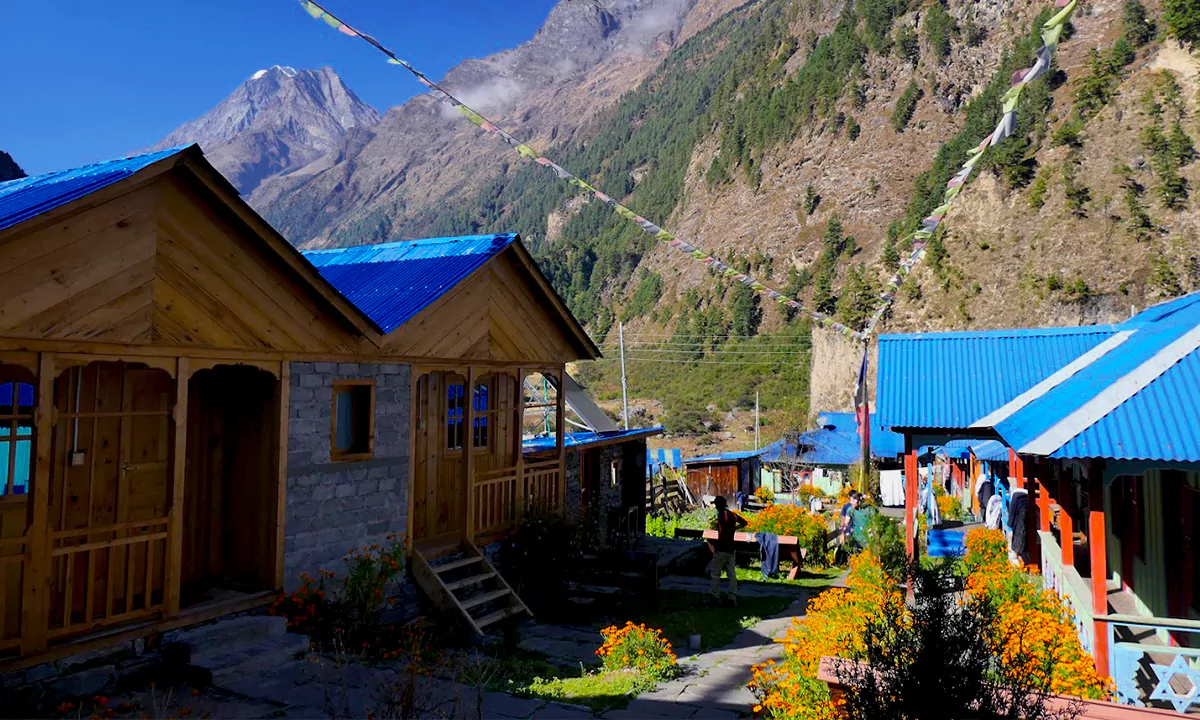
Trekking in Nepal is a special dream for many adventurers around the globe. There is a range of different types of treks, from the famous Everest Base Camp Trek, to the secluded, spiritual journey on the Nar Phu Valley Yoga Trek, to the desert-like ancient landscapes of Mustang.
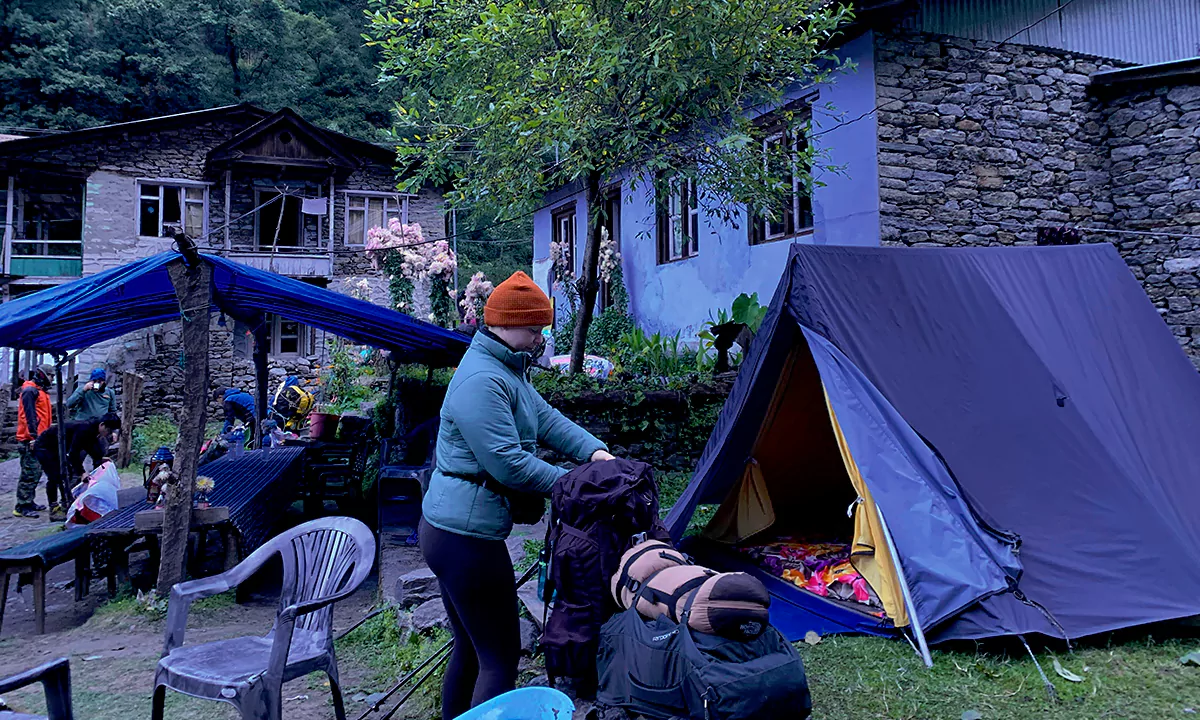
You might be wondering, “Where will I sleep on my Nepali trek?” The answer for most treks is in tea houses! When Nepal first opened up to allow foreigners to venture into the Himalayas (nearly 80 years ago), people would pitch their own tents or pay a small fee to be hosted in local homes. The warm hospitality of Nepali people continues to this day, in the form of tea houses.
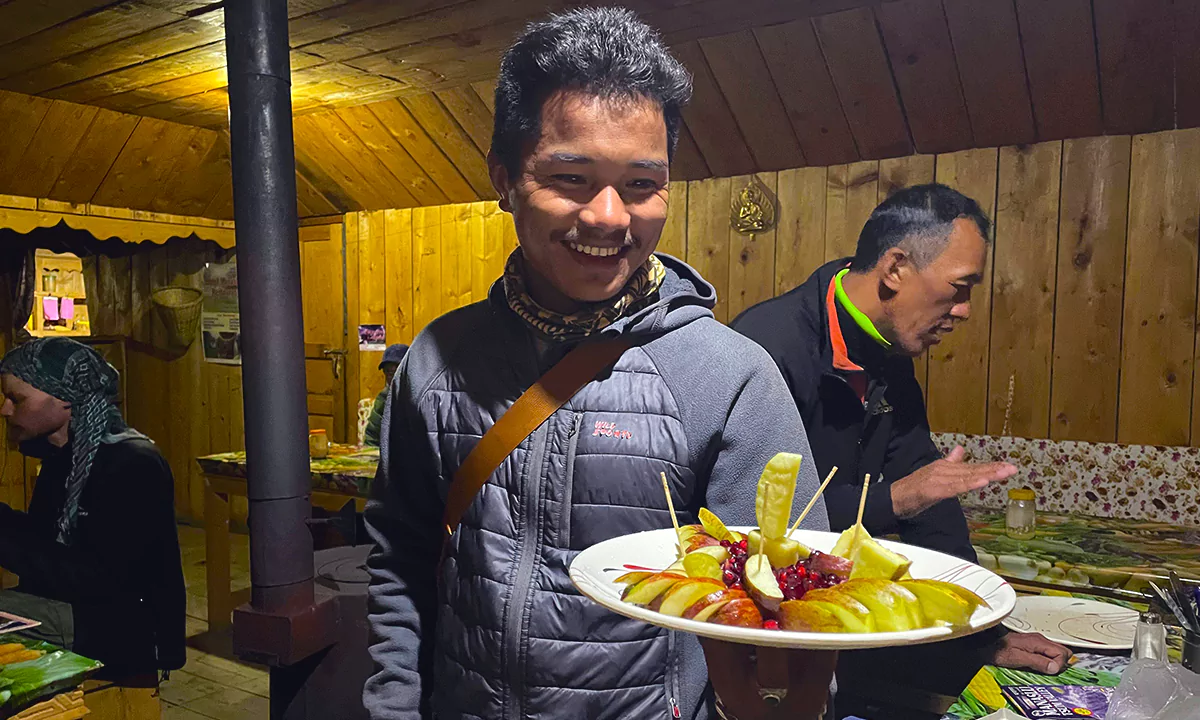
A tea house is a simple lodge that hosts trekkers in the Himalayas. They have rooms for overnight stays and dining halls that serve breakfast, lunch and dinner (and of course, TEA!). Run by locals, you can expect delicious and fresh Nepali cuisine as well as some international dishes.
The rooms are simplistic and cozy, with small beds, a light and perhaps a table. Depending on the region, the elevation, and the cost of the room, the quality can vary. In fancier tea houses you can expect electricity in the rooms, attached bathrooms and western-style toilets. More basic tea houses have shared bathrooms, often with traditional squat toilets, and no electricity.
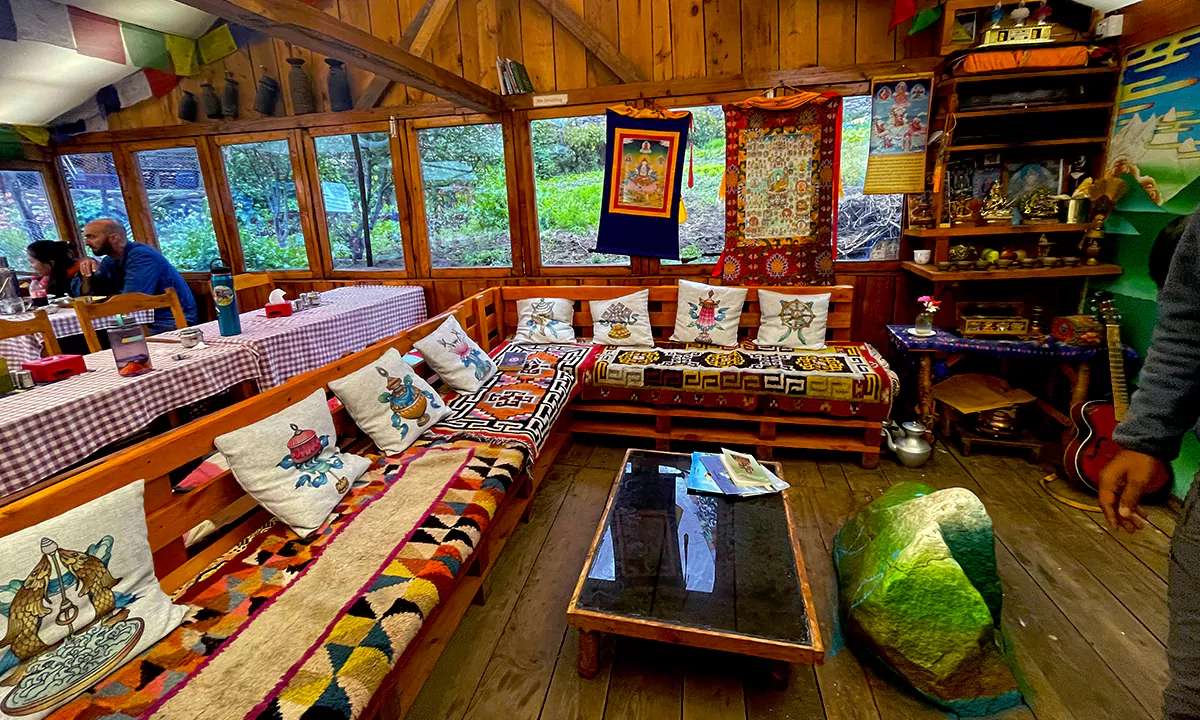
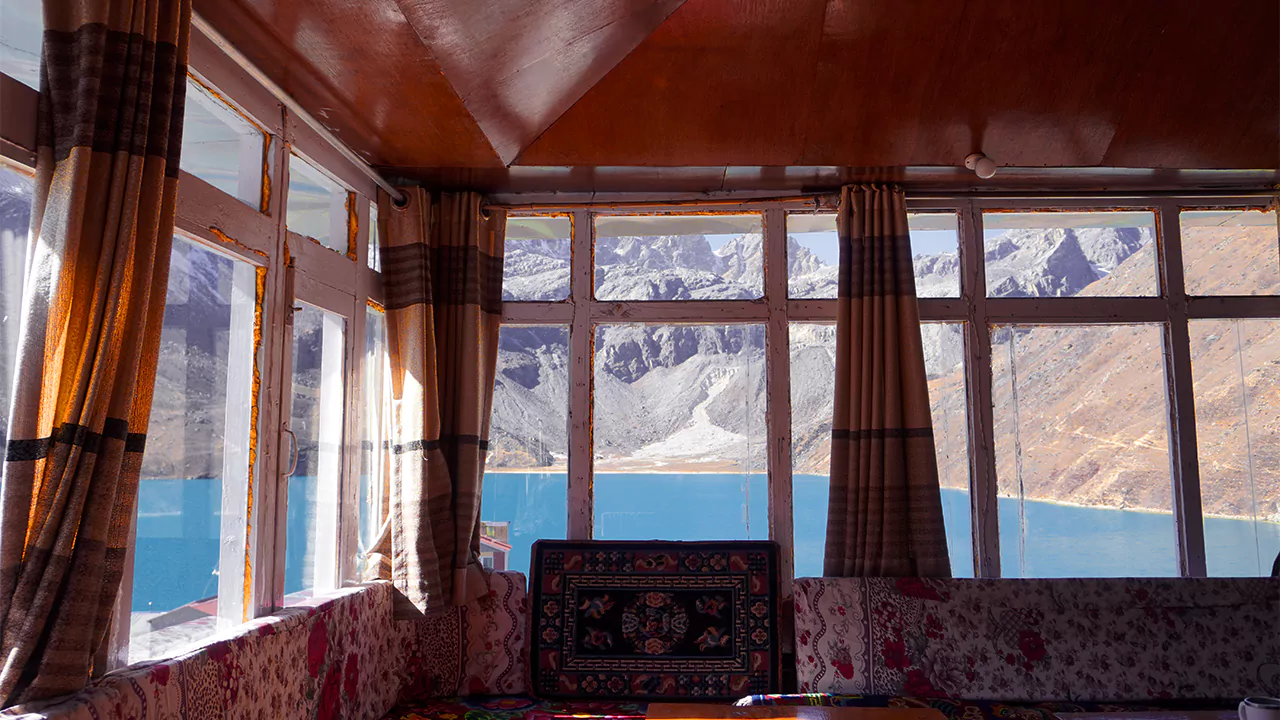
Every tea house has a communal dinning room with a kitchen attached. There is usually a wood or gas stove to warm up the room in the evenings. The heat draws people in not only for meals, but to hang out. There are usually simplistic tables and chairs or benches. Some dinning halls are used as overflow sleeping spots during busy times. There are usually utensils and condiments on the tables, decorations around the walls, and windows, sometimes with a special mountain view.
Usually only staff go in and out of the kitchens and are the liaisons between the guests and the tea house. It is common Nepali hospitality to serve guests first and then the hosts eat later. Your guide and porters will likely serve you first and then eat their dal bhat at the end of the night.
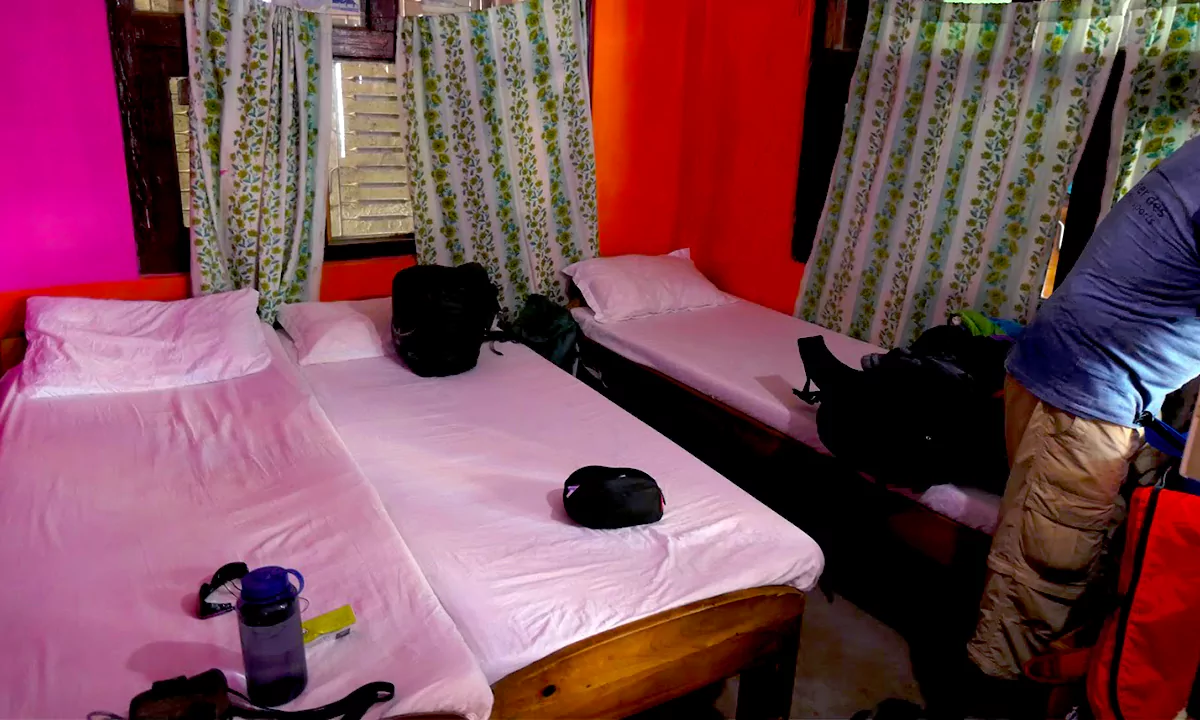
Tea house rooms are, for the most part, extremely basic, especially when you get way up there in the mountains. There are usually a few beds, a small table, a dustbin and a light. If you’re lucky, there will be a window or two, with a spectacular view! There may or may not be a charging outlet in the room. The walls are usually quite thin so the sound can often travel quite easily.
There are usually room options with 1-3 beds available; one double bed and/or a few single beds. The beds are wooden platforms with a thin mattress on top, covered in a sheet. One pillow and one blanket are provided per bed. It is recommended to trek with a sleeping bag (and liner) to use in addition to the blanket and keep things clean. Some tea houses wash the sheets and pillowcases every day, but admittedly, not every tea house can (no plumbing, washers or dryers here!).
There are shared bathrooms as well as attached bathrooms at some tea houses. Across Nepal, most people use squat toilets and water as opposed to western-style seated toilets and toilet paper. As a result of so many foreigners venturing into the Himalayas, more seated flush toilets have been implemented. Most tea houses, however, still do not provide toilet paper so you need to bring your own. Toilet paper goes in the dustbins provided, not in the toilets.
Soap and towels are not provided so be sure to bring your own. In some cases, the bathrooms are outside, separate from the house (which is traditional Nepali style). There are often not mirrors or sinks in shared bathrooms; the sinks are outside and, who needs a mirror while trekking anyways?!
Not all tea houses have showers for guests. You can ask your guide which tea houses have showers and plan your shower (and hair washing) schedule accordingly! In some attached bathrooms there are showers, usually with cold water, or just a toilet and sink. At certain tea houses, not all of them, they have hot showers which you can use for a small fee.
Some of the showers are heated by gas and some use solar heating and depend on the day’s weather. Please do not have long hot showers and never wash your clothes in the hot water. The resources in the mountains (and the world!) are limited and need to be conserved and shared amongst everyone. It is a good idea to bring your own shower shoes. In some tea houses, a hot shower is a bucket of water boiled on the woodstove! It’s all part of the adventure.
Tea houses offer a menu of items for breakfast, lunch, dinner and snacks. You can choose from a variety of local and international dishes. It is usually requested that you order dinner before 5pm and order breakfast for the following morning before going to bed. It is assumed that you will eat at the tea house where you are staying.
For lunch, when you stop along the route, be prepared to wait some time for them to make your food fresh.
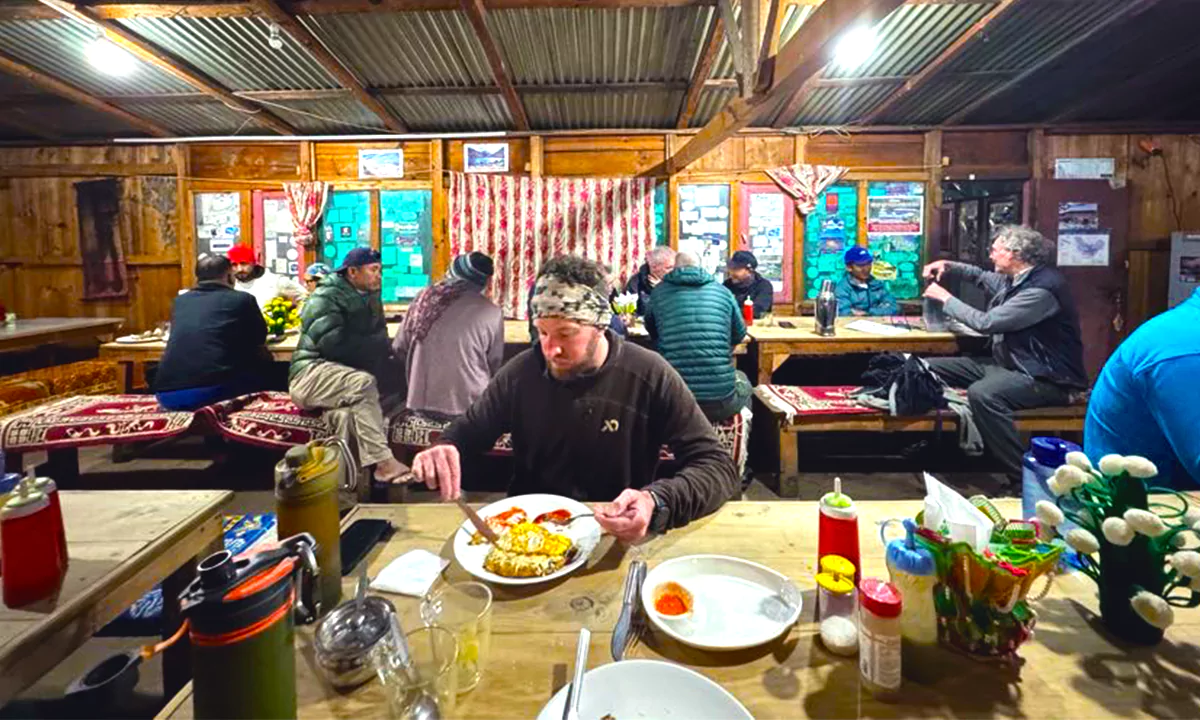
At higher elevation, when the temperatures are lower, there is usually a glorious wood stove (or in some cases, a gas heater) in the communal dining halls. The stoves are usually only lit during the evenings, so bundle up for breakfast! Although the little stoves can pump out a lot of heat in the dining halls, the guest rooms, however, are not heated. This means that cozy sleeping clothes and a warm sleeping bag are a good idea.
It is truly incredible that for most treks, at most tea houses, there is electricity, wifi and even local cell service deep into the Himlayas. We’re talking about connecting to the world wide web in the middle of the Himalayas. WILD! That being said, the electricity and wifi can be pretty unpredictable and unreliable and some tea houses have solar power only.
As far as charging your devices, some tea houses have outlets in the guest rooms, and most of the time there is communal charging in the dining halls (for a small fee). It can be useful to have a power bank for portable charging when there’s no electricity.
We suggest that you take this unique opportunity to completely disconnect from the online world and immerse yourself fully in the experience. Your guide will take care of everything for you, no need to be route-finding or translating.
Along certain more established treks, such as the Everest Base Camp Trek, there is the option to stay in much nicer tea houses. Extra amenities that might be included are electric blankets, electricity in rooms, nicer views, attached bathrooms, a desk and chair, hot shower, and more comfortable beds.
If you’re interested in staying in fancier tea houses along the way, you can inquire with your trekking company about prices and what is available.
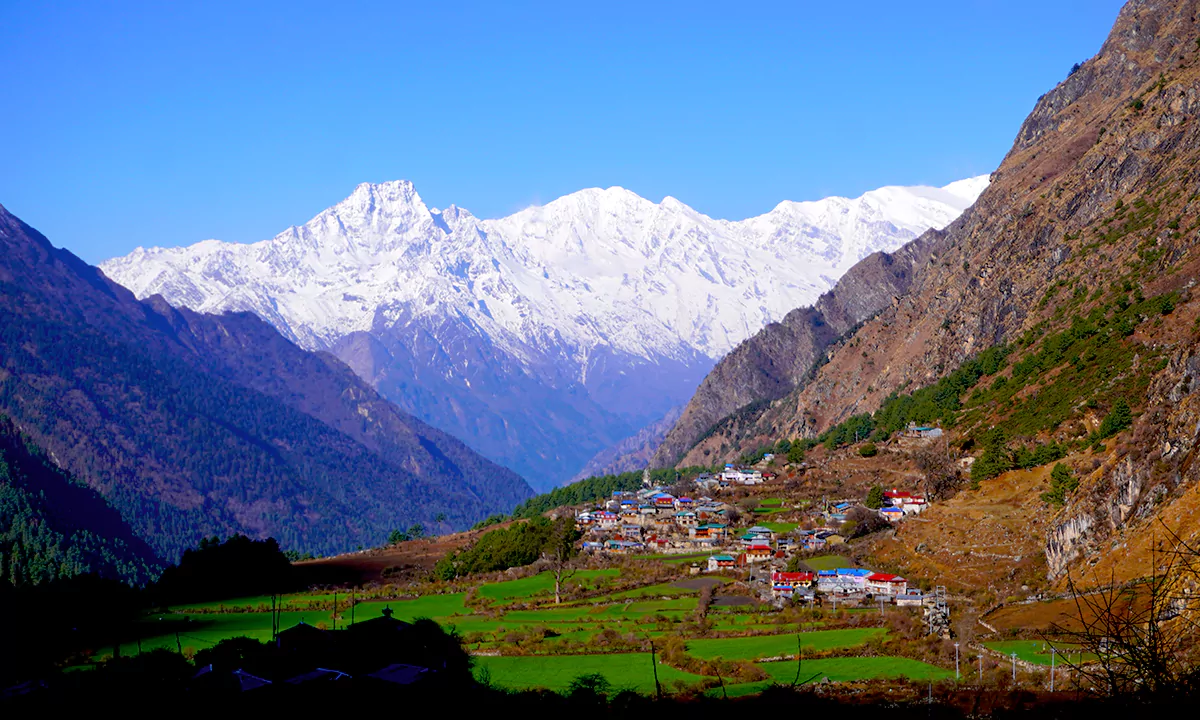
Depending on your itinerary and pace, you will likely show up at your overnight tea house in the afternoon or early evening with plenty of down time. You might be wondering what is there to do at tea houses? We suggest taking this time to sloooooow down, disconnect from the online world and reconnect to more meaningful things.
Here are some ideas of what to do at the tea houses:
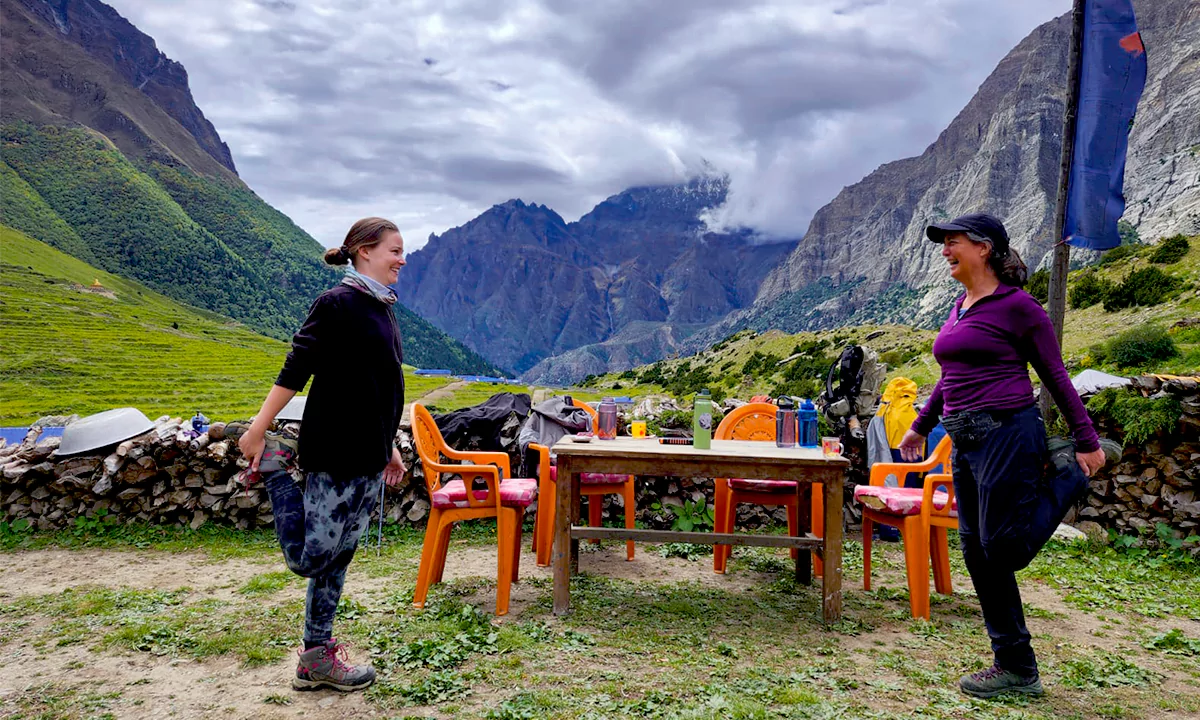
If you’re reading this, you’re already on the right track and interested in staying in Nepal trekking accommodation in a respectful way. First and foremost, be kind.
If you wouldn’t do something in your own country such as walk into someone’s home without asking, pick something from someone’s garden, or leaving a mess in the bathroom, then don’t do it in Nepal either!
We are so unbelievably lucky to be welcomed into the local villages and in some cases people’s homes, we want to respect that honour.
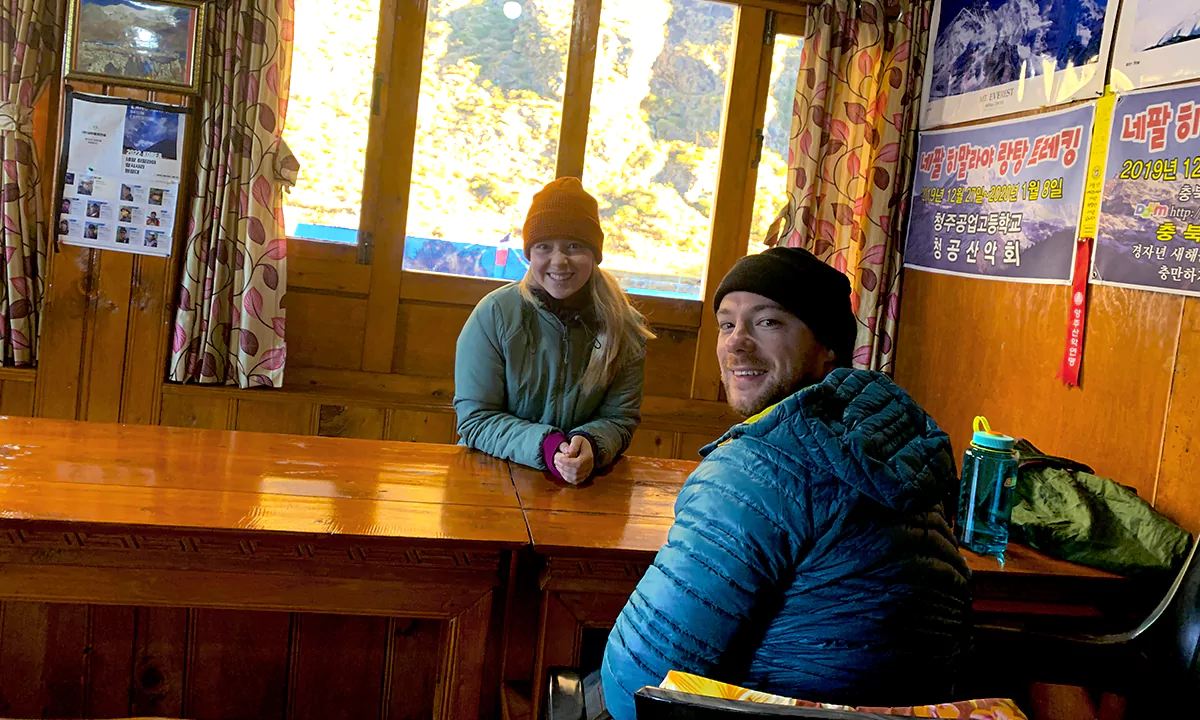
From one village to the next, the tea houses offer many similar items, however the menus themselves are surprisingly large and flavours and cooking styles change from tea house to tea house. You can get a range of local Nepali, and in some regions, Tibetan cuisine, as well as more familiar western dishes.
Often the food is made fresh with vegetables that are grown in the local fields. Menus are written in English and offer some dishes seasonally based on what is available. Allergies and common food requirements can usually be accommodated for things such as gluten-free, vegetarian and vegan. Of course, use your own discretion and know that the kitchens are usually tiny and cross-contamination will happen.
The most recommended dish is Nepal’s national dish, dal bhat. If you haven’t tried it yet, get ready to fall in love with this delicious dish! A simple dal bhat consists of white rice (bhat), lentil soup (dal) and vegetable curry. Additional items on a dal bhat plate might include sauteed greens, a spicy sauce, local yogurt, meat curry and a few slices of cucumber and carrot.
Dal bhat is always cooked fresh and features local vegetables and rice whenever available. The dish is so beloved that Nepali people eat it every day for lunch and dinner! It is also part of the culture to offer unlimited refills, so it truly is the perfect, hearty dish to fill you up after a long day of trekking.
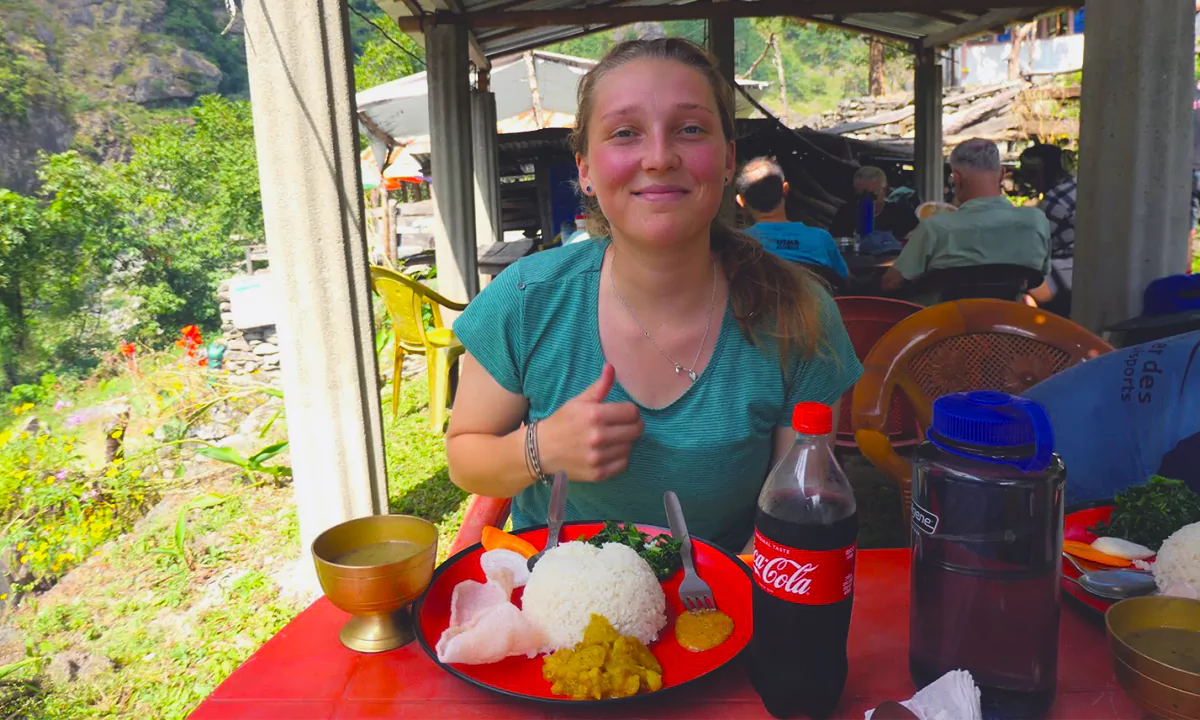
For breakfast you can expect mostly western dishes including pancakes, oatmeal/porridge, muesli, toast and eggs. If you want to try a delicious local option, look for “gurung bread” (which you’ll see along the Annapurna Base Camp Trek) or “Tibetan bread” on the menu, which you can eat with jam, honey or an omelet.
Another local breakfast item to keep an eye out for is “champa porridge” (sometimes written “tsampa”), which is a blend of different grains and comes with chopped fruit when available. Order your breakfast the night before so that the kitchen can prepare and it’s ready when you wake up.
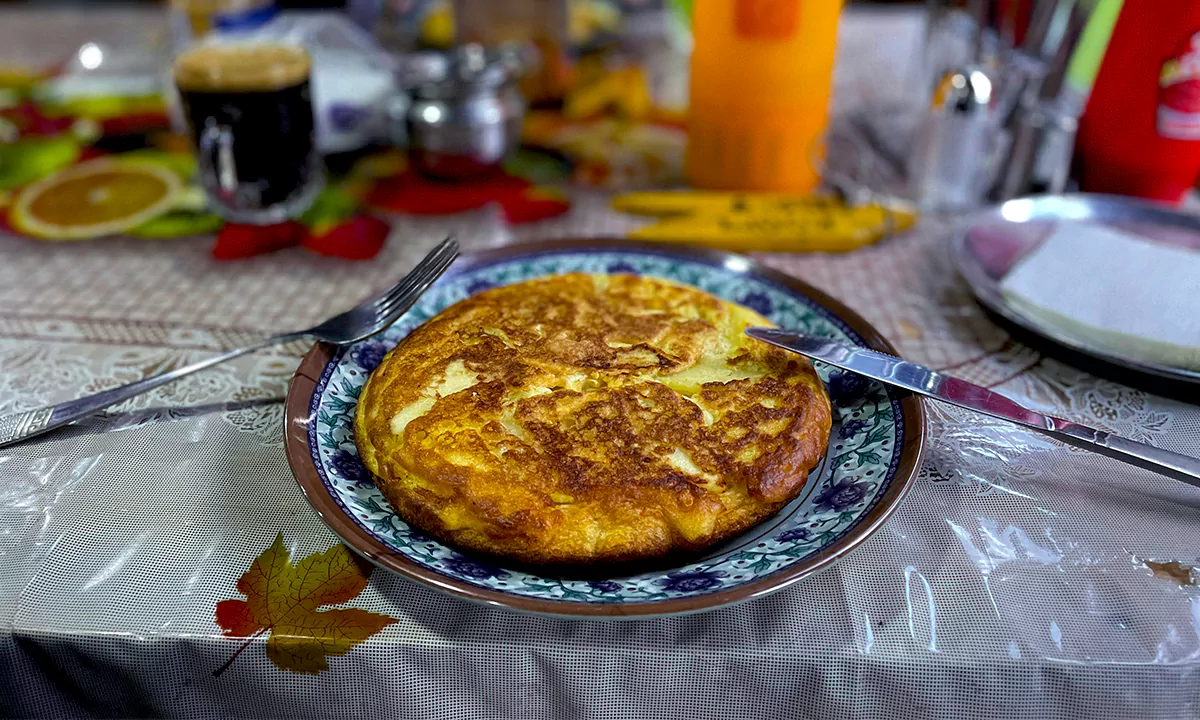
On most days of the trek, you’ll be stopping at a tea house for lunch along the way. If you’re looking for a quick option, you can order fried rice, fried noodles, or soup. Dal bhat is also available for lunch but it might take a little longer for them too cook it from scratch.
Momo are another highly recommended Nepali dish. Originally from Tibet, momo are dumplings served with a spicy sauce or ketchup and filled with sauteed vegetables or meat.
You will eat dinner at the tea house that you are staying at for the night. On a regular trekking day, you will arrive sometime in the afternoon, freshen up, and then head to the dining hall to order your dinner and relax. Of course, dal bhat is recommended (have we convinced you to try dal bhat yet?!), but you have the whole menu to choose from!
Western dishes include pasta, sandwiches, and maybe even burgers or pizza. A little heads up, these dishes are usually loose interpretations of the classics we know and love, so manage your expectations.
There might be a time that you arrive early in the afternoon, or want a sweet treat after dinner. Snacks and desserts are usually not included in most trekking packages so you can expect to pay on your own in local Nepali rupees. You’ll see familiar snacks such as French fries and popcorn, but you might also like to try some Nepali snacks such as “chili” or “sadheko” dishes.
Anything listed as “chili”, for example, chips chili, tofu chili or momo chili, will be cooked in a spicy sauce with onion, tomato and green peppers. Anything listed as “sadheko”, for example, peanut sadheko, aloo (potato) sadheko, or bhatmas (soybean) sadheko, is salad-ish, with chopped veggies, spices, hot peppers, and fresh cilantro. A great protein packed local favourite!
Desserts are usually available at more established tea houses, with items such as deep-fried snickers bars, and homemade apple pie and rice pudding.
When you trek with Himalayan Peace Treks, an ethical trekking and travel company, your trek package includes a tea or instant coffee at every meal. Nothing better than a hot drink on a chilly morning.
Nepali people absolutely love tea; it’s tricky to attend a meeting, visit a friend, or attend a ceremony without being offered tea immediately. You absolutely must try Nepali “masala tea” which is a milk tea, flavoured with local spices like cinnamon, cardamom, bay leaves, and cloves. Additionally, on some treks like the Langtang Valley Trek, you’ll see “Tibetan tea” on the menu, which is tea made with butter, sugar, salt and spices prepared in a tall wooden churn. Some fancy tea houses have an espresso machine where you can treat yourself to an Americano or latte.
For tea and coffee alternatives, you might want to try “hot mint”, which is fresh mint in hot water, “hot lemon”, which is either fresh lemon or a lemon powder, and “hot ginger” which is fresh ginger boiled in water, on the menu. Things like beer, juice and pop can also be purchased for an extra cost, paid in Nepali rupees.
Most food along the trekking routes is hygienic and delicious because they cater to tourists. Dal bhat (is the best, have you heard?), is cooked fresh with local ingredients and is usually safe to order everywhere. If you have a sensitive stomach, be sure to avoid spicy dishes and ask your guide about the spiciness level before ordering. Please do not over order food: food waste is unfortunate and environmentally harmful.
When it comes to ordering meat in Nepal trekking accommodation, many trekkers choose to avoid eating it once at higher elevation. In many regions, the killing of animals is prohibited, so any meat on the menu has to be carried in and then stored without any modern refrigeration. Even in regions where killing animals is allowed, when you get up to higher altitudes, any meat there will have been carried in. You can even see the meat being carried in bamboo baskets on the backs of porters. At the end of the day, it’s up to you, but now you’ve been lovingly warned.
As you gain in elevation and altitude sickness is a possibility, it is recommended to avoid (or at least greatly reduce) drinking alcohol or lots of caffeine, in order to help your chances of preventing altitude sickness. Monitor your symptoms and see how you feel, everyone’s tolerances are different.
At Himalayan Peace Treks, we recommend limiting how much you purchase bottled and packaged items because there is no reliable garbage or recycling disposal. You can read more about trekking sustainably in Nepal here. You are responsible for filtering your own drinking water and we do not recommend purchasing plastic bottled water. Please come with your own filtration system or plan to purchase boiled water along the way.
Out of all Nepal’s trekking accommodation, the tea houses on the way to Everest Base Camp are among the nicest, most comfortable and modern that you will find. It is such a famous, well-travelled route that there’s something for everyone along the way! There is a range of quality including more basic, standard tea houses, and then more luxury options.
Although not every village or stopping spot has the option for a luxury tea house, overall the tea houses along the Everest Base Camp Trek are quite comfortable. In the more established villages like Namche Bazaar, you will find a few bakeries, pubs and coffee shops. If trekking an alternative route in the Everest region such as the Everest Three Passes Trek or Gokyo Lakes Trek, you can expect more simplistic tea houses at higher elevation.
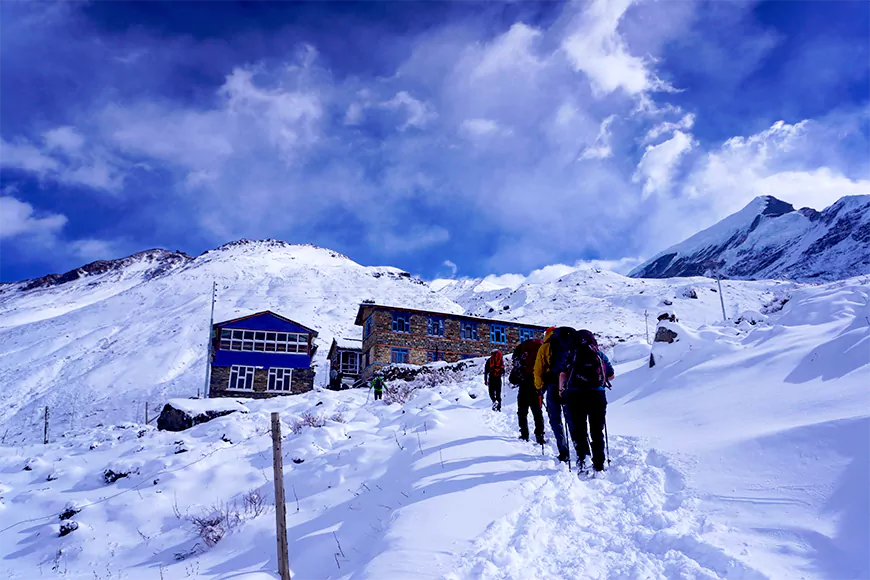
Similar to the Everest region of Nepal, the Annapurna region is quite popular. The Annapurna region was one of the first regions to open up to foreign trekkers so is much more established than a route like the Tsum Valley Trek (only open to trekkers for twenty years). The tea houses on some of the popular routes in the area such as the Annapurna Circuit Trek, or Annapurna Base Camp Trek are very comfortable, with experienced cooks and more thoughtful designs. The tea houses at Annapurna Base Camp itself have incredible mountain views out the windows!
At high elevation, tea houses are more simple, because of the challenge of bringing materials in. If you’re interested in trekking off-the-beaten path and okay with more basic tea houses, one of our absolute favourite treks is the Nar Phu Valley Trek (did we mention we have a Nar Phu Yoga Trek as well!?), that ventures into a remote part of the Annapurna region. We love the Nar Phu Valley because it is more authentic to Nepali living in the mountains and showcases traditional villages and architecture.
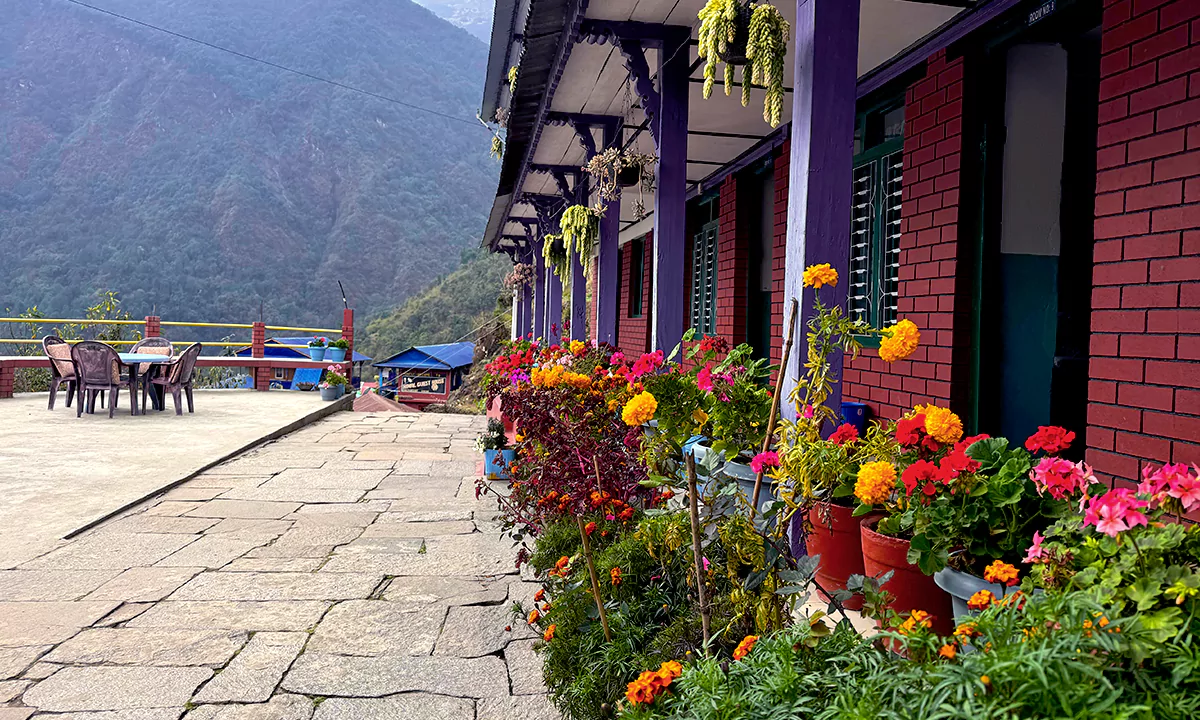
The Manaslu region is another favourite of the Himalayan Peace Treks’ team as it is quieter and offers spectacular routes. The tea houses are not as established as the Everest or Annapurna regions, but are becoming newer and nicer as time goes on. At lower elevation the tea houses are more comfortable with attached bathrooms and electricity in the rooms. At higher elevation the tea houses become more rugged and sometimes the bathrooms are squat toilets that are outside.
If tackling Larkya La Pass (5106 m), the high mountain pass on the Manaslu Circuit Trek, you will have one night before the pass at a very basic tea house and can expect to sleep in a shared room or tent. Wifi and electricity can be unpredictable – but we recommend unplugging anyways! If you would like an even more remote trek and are okay with basic tea houses, you might be interested in the Upper Manaslu Circuit Trek or the Tsum Valley Trek.
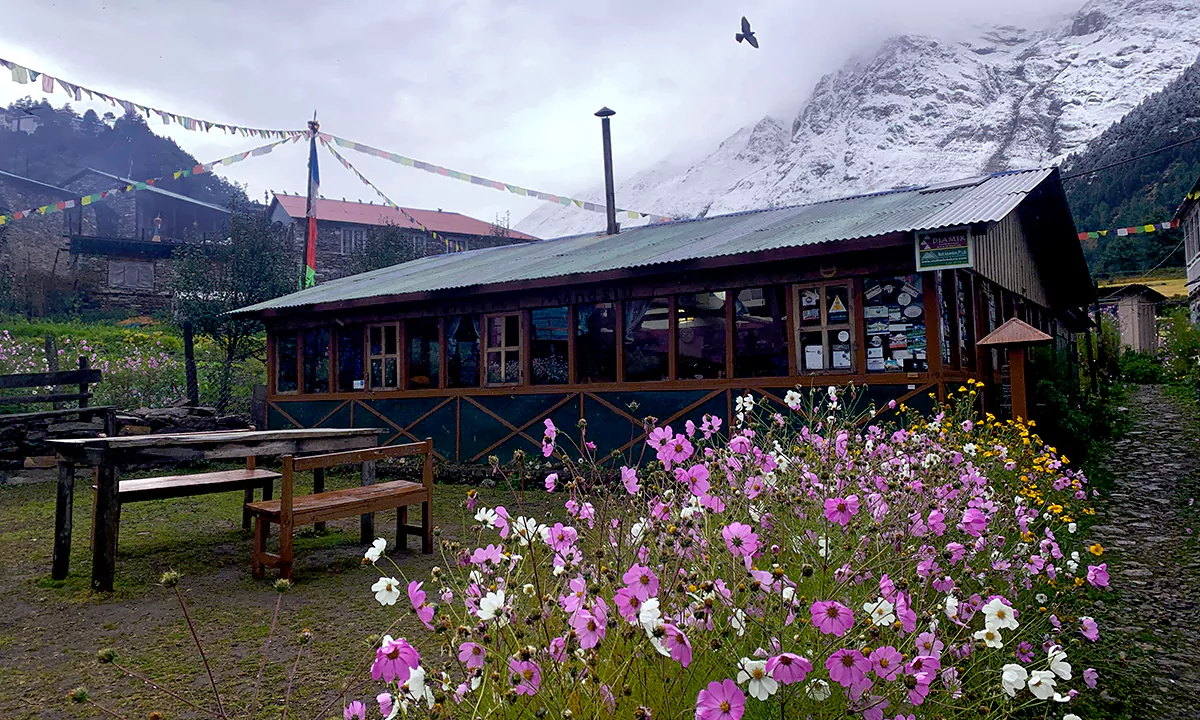
Tea houses in the Langtang region are fairly comfortable. The region was heavily impacted by the 2015 earthquake that shook Nepal and they have since been rebuilding. This means that many of the tea houses are more modern and designed to suit traveller’s needs. Tea houses have communal dining halls with a warm woodstove and simplistic rooms.
Depending on the tea houses, you may or may not be able to get a room with an attached bathroom and a mountain view! For an off-the-beaten path trek in the Langtang region, you might be interested in trekking up to Gosikunda Lake or staying at lower elevation and doing the Tamang Heritage Trek. Both of these routes have more basic tea houses and food available.
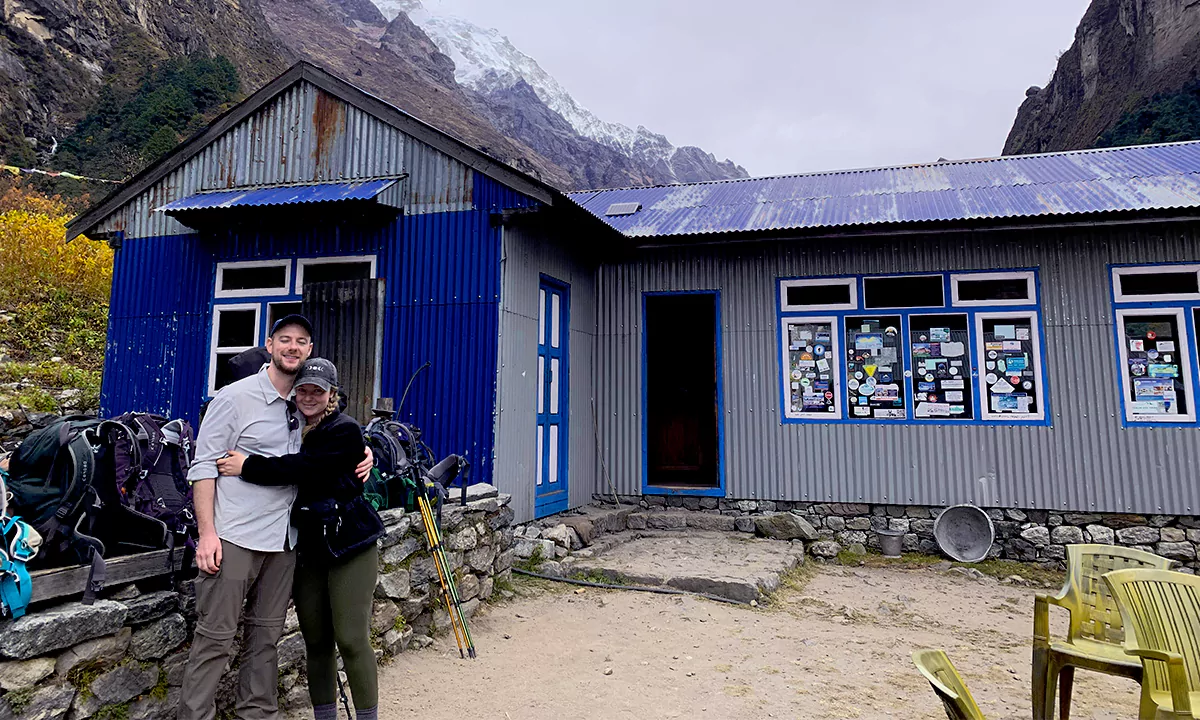
There are some key items that will specifically help to make your stay in Nepal trekking accommodations more comfortable. For a complete and thorough breakdown of everything you need to pack (with printable checklists!), you can check out Himalayan Peace Treks’ Complete Nepal Trek Packing List.
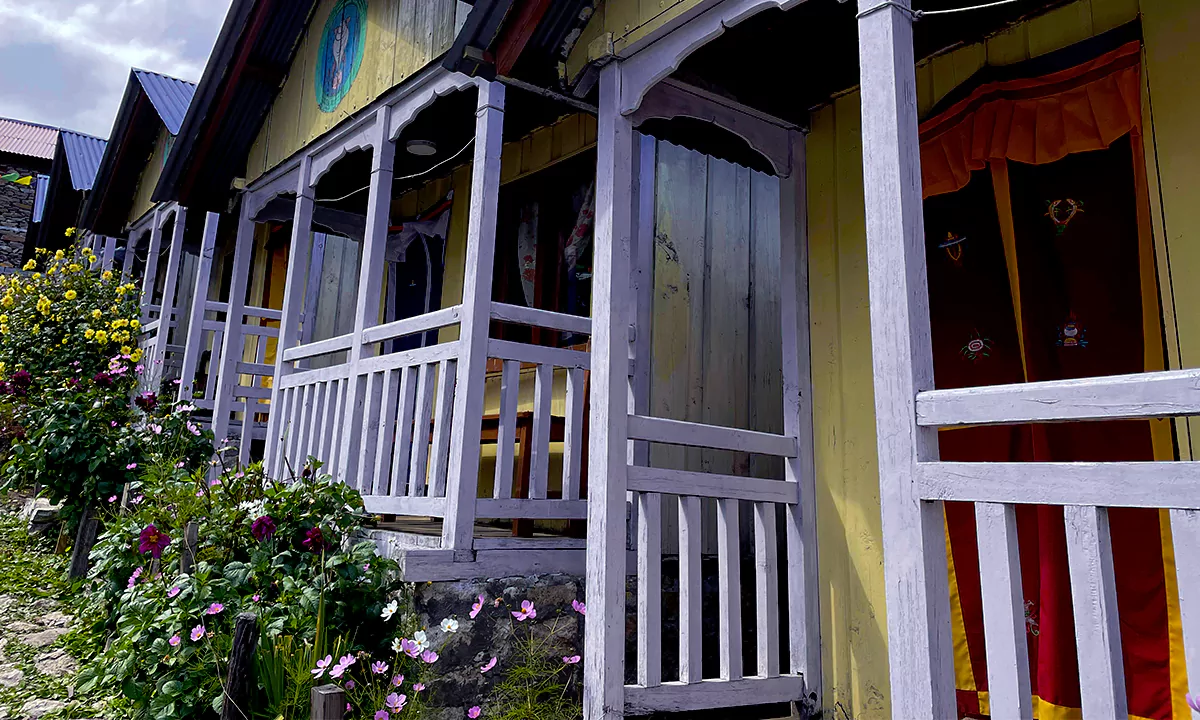
Hopefully by now we have helped to answer some key questions regarding staying in Nepali tea houses while trekking. To reiterate, the tea houses vary greatly. Different times of year, different treks and different regions can mean that you get different amenities and menu items.
What is consistent across all of Nepal trekking accommodation is that the hosts are delightfully welcoming and the food is delicious! Sure you might try a squat toilet for the first time or shower in frigid water, but it’s all part of the wild and wonderful adventure of trekking in Nepal.
If you’re looking for a trusted, ethical trekking company to coordinate your journey for you, consider reaching out to Himalayan Peace Treks. We would love to guide you into the Himalayas in a peaceful way from start to finish and show you just why we love Nepal so much.
Contact the Himalayan Peace Treks team
What is Nepal Trekking Accommodation?
Tea houses. For most treks, you will be staying in tea houses, which are small rustic lodges run my locals.
Who Runs the Tea Houses?
Tea houses and other Nepal trekking accommodations are mostly operated by Nepali people who are local to the region you are trekking into. In some cases where nobody inhabits the trekking area, staff will have hiked in, just like you, in order to serve you.
Do I Need to Pay for My Room?
If you’re trekking with Himalayan Peace Treks, all of your Nepal trekking accommodation will be included in the price of your trek package as well as a couple nights of accommodation in either Pokhara or Kathmandu. Expect to share a room if you’re joining a group, otherwise you can pay a little extra and get a private room.
If you are trekking on your own, you’ll need to carry enough cash to get you through the entire trek as there are rarely reliable ATMs on the treks.
Do I Need to Book my Nepal Trekking Accommodation in Advance?
Your experienced guide will handle booking your rooms for you if needed. During peak season, it can be tricky to get a room in some areas with the Nepal trekking accommodation fills up quick. Calling ahead or booking in advance is a good idea. In some cases when it’s really busy, people end up sharing rooms and sleeping in the dining halls – it’s all part of the fun!
What’s the Food Like in Nepal Trekking Accommodation?
There is a variety of local and international dishes at the tea houses where you’ll be staying while trekking in Nepal. You can order from a menu and don’t have to eat the same thing every day.
Can I Eat My Own Food?
It might seem like a cheaper and easier way to trek, however the expectation is that you eat from the tea house kitchen where you stay. You are welcome to eat your own snacks and treats, but when it comes to meals, please order from the tea house. If you eat your own food or go to another place for a meal, many tea houses will add an extra charge to your room.
Are There Blankets in Nepal Trekking Accommodations?
One blanket is usually provided with each bed. If it’s peak season and it’s really busy, then they might run out of blankets so having a sleeping bag is a great idea.
Is There Electricity in Nepal Trekking Accommodations?
At most tea houses, yes, there is electricity but it can be unpredictable and weather dependent.
Is There Wifi in Nepal Trekking Accommodations?
Most tea houses have wifi. Often you can purchase it for a small price paid in Nepali rupees. The wifi is also unpredictable and weather dependent.
Do I Need Camping Gear For Trekking In Nepal?
For most treks, no camping gear is required whatsoever. You can enjoy being hosted in tea houses which provide all food and overnight rooms. If you’re doing a camping trek, your trekking company will organize most of the camping gear for you.
In Nepal Trekking Accommodation in Tents?
At some trekking stops there are tents available outside of operational tea houses that guests can stay in by choice or when it’s busy. There is usually a proper mattress in the tents and a blanket provided. Some treks are camping only or require a night or two in a tent in areas where there are no tea houses.
Have Questions?
Talk to our expert team and plan your trip.