Email us
[email protected]


Email us
[email protected]

Trip booking for 2025 and 2026 is open, you can book any trip from our website.

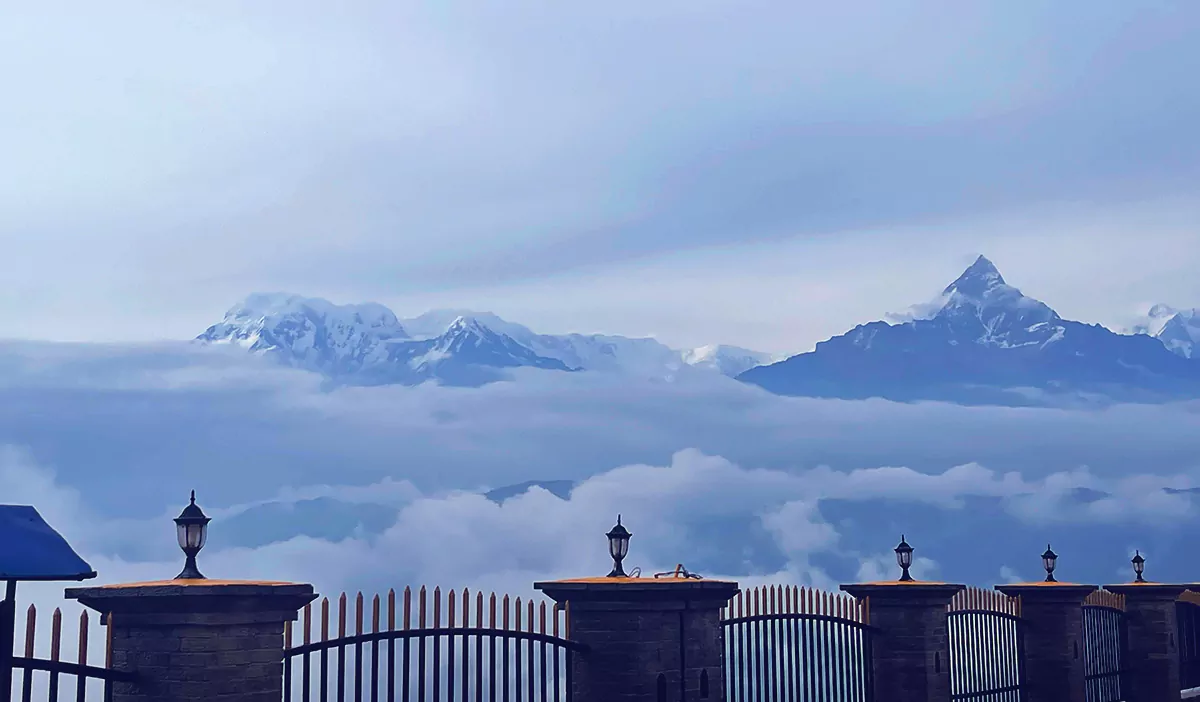
Pokhara is a well-loved tourist city in Nepal, nestled in the lap of the Annapurna and Dhaulagiri mountain ranges. The city is known for its many lakes, adventure activities, mountain views, and spiritual sites. At 200 km away from Kathmandu, Pokhara is a gateway into the Himalayas for many trekkers and travellers.
There is truly something for everyone in Pokhara depending on your unique interests, time frame and preferences. It is an enjoyable place for families, tour groups, and solo travellers to visit.

For nature lovers, you will enjoy spending time at Phewa Lake, exploring caves, visiting Devi’s Fall and stopping at one of the panoramic mountain viewpoints for sunrise and sunset. For cultural experiences, you can visit one of the many temples and statues, try food from different regions, attend a traditional dance concert, and witness the nightly Hindu sunset ritual by the lake. Additionally, there is no shortage of things to do for adventurous thrill seekers, including bungee jumping, paragliding, ultra-light flights and zip lining.
Regardless of your time frame, there is plenty to do in Pokhara to fulfill your vacation wants. Whether you are just passing through on your way to a trek or planning to stay for a while, it is well worth a visit. Pokhara city is a hub for shopping whether you’re looking for trekking gear to rent or purchase or local artisan shops. You can find local jewelry and clothing as well as handicrafts such as art. There is a vibrant nightlife for those looking to enjoy a night on the town with many bars, restaurants and clubs.
If you’d like to slow things down, then you can enjoy a leisurely stroll along the lakeside or find a place to sit at one of the many cafes and restaurants to enjoy views of Annapurna Himalayan range reflecting in Phewa Lake. You can also attend a yoga class or a Himalayan singing bowl session.
Pokhara is the perfect mix of peace and excitement if you look in the right places.
If you are interested in booking a tour of Pokhara in which transportation, accommodations and all popular tourist sightseeing is arranged on your behalf, consider reaching out to Himalayan Peace Treks, a local ethical trekking and tour company. We would be happy to arrange a trip to Pokhara for you that is suited to your exact preferences.
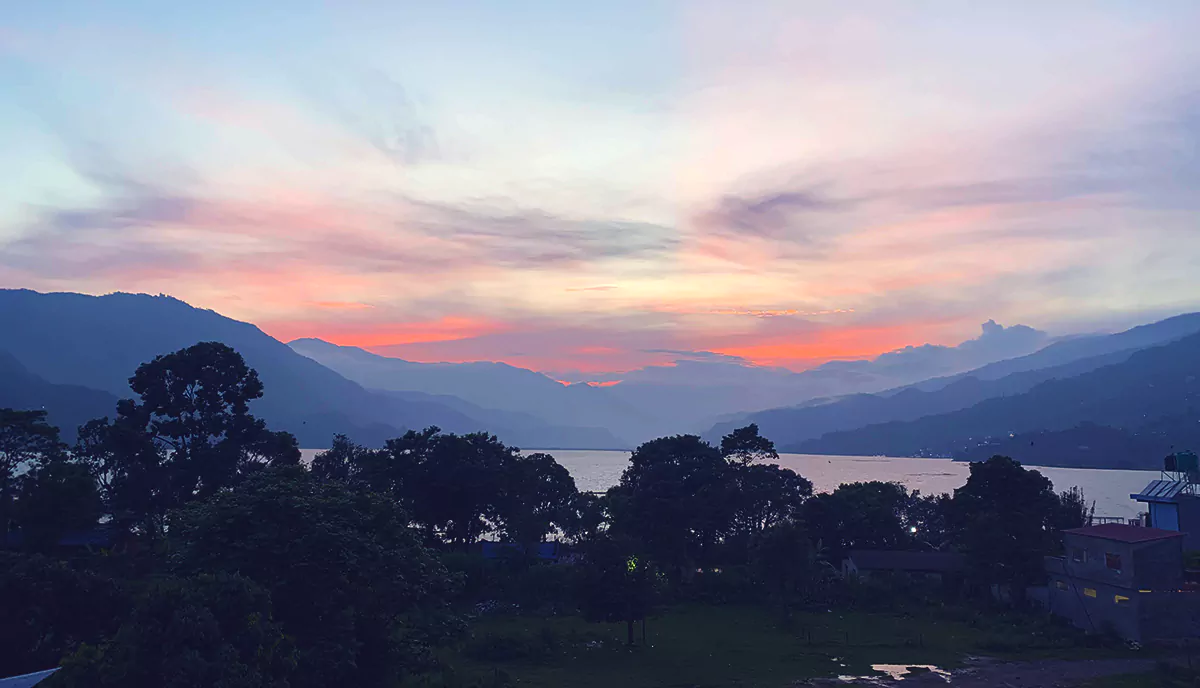
Day 1 – Flight from Kathmandu to Pokhara and Sightseeing
Take a short and scenic morning flight from Kathmandu to Pokhara (25 mins). It’s a beautiful flight with aerial views of the spectacular Himalayan landscapes. Arrive in Pokhara and check in at your hotel, then head to the lakeside and enjoy a local lunch overlooking the gorgeous Phewa Lake and its surrounding mountains. In the afternoon, take a boat ride on Phewa Lake with a visit to the Taal Barahi Temple, located in the middle of the lake. Alternatively, you might be interested in exploring the lake via stand-up paddleboard or kayak which can easily be rented. In the evening, take a taxi to either the giant Shiva Statue at Pumdikot or the World Peace Stupa. Both options are spiritually significant sites located at panoramic viewpoints where you can watch the sunset over the mountains.
Day 2 – Full-Day Pokhara Sightseeing
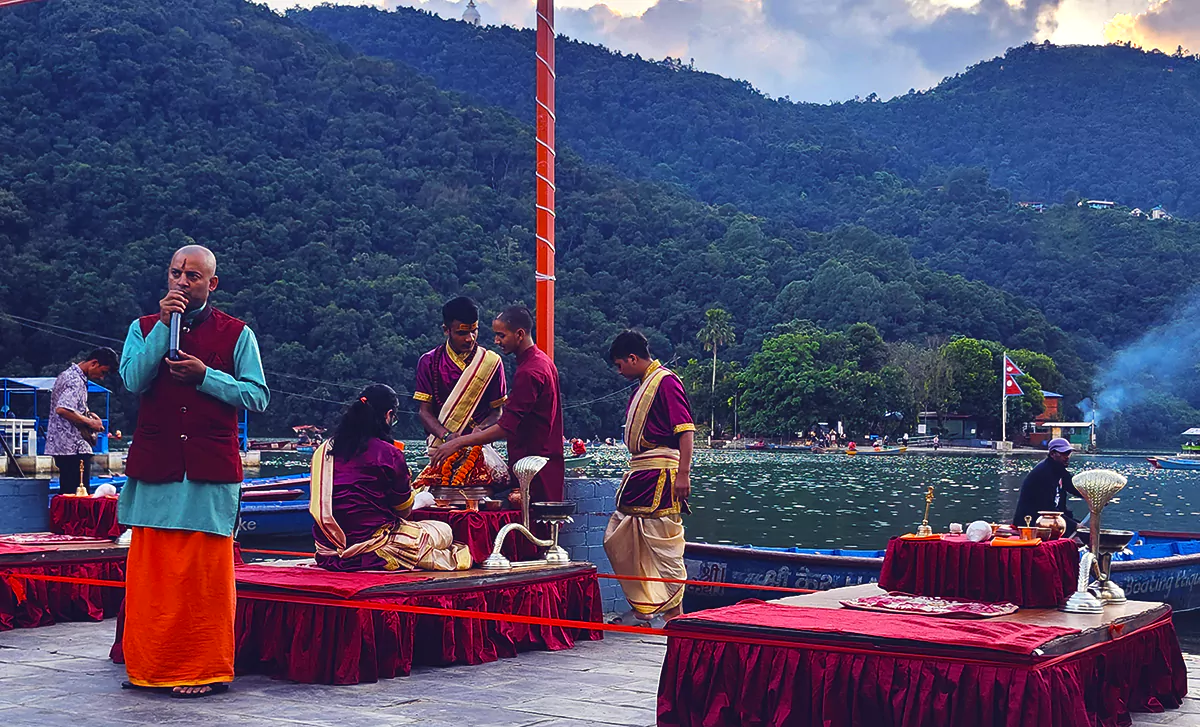
Today is your one full day to explore many of the major destinations in Pokhara. Rise early in the morning, around 4 am, and drive to Sarangkot, another viewpoint overlooking Pokhara and the Annapurna Mountain range. Be sure to get to Sarangkot in time to witness the magical mountain sunrise. This is one of the best paragliding spots in the world so the adventurous traveller can do that here! Take a quick visit to Bindhyabasini Temple and return to your hotel for breakfast. After refueling and rejuvenating, set off again to visit more sought-after spots. You will have time to see Devi’s Waterfall, Bat Cave, Mahendra Cave, and Gupteshwor Temple. All major sites are either free or a small entrance fee. Your main cost will be hiring a car for the day. Walking along Pokhara’s vibrant lakeside is a great way to end the day. There is a free daily sunset offering that is part of Hindu ceremony that you are welcome to observe. Then pick one of the many restaurants to enjoy dinner. You might choose a restaurant with live music or with a cultural dance show.
Day 3 – Flight Back to Kathmandu
If you haven’t caught a sunrise yet from one of the many viewpoints then today is the last chance to do so! After the amazing sunrise, return to your hotel for breakfast and pack up for your return journey. Drive to the airport and hop on your flight back over the Himalayas to Kathmandu.
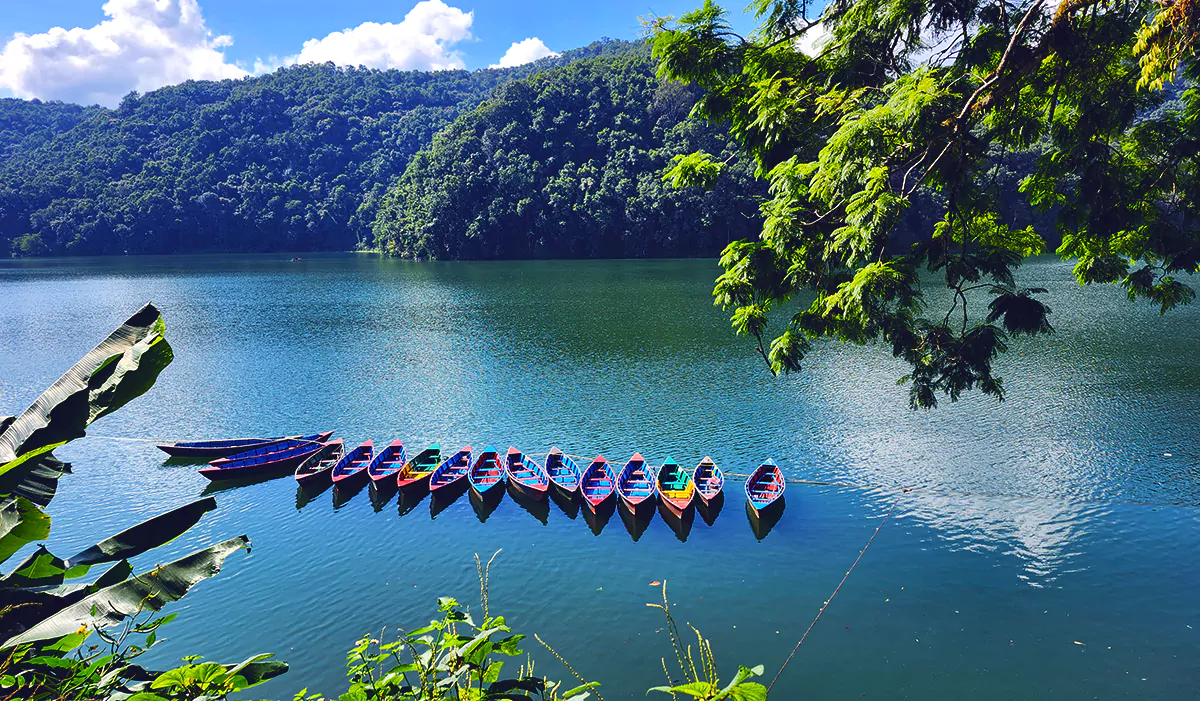
Day 1 – Drive from Kathmandu to Pokhara
Depart early from Kathmandu via bus or private car. Enjoy the scenic drive through rolling foothills, alongside rivers, and through mountain villages. Once you arrive in Pokhara, check-in at your hotel and then head to the lakeside for dinner. If you can, try to catch the daily Hindu offering that takes place at sunset. It is a unique cultural ceremony and is free to attend.
Day 2 – Full-Day Pokhara Sightseeing
Today is a full day of exploring many of the major destinations in Pokhara. Rise early in the morning, around 4 am, and drive to Sarangkot, a viewpoint overlooking Pokhara and the Annapurna Mountain range. Try to get to Sarangkot in time to witness the magical mountain sunrise. This is thought to be one of the best paragliding spots in the world. Next is a short visit to Bindhyabasini Temple and return to your hotel for breakfast. After breakfast, head back down to Phewa Lake for a boat ride and a visit to the Tal Barahi Temple, located in the middle of the lake. Alternatively, you might be interested in renting a stand up paddleboard or kayak to enjoy the lake yourself. Have lunch anywhere along the lake and take the afternoon for rest, walking around, or shopping. If you are interested in yoga and Himlayan singing bowls there are many spots in Pokhara to take a class or receive a healing session. In the evening, drive to Pumdikot, where there is a huge statue of Lord Shiva and incredible views of the surrounding mountain range. This is an important spiritual site and a beautiful place to watch the sunset.
Day 3 – Full-Day Pokhara Sightseeing
Today is another full day of enjoying what Pokhara has to offer. If you are an early riser then you can try to catch the sunrise again, this time from the World Peace Stupa which is another culturally significant spot that overlooks Pokhara and its mountainous landscape. The World Peace Stupa is a beautiful location for sunrise or sunset. If you would like to visit it at sunset instead, then you can drive 25 min to the top or hike for an hour after a short boat ride on Phewa Lake. During the daytime you can visit any of the rest of the recommended destinations including Devi’s Falls, the Bat Cave, Mahendra Cave, the International Mountain Museum, and Gupteshwor Temple. Whether you watch the vibrant sunset from the World Peace Stupa or from a lakeside restaurant, be sure to take a moment to reflect upon your time in Pokhara.
Day 4 – Drive Back to Kathmandu
After a final breakfast in the beautiful city of Pokhara, you start your journey back to Kathmandu via car or bus. The drive between Kathmandu and Pokhara takes anywhere from 6 to 9 hours depending on vehicle type and road conditions. Tourist and local buses take a long time with many stops along the way. Local buses usually take the longest time, stop most frequently and play loud music. Some travellers choose to take the local bus because they get a unique glimpse into local travel and daily life. Hiring a private car is the most comfortable option because it is usually quicker, offers more flexibility and is literally more comfortable on the body.
If you are interested in worry-free travel, Himalayan Peace Treks is an ethical travel and trekking company which can help you arrange your trip to Pokhara.
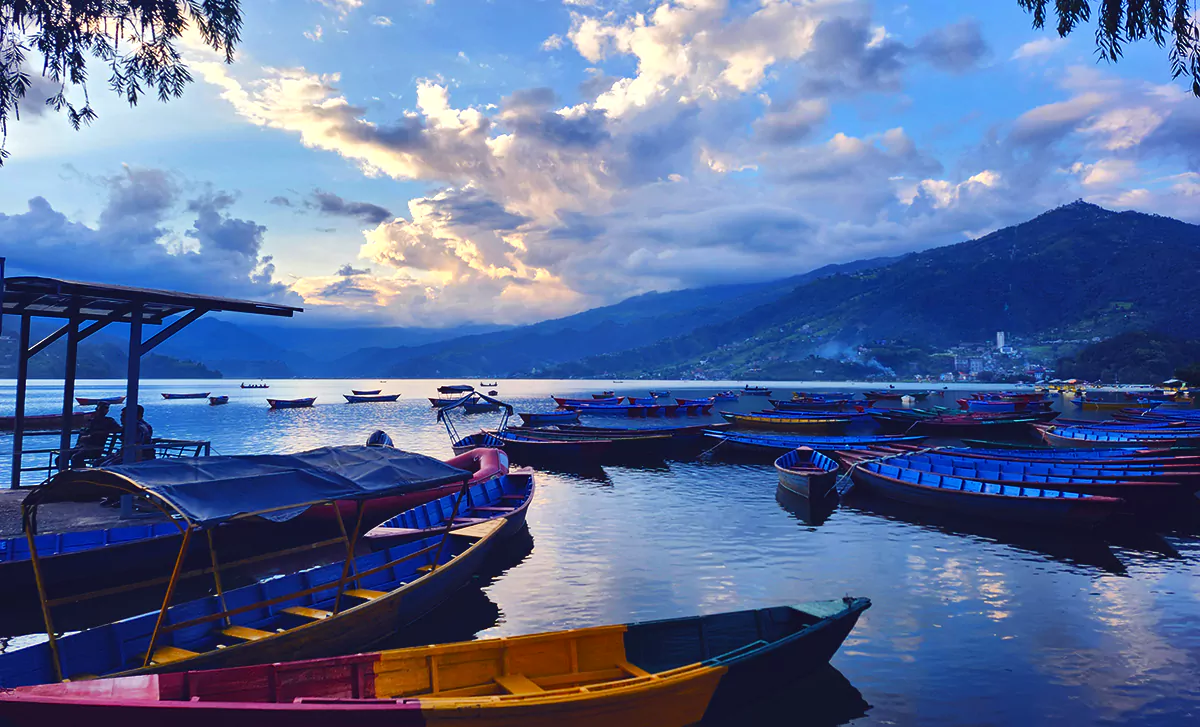
You can visit Pokhara any time of year! The best time of year to visit Pokhara is in the spring (Feb-May) or autumn (September-November) when the weather is more likely to be enjoyable and clear. During spring and autumn you can expect spectacular mountain views, limited rain and warm days. Monsoon season (June-August) offers lush greenery and fresh air. In winter, although chillier, the mountain views are usually quite clear and the crowds are considerably less. Pokhara can be visited throughout the year, just be sure to check the dates and perhaps adjust your expectations and packing list to accommodate for rainy or cold weather.
The weather in Pokhara is very agreeable. The best weather is during the spring (Feb-May) and autumn (Sep-Nov) months when the sun is out and there isn’t much precipitation. During April, the peak trekking month in spring, the temperatures reach an average of 27-30 degrees during the day and drop to 12-14 degrees at night. In October, the peak trekking month in autumn, the highs average around 26-28 degrees and the lows are anywhere from 11-17 degrees. You can expect the coldest temperatures in the winter (Dec-Jan) with lows hovering around 2 degrees and highs up to 18 degrees. Monsoon season (Jun-Aug) has high temperatures and lots of precipitation. In July, you can expect lows around 20 degrees and highs around 29 degrees.
Phewa Lake: Phewa Lake, sometimes written as Fewa Lake, is a lovely freshwater lake in Pokhara’s heart that is a must-visit destination for both international and domestic tourists. The main tourist area of the city is wrapped around the lake’s shore and is referred to as “lakeside”. Along the lakeside there are many restaurants and benches that overlook the water. A small island in the middle of the lake is home to a Hindu temple called Tal Barahi and is a popular pilgrimage site for religious people. You are welcome to take a boat ride around the lake and stop to visit the temple. It is also a fun activity to rent a kayak or stand-up paddleboard to explore the calm lake yourself. Enjoy the greenery surrounding the lake and its reflection of the Annapurna Himalayan range. Every night at sunset there is a Hindu Arti ritual in which flames are ceremoniously waved and mantras are sung as spiritual offerings.

Sarangkot: Sarangkot, a hill station situated at 1600 m elevation, is a popular spot to enjoy a magical mountain sunrise. It is a 30 min drive (about 10 kilometers) from Pokhara’s lakeside and overlooks the entire Lokhara valley and surrounding mountain ranges. Tourists from all over the world come here to see views of Annapurna, Dhaulagiri and Manaslu. The spot has even been named one of the best locations in the world to paraglide. Hiking up from the highway is also an option and takes about 90 min.
Devi’s Falls: Devi’s Falls is a natural waterfall located about 2 km from the city center of Pokhara. It is one of the most visited places in Pokhara because of its powerful water, eroded stones and lush greenery during monsoon season. The original name was Patale Chango which translates loosely to “underworld’s waterfall” or “underground waterfall” because the waterfall tunnels its way through the rock and disappears underground. In 1961 there was an incident in which a Swiss woman drowned in the waterfall. This tragedy resulted, over time, in the name change to Devi’s Falls. There are various speculations about the name, with the most likely narrative being that her surname was “David” or “Davis” which, due to Nepali pronunciation and spelling, eventually morphed into “Devi”, a common name in Nepal. You will likely see many different spellings of the waterfall.
Gupteshwor Mahadev Cave: Gupteshwor Cave is a natural wonder and religious place; these two things often go hand-in-hand in Nepal. The cave, which is also considered a temple, is located close to Devi’s Falls. Walk down a huge spiraling staircase to enter the cave and see water flowing from Devi’s Falls. The cave temple is dedicated to Lord Shiva with various statues, art and offerings associated with this Hindu god. Quite surprisingly to some tourists, there is a statue of a cow in the cave. Cows are a holy animal in Hindu culture (you won’t find any beef here!) and the cow is symbolically protecting Lord Shiva.
World Peace Stupa: The World Peace Stupa, also known as World Peace Pagoda or Pokhara Shanti Stupa, is a noteworthy Buddhist monument located on a hilltop. The stupa is a striking symbol of peace and harmony. Just a 25 minute drive from Pokhara’s lakeside, it is a popular spot to visit for sunrise or sunset. Enjoy beautiful views of Annapurna and Dhaulagiri Himalayan ranges, Phewa Lake, and Pokhara city. If you are interested in hiking, first take a short boat ride across Phewa Lake, then hike for about an hour to reach the monument and viewpoint.
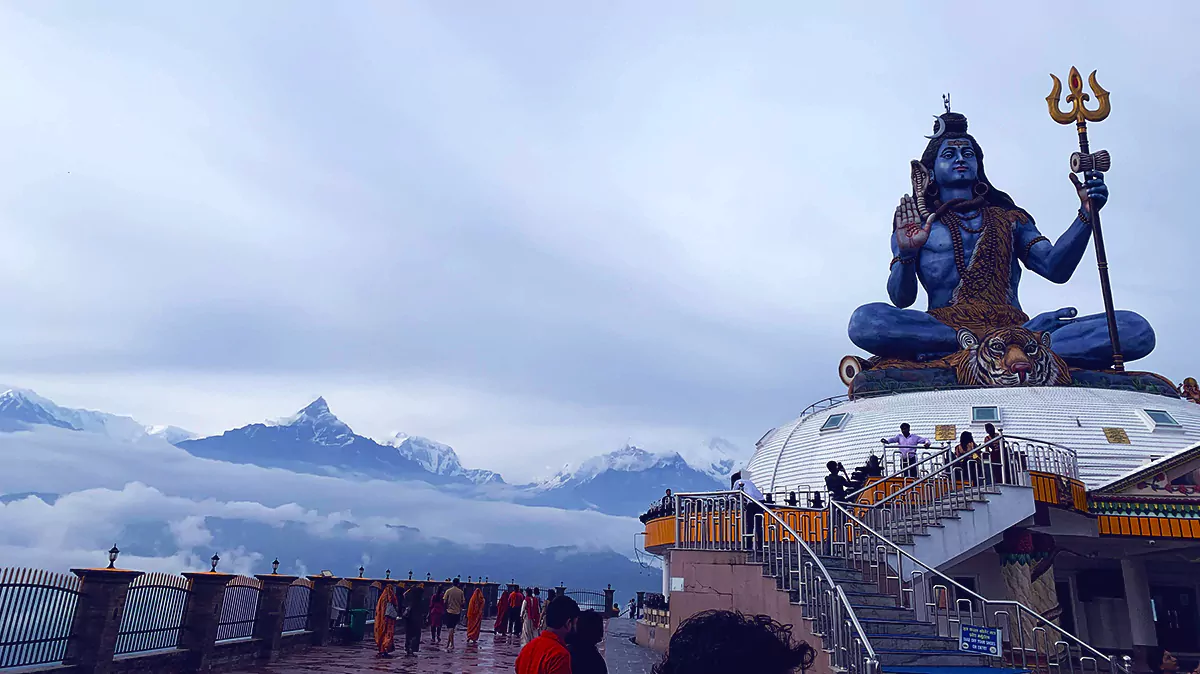
Pumdikot Shiva Statue: Perched on a hilltop in Pumdikot, home to the second tallest Lord Shiva statue in Nepal. The statue and stupa that the Hindu God is perched on are a total of 108 feet tall (108 is a sacred number in Hindu mythology). The statue was fairly recently constructed and is quickly becoming a popular tourist destination due to its religious relevance and panoramic views. From the hilltop, you can see the Annapurna and Dhaulagiri Himalayan ranges above as well as Pokhara and Phewa Lake down below.
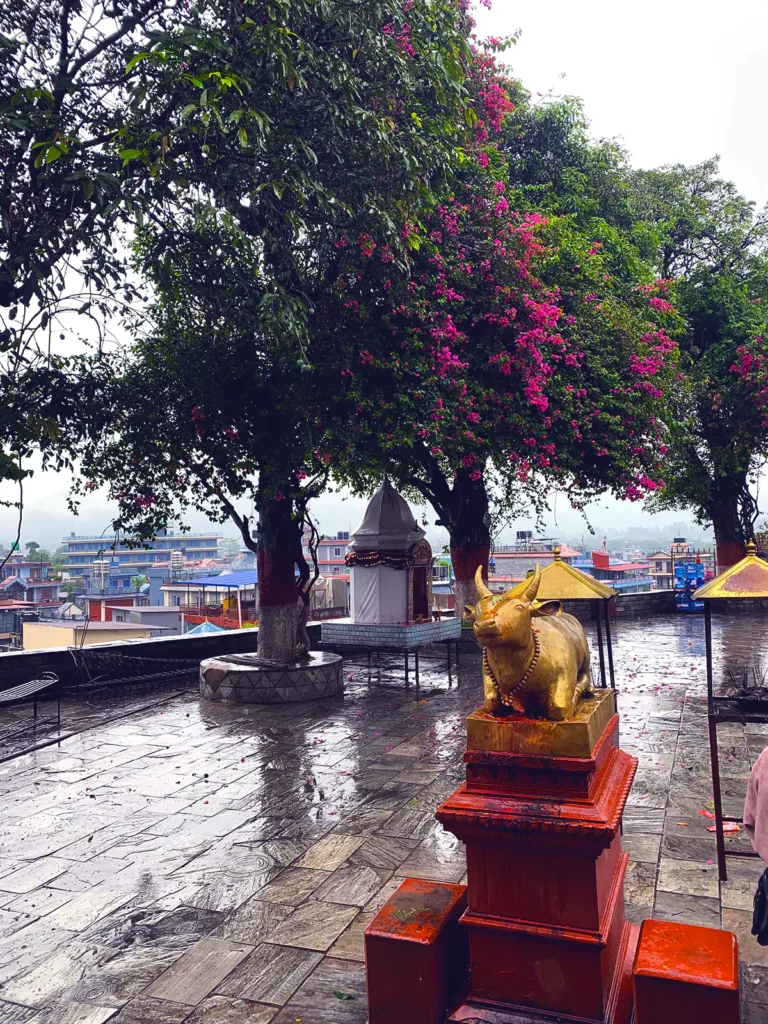
Bindhyabasini Temple: Bindhyabasini Temple, or Shree Bindhyabasini Temple, is another sought-after attraction in Pokhara. The temple has a long history and interesting legend about its establishment. It is thought that hundreds of years ago, the king wanted to build a temple dedicated to Bindhyabasini, a reincarnated form of the Hindu goddess, Kali. When the king’s men were carrying a statue of the goddess, they rested at the current temple’s location for the night. In the morning, her statue was unmovable so that’s where they decided to build the temple. On a clear day you can enjoy views of the surrounding mountains.
International Mountain Museum: Another major tourist attraction in Pokhara is the International Mountain Museum. The museum was established in 2005 in order to record and showcase the development of mountains and mountaineering activities around the world. There are three exhibit halls: Hall of Great Himalayas, Hall of Fame and Hall of World Mountains. The museum includes historical and present-day exhibits about the mountains themselves, the people (and animals!) who climb them and the locals who inhabit their fascinating environments.
Lakeside: Lakeside is one of the easily accessible visiting places in Pokhara. It is a strip of shops, restaurants, and waterfront access to Phewa Lake. This vibrant area has something for everyone! If you’re hungry, you can find pubs, restaurants, bakeries and coffee shops with local and international cuisines. There are many shops along the neighbouring streets with trekking gear, handmade crafts and local souvenirs. If you’re in the mood for some rejuvenative time you can find yoga studios, massage parlors and even take Himalayan singing bowl lessons.
Flight: Flying is usually the fastest way to reach Pokhara as it is only a 25 min flight from Kathmandu. The incredible aerial views from the small plane showcase the vastness of the Himalayas. It is the only option that gives you time to explore Pokhara city and the lakeside on the same day that you are travelling. Although not as sustainable as road travel, domestic flights are a great way to save time and enjoy a bird’s-eye view of the mountains. Depending on availability, time of year and weather, flights can often be cancelled. During peak season, try to book as far ahead in advance as you can. If it’s cloudy, flights won’t be operating so be prepared to hop in a car as an alternative
Private Car or Jeep: A private car is another comfortable and convenient option to get to Pokhara from Kathmandu or anywhere in Nepal. From Kathmandu, it will take 5-6 hours to drive from Kathmandu if everything goes smoothly. It is a scenic drive with views of lush green hills, rivers, and mountain villages. This is an ideal option for stopping at your own pace and including any side trips you might like. As you might imagine, the mountainous roads in Nepal are windy, bumpy, dusty and unpredictable. Be prepared that your journey might take longer than anticipated.
Tourist Bus: Tourist buses are a reliable and comfortable option for travelling between Kathmandu and Pokhara. As you might know, travelling via bus is a more sustainable and cost-effective travel option. There are a few different tourist bus companies that operate different classes of tourist buses including regular, deluxe and sofa. These buses depart from Kathmandu at the tourist bus station in Sorakhutte, near the tourist hub of Thamel, at 7 am every day. They leave Pokhara from the Pokhara tourist bus park at 7:30am daily.
Local Bus: The local bus is the cheapest and, honestly, least comfortable option to reach Pokhara. It takes about 8-9 hours because it stops frequently to pick up and drop off passengers along the way. The buses are often crowded, they play loud music and you might just end up sitting next to a goat! They can be quite challenging for some tourists, or a lot of fun, depending on your style. Local travel in any country, especially Nepal, offers an authentic glimpse into local travel and way of life.
A minimum 3-4 day trip (including travel days) is enough time in Pokhara to cover the major attractions. Your mode of transportation makes a big difference! If you travel by road from Kathmandu then you need two full days allocated towards your round-trip travel. If you choose to fly then you can do some sightseeing on your travel days. If you have more time, want to take a more leisurely approach, or want to add more activities into your trip then you can easily fill a 5-7 day itinerary.
You will need to pass through Pokhara to access treks in the Annapurna region such as the Annapurna Base Camp Trek and the Mardi Himal Trek. We highly recommend stopping to check out Pokhara for at least a day or two post-trek. Plan your time in Pokhara for after your trek so that you have buffer days while trekking and your trek isn’t right up against your international flight from Kathmandu.
When looking at accommodation, it is important to know that “Lakeside” is the prominent tourist area of Pokhara. It has many activities, shops, restaurants and hotels. A wide range of accommodations are available in Pokhara, including luxury resorts, boutique hotels, budget guesthouses, and lakeside homestays. You can decide if you want to be right in the hustle and bustle of the vibrant lakeside area or find a quieter spot outside of the main hub.
In just a couple of days on foot, you can reach Ghorepani, a small Magar village, and Poon Hill, an incredible sunrise viewpoint at 3210 m
Trekking to the Base Camp (4130 m) of the tenth highest mountain in the world (8091 m) is an exhilarating journey from Pokhara to Pokhara in only 5-7 days
Up close mountain views and Nepali jungle await you on the moderate trails of the 4-6 day journey to Mardi Himal Base Camp (4500 m)
A slightly quieter option to trek to Khopra Danda (3660 m) and Khayer Lake (4500 m) over the course of 7-11 days
Himalayan Peace Treks can help you to arrange your Pokhara Tour as well as trekking in Nepal
A small village that is the hub of Gurung culture, located at 2012 meters elevation in the foothills of the Annapurna mountain range. You can take private or public transportation to get to Ghandruk by road, or even drive part of the way there and trek the rest for a short mountain adventure!
A Newari village only 60 km east of Pokhara with lovely far-off mountain views. It has a quaint village feel and is home to one of 2. the biggest caves in Nepal.
122 km on the route from Pokhara to Lumbini is Tansen, an ancient market centre known for its handloom fabrics and metal craft. Enjoy panoramic views from the viewpoint just above the market.
A short drive plus a short trek brings you to the modest Gurung village of Ghurunkha in the Syanja district. The village’s traditional culture and cobbled streets make for a tranquil atmosphere.
To the west of Pokhara is the naturally beautiful village of Panchse. It is a well-loved spiritual site for Hindus and Buddhist. You can trek to Panchse, from Pokhara back to Pokhara, in five days.
Sirubari is only 56 km south of Pokhara and offers another quaint village experience. Gurung culture and heritage has been beautifully upheld within the small village.
A Gurung village in the Lamjung district with its own specific Ghale culture and traditions. It is located at 2070 m elevation and offers mountain views all around. There is a strong depth of community in Ghale Gurung culture.
How far is Pokhara from Kathmandu, and how can I travel there?
Pokhara is about 200 kilometers from Kathmandu. You can get there by road (6-8 hours by tourist bus, private car, or local bus) or take a 25-minute flight.
What are the places to visit in Pokhara?
Pokhara is one of the most beautiful cities in Nepal with many sightseeing places including Phewa Lake, Davis Falls, Mahendra Cave, Sarangkot (for sunrise views), World Peace Stupa, and Shiva Statue (for sunset views), International Mountain Museum, and Begnas Lake.
What activities can I enjoy in Pokhara?
Pokhara offers multiple activities including boating, paragliding, zip-lining, bungee jumping, ultra-light flights, hiking, mountain biking, and a relaxing walk by the lakeside.
When is the best time to visit Pokhara?
The best time is during spring (March-May) and autumn (September-November) when the weather is clear, and the mountain views are at their best.
What is the weather like in Pokhara?
During spring and autumn the temperatures range from lows of 11-17 degrees to highs of 27-30 degrees with very little precipitation. During monsoon season you can expect hot and rainy days. Temperatures drop in the winter to 2 degrees at night and 15-18 degrees during the day.
How many days are enough to explore Pokhara?
A 2–3-day trip is enough to cover major attractions, but 4–5 days are the best if you also want to include adventure activities or hikes around.
What is Pokhara famous for?
Pokhara is known for its many lakes and views of the Annapurna mountain range.
Is Pokhara a valley?
Yes, the city of Pokhara, much like Kathmandu, is located in a huge mountainous valley.
How big is Pokhara?
Pokhara is the largest city in Nepal with an area of 464.24 square kilometers. In terms of population, it is the second largest with 513 504 people in 2021.
Is Pokhara suitable for family trips?
Yes, Pokhara is perfect for family vacations, It offers activities for all ages, from boats ride in the Phewa lake and sightseeing to cultural experiences.
What type of accommodation is available in Pokhara?
A wide range of accommodations are available in Pokhara, including luxury resorts, boutique hotels, budget guesthouses, and lakeside homestays.
Is Pokhara safe?
Yes, Pokhara is a tourist-friendly city with a low crime rate.
Is Pokhara safe for solo travellers?
Absolutely! Pokhara is a friendly city with a safe environment. It is one of the top destinations for solo travellers including female solo travellers.
Is there a nightlife in Pokhara?
Yes, around Lakeside there are many bars, restaurants and clubs for both local and international travellers.
Are guides available for tours in Pokhara?
Yes, professional guides can be arranged for city tours and other activities.
Is the itinerary for the Pokhara tour customizable?
Yes, most tour operators offer customizable itineraries to fit your time availability, whether you’re looking for adventure, relaxation, or a cultural tour.
Have Questions?
Talk to our expert team and plan your trip.